
Washing pyjamas with care
You want to choose a programme based on the care label and how soiled the pyjamas are, rather than just the programme name.


Choose a washing machine with a capacity suited to the cotton loads you usually wash, and check that its programmes match the care labels on your pyjamas. The Consumers’ Association notes that the stated capacity applies to cotton washing; Eco 40-60 is designed for normally soiled cotton that can be washed at 40 or 60 °C according to the care label. Before installation, also measure the door swing and allow room for the connections: Bosch Netherlands recommends using an earthed socket.
You want to choose a programme based on the care label and how soiled the pyjamas are, rather than just the programme name.
You often wash pyjamas with other cotton items and want a capacity that suits your usual laundry load.
Available space, door swing, flooring and access to water, drainage and an earthed socket all affect what will work in practice.
| What to consider | What should you check? | Who is this important for? |
|---|---|---|
| Cotton programme and rinsing | Check the programme instructions and whether an extra rinse is available. | If I want the programme to suit the care label and how soiled my pyjamas are, I look beyond the name alone. Around 36% of consumers prioritise suitable washing and rinsing. |
| Capacity | Compare the stated cotton capacity with the size of your usual sorted laundry load. | When my pyjamas usually go in with other cotton items, I don’t want a drum that’s consistently larger than my regular load requires. Around 29% of consumers let their usual laundry volume guide their choice. |
| Positioning in the utility room | Measure the external dimensions and door swing; check there’s room for hoses and connections. | If space is limited in my utility room, I want to know not only whether the machine will fit, but also whether I can easily use the door and connections. Around 21% of consumers prioritise the space available. |
| Consumption and aftercare | Compare label figures on a like-for-like basis and check the seller’s service terms. | If I want to factor in running costs and after-sales support, I compare the energy label figures and see what service the seller offers. Around 14% of consumers give these points top priority. |
The energy label compares consumption for the stated eco cycle; it doesn’t automatically predict consumption for every cotton programme. The Consumers’ Association also recommends assessing capacity based on cotton washing. Check the manual for the specific model before installation.
A larger capacity is most useful if you make regular use of it. Milieu Centraal advises against buying a washing machine that’s bigger than you need.
Think about the amount of cotton you usually wash together and compare it with the stated capacity.
The programme name doesn’t guarantee that the water will be exactly 40 or 60 °C during every wash. According to the Consumers’ Association, the programme is designed for normally soiled cotton that can be washed at 40 or 60 °C according to the care label.
Follow the clothing label and, if it gives different washing instructions, choose a programme to match.
Depth, door swing, hoses, connections and flooring also affect whether a machine will fit in a utility room.
Compare the model’s full dimensions with the available space and follow the installation instructions. Bosch Netherlands recommends connecting the machine to an earthed socket.
The WAN2827BNL is a freestanding front-loader with an 8 kg cotton capacity, if that suits your usual load.
The BM3WFT3841W is an 8kg model with a cotton programme, worth comparing if you’re looking for a freestanding machine.
The WEC388 WCS is an 8kg model for anyone who wants to factor the listed controls and steam features into their comparison.
The LR87BADEN is a 10kg model for households that regularly wash larger loads of cotton.
This selection includes freestanding front-loaders with capacities of 8 and 10 kg. Compare the capacity with your usual laundry load and measure the space in your utility room before choosing a model.
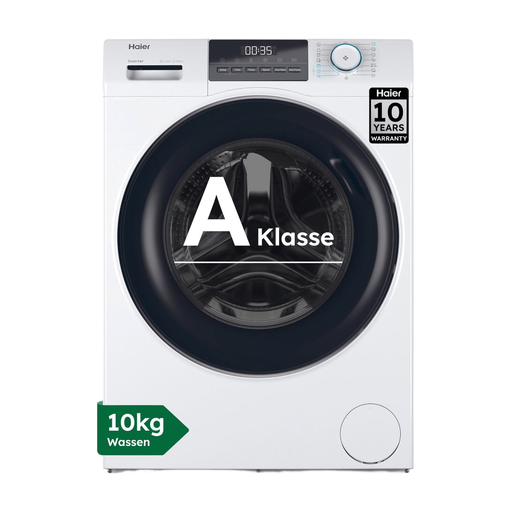 No image available
The stated 10 kg capacity is worth considering if you usually wash your pyjamas with larger cotton loads.
The product name lists 10 kg, 1400 rpm, an inverter motor, ABT and Steam.
 No image available
The stated 8 kg capacity gives you a useful point of comparison if it suits the cotton loads you usually wash.
The product name lists 8 kg, 1400 RPM, 16 programmes, Steam Sanitization and energy class A.
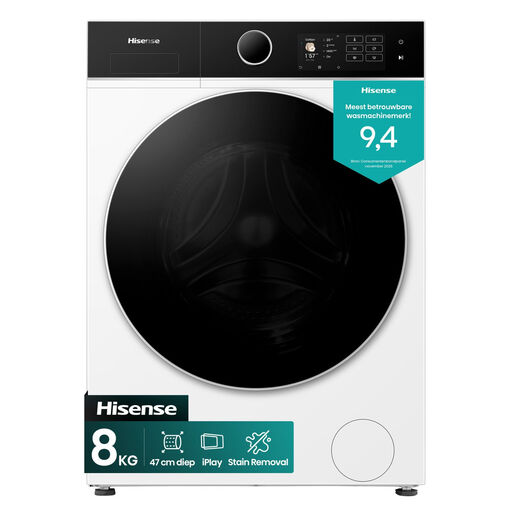 No image available
The stated 8 kg capacity can help you compare the machine with your usual cotton load.
The product name lists 8 kg, 1400 RPM and an inverter motor.
 No image available
The stated 8 kg capacity is relevant if it suits the amount of cotton you usually wash together.
The product name lists 8 kg, 1351 RPM, 16 wash programmes and a steam function.
 No image available
The stated 8 kg capacity gives you a starting point for comparison with your usual cotton load.
The product name lists 8 kg, 1400 rpm, EnergySpin, a ProSmart inverter motor and energy class A.
No. According to the Consumers’ Association, this programme is designed for normally soiled cotton that can be washed at 40 or 60 °C according to the care label. If the washing instructions say otherwise, follow the label and choose a suitable programme; the name doesn’t indicate a fixed actual wash temperature.
Compare the model’s dimensions with the space available, and check the door swing, stable flooring, water supply, drainage and an earthed socket. Bosch Netherlands recommends removing the transit bolts according to the manual before the first wash.
Household washing machines covered by the relevant EU labelling rules must carry an energy label. The European Commission also sets out the requirements that apply to washing machines, including an eco 40-60 programme for those within the scope of the rules; this doesn’t mean you have to choose energy class A.
No. ACM ConsuWijzer explains that statutory consumer rights in the Netherlands apply alongside a commercial guarantee. There’s no single fixed statutory period for every washing machine: what you can reasonably expect with normal use and the circumstances of a fault both matter. Contact the seller if there’s a problem.
When you buy a new, similar appliance, the shop must accept your old washing machine free of charge under the Dutch old-for-new scheme. The Government of the Netherlands says this also applies to online purchases; disconnecting or installing the appliance separately isn’t automatically free.