
People washing small weekend loads
You may have only a few cotton pyjamas to wash after a weekend away and want a drum that also suits your usual washing habits. Milieu Centraal recommends choosing the drum capacity to suit your household.


Choose the drum capacity to suit the amount of washing you usually build up, rather than basing your decision on just a few pyjamas after a weekend away. Then compare the permitted load and the programme’s results: Eco 40-60 may suit normally soiled cotton that the care label says can be washed at 40 or 60 °C, while the standard cotton programme may be more relevant if getting clothes clean is your priority. Milieu Centraal recommends choosing a drum size to suit your household, and the Consumentenbond explains how programmes differ.
You may have only a few cotton pyjamas to wash after a weekend away and want a drum that also suits your usual washing habits. Milieu Centraal recommends choosing the drum capacity to suit your household.
You can wash normally soiled cotton pyjamas with other items if the care label allows it, and you want to take energy and water use into account. Milieu Centraal and the European Commission offer guidance on assessing drum size and energy labels.
You want to wash lightly soiled pyjamas quickly, so check in advance which loads and fabrics are suitable for a short programme. The Consumentenbond points out that programme duration and consumption depend in part on the programme and the amount of laundry.
Best when: getting clothes clean matters more than using as little energy as possible in one cycle, or you’re washing the pyjamas with your usual cotton laundry.
Keep in mind: the Consumentenbond reports that, on tested machines, this programme generally cleans better than Eco 40-60, but may use more energy and water.
Best when: the cotton pyjamas are normally soiled, the care label allows washing at 40 or 60 °C, and efficient washing is a priority.
Keep in mind: the programme name doesn’t guarantee that the water will reach 40 or 60 °C. The Consumentenbond also reports differences in cleaning and rinsing between tested machines.
Best when: you need lightly soiled pyjamas again soon and the load is within the quick programme’s limit.
Keep in mind: programme duration and maximum load vary by model; you can’t automatically use the machine’s full drum capacity on a quick cycle.
| What to consider | What should you check? | Who is this most important for? |
|---|---|---|
| Drum capacity | Compare the drum capacity with the amount of laundry your household usually produces, and check the permitted load for relevant programmes. | If I only have a few pyjamas to wash after a weekend away, I want a drum that also suits my usual laundry. Around 33% of consumers say that choosing the right drum capacity is their main concern when buying. |
| Energy and water use | Compare kWh per 100 Eco 40-60 cycles and water per cycle on the same label basis. These figures don’t directly tell you what another programme will use. | If you wash cotton regularly, you’ll want to consider consumption over several loads. Around 25% of consumers put efficient washing first. |
| Quick programme | Check the programme duration, maximum load and suitable fabrics for the exact model. | If I need lightly soiled pyjamas again soon, I want to know whether they’ll fit in a quick cycle. Around 25% of consumers say getting items ready to wear again quickly is their main concern when buying. |
| Cleaning and rinsing | Compare cleaning and rinsing results for the exact model, and check which rinse options are available. | If I want to reduce detergent residue or prioritise washing results, I look beyond energy use alone. Around 17% of consumers put cleaning and rinsing first. |
Your weekend washing is only one part of your usual laundry. A larger drum isn’t automatically the best choice if you normally wash small loads.
First work out how much laundry you usually build up, then compare that with the drum capacity, as Milieu Centraal recommends.
The name doesn’t mean the programme actually washes at 40 or 60 °C. Cleaning and rinsing results can also differ from those of the standard cotton programme.
Check the care label, and don’t automatically choose Eco 40-60 if a specific washing or rinsing requirement matters more. The Consumentenbond explains how the programmes differ.
A quick programme may have a lower maximum load than the full drum capacity. For example, Bosch lists a maximum of 3.5 kg on the SuperKort 30′ programme for model WUU28T20; that limit doesn’t automatically apply to WUU28T20NL or other models.
Check the manual for the exact model and the programme’s load limit before choosing a quick cycle.
The Dutch product page describes the Serie 6 WUU28T20NL as an 8 kg front-loading washing machine with a maximum spin speed of 1400 rpm. It’s a specific model you can use to compare drum capacity and installation space.
The LF628600 is a 6000 ProSense front-loading washing machine with an 8 kg capacity. It’s a specific model you can use as a starting point for comparing load sensing and energy label information.
Samsung describes model WW80CGC04AAEEN as an 8 kg AI Ecobubble front-loading washing machine with an A energy rating. Compare the specifications and programmes for this exact variant.
Miele describes the WEA135 WCS 8kg Active as an 8 kg front-loading washing machine with AddLoad, which may be worth considering if you want to be able to add an item you’ve forgotten.
The selection includes compact mini washing machines for small loads and freestanding washing machines with an 8 kg capacity. For each model, check whether the available programme is suitable for cotton pyjamas and the amount of laundry you want to wash.
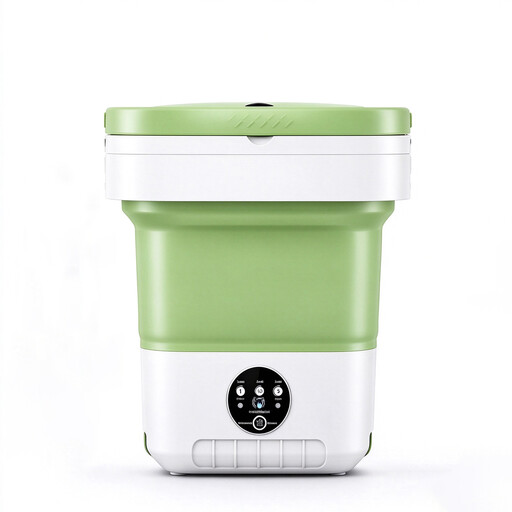 No image available
A compact option to consider if you mainly want to wash small loads. Check that the model and programme are suitable for cotton pyjamas.
The product name lists a 12-litre capacity and a spin-drying basket.
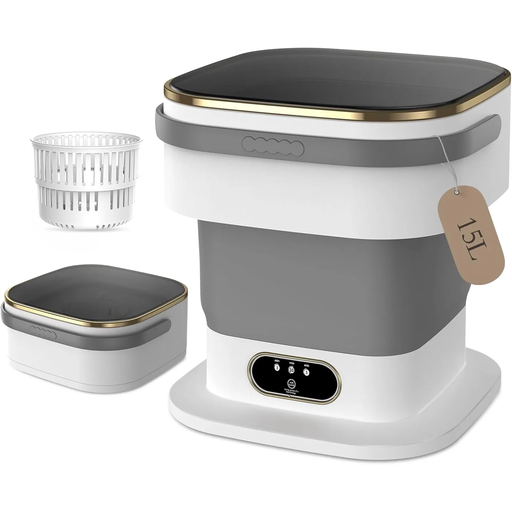 No image available
A compact option if you’re considering washing small loads. Check beforehand that the model and programme are suitable for cotton pyjamas.
The product name lists a 15-litre capacity and a spin-drying basket.
 No image available
A freestanding model to compare if you usually add your weekend washing to a regular load. Consider whether 8 kg suits your usual washing habits.
The product name lists an 8 kg capacity, 1400 rpm and 16 wash programmes. The description mentions cotton, Eco 40-60 and a 15-minute quick programme; check the permitted load for each programme.
 No image available
A freestanding washing machine to compare with your usual washing habits. Consider whether 8 kg suits the loads you typically build up.
The product name lists an 8 kg capacity, 1351 rpm and an A energy rating. The description mentions quick cycles from 14 minutes; check which fabrics and load sizes are permitted.
 No image available
A freestanding model to compare if you want to wash pyjamas with your usual laundry. Check that the load size and selected programme are suitable.
The product name lists an 8 kg capacity, 1400 rpm, EnergySpin, a ProSmart Inverter Motor and an A energy rating. The description mentions cotton, Eco 40-60, load adjustment and a quick programme; check the conditions for each cycle.
No, not without checking the care label and washing requirements. Eco 40-60 is designed for normally soiled cotton that the label says can be washed at 40 or 60 °C, but the name doesn’t guarantee that the water will reach that temperature. The Consumentenbond reports differences in cleaning and rinsing compared with the standard cotton programme.
It depends on the permitted load and fabrics for the quick programme on the exact model. Check the care label and the washing result you want too; the drum’s maximum capacity doesn’t automatically apply to a quick cycle.
For household washing machines in the EU, energy labels range from A to G. The European Commission explains that the energy information shown is based on Eco 40-60, so don’t read it as a consumption figure for every cotton or quick programme.
Follow the manual for your chosen model when it comes to maintenance. Milieu Centraal recommends running a 60 °C wash about once a month to help prevent soap and dirt residue building up in the machine. This doesn’t mean you need to wash every pair of pyjamas at 60 °C.
For private purchases in the Netherlands, the old-for-new scheme applies to an old appliance of a similar type. According to the Dutch government, the shop must take it away free of charge, including for online purchases. Check separately whether delivery, connection and installation are included, as these are different services.