
Host with quick guest turnovers
You wash pyjamas between stays and want to know whether a suitable cotton programme will finish in time. A short cycle doesn’t prove that more heavily soiled laundry will come out just as clean.


Choose a drum that suits a typical load of pyjamas and that you can usually fill reasonably well. Then match the cotton programme and cycle duration to the time between guests. The Dutch Consumers’ Association recommends choosing a large drum only if you can usually fill it. A short cycle doesn’t guarantee the same washing results for more heavily soiled laundry. Compare energy and water figures based on the same Eco 40-60 label data, rather than treating them as a prediction for every programme.
You wash pyjamas between stays and want to know whether a suitable cotton programme will finish in time. A short cycle doesn’t prove that more heavily soiled laundry will come out just as clean.
Sometimes you wash just a few pairs of pyjamas, and sometimes a larger load. Choose a load capacity that suits what you wash most often, rather than basing your choice on an exceptionally busy changeover.
When you’re doing repeated washes, you’ll want to compare energy and water use, while also considering maintenance and any drying requirements.
| Factor to consider | What should you look for? | Who is this most relevant to? |
|---|---|---|
| Washing cotton pyjamas well | Compare the cotton programme with the care label and permitted load size; assess a quick cycle separately. | If I want the pyjamas to come out clean after a normal wash, I look for a suitable cotton programme. For around 31% of consumers, getting laundry clean is the top buying priority. |
| Washing between guests | Check the cycle duration for the intended load size and the conditions for using a shortened cycle. | If the next guests are arriving soon, I want to know whether the washing and drying will be finished in time. For around 25% of consumers, changeover time comes first. |
| Suitable load capacity | Weigh a typical load and compare it with the machine’s capacity; also check its external dimensions and the space needed for installation. | If my load sizes vary a lot, I want a drum that suits the laundry I wash most often. For around 19% of consumers, getting the capacity right is the top priority. |
| Energy and water use | Compare kWh per 100 Eco 40-60 cycles and water use per cycle on the same label basis. | If the machine runs frequently, I want comparable consumption figures to help me decide. Around 13% of consumers put consumption first. |
| Installation and maintenance | Measure the available space and check that the drawer, door seal and filter are accessible. | If space is limited, I want a machine that’s practical to install and maintain. For around 12% of consumers, installation and maintenance are the main considerations. |
Your usual load may be much smaller than the capacity you base your choice on. The Dutch Consumers’ Association recommends choosing a large drum only if you can usually fill it.
Weigh a typical load of pyjamas and compare it with the machine’s capacity before you decide.
A shorter cycle doesn’t, by itself, mean that more heavily soiled pyjamas will come out just as clean.
Check the permitted load size for the shortened cycle on the exact model. For more heavily soiled laundry, choose a suitable full programme.
Drying capacity may be lower than washing capacity, so you might not be able to dry a washed load all at once.
Compare the washing and drying capacities separately with your typical load.
According to LG, the LG F4X1008NWH is a front-loader with an 8 kg capacity, app control and steam functions.
According to Siemens, the iQ500 WG44G2ZWNL has a 9 kg capacity and features that shorten programmes.
Bosch describes the Serie 6 WGG244ZANL as a 9 kg front-loader with SpeedPerfect and an add-item function.
According to Miele, the W1 WWE380 WCS PWash&Steam&8kg combines an 8 kg capacity with QuickPowerWash.
According to the Dutch Consumers’ Association, the LR6KOLN is an 8 kg front-loader with a load sensor, TimeSave and an Extra-Quick programme.
This Joybuy selection includes front-loaders with a cotton programme and a range of load capacities. Compare the drum with your usual load and check the conditions for quick programmes when washing more heavily soiled laundry.
 No image available
A cotton programme is listed; the 9 kg capacity may suit you if it matches your usual load.
The description lists Eco 40-60 and a 39-minute Super Speed programme for 5 kg. The 15-minute Quick cycle is intended for lightly soiled laundry.
 No image available
The listed cotton programmes make this model worth comparing for loads of pyjamas; choose a capacity that suits what you wash most often.
The description also lists Eco 40-60, Quick Wash and a 0–24-hour delay end function.
 No image available
With a 7 kg capacity and a cotton programme, this model is worth comparing if your loads are usually smaller.
The stated depth is 400 mm. The 15-minute quick wash is intended for small, lightly soiled loads.
 No image available
The 8 kg capacity and cotton programme are worth comparing with your usual load.
The description lists Eco 40-60 and a 14-minute Daily Xpress programme for lightly soiled laundry.
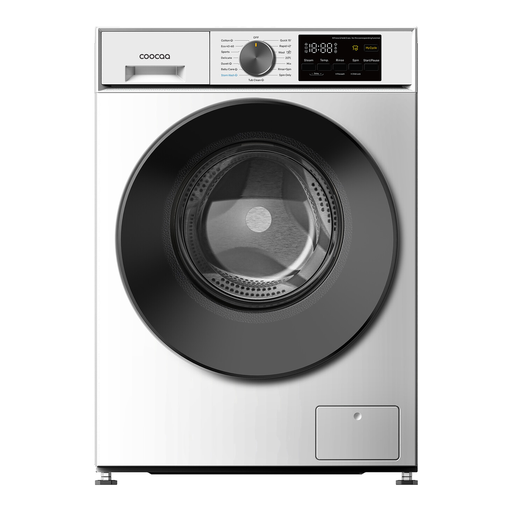 No image available
The stated 8 kg capacity and cotton programme are useful starting points for comparing the machine with your usual load.
According to the description, the 15-minute Quick Wash is intended for lightly soiled laundry.
Weigh a typical load of pyjamas and don’t choose a machine based only on the largest load you can imagine washing. The Dutch Consumers’ Association recommends choosing a large drum only if you can usually fill it.
Not without checking the care label and how soiled they are. Eco 40-60 is intended for normally soiled cotton that the care label says can be washed at 40 °C or 60 °C. The Dutch Consumers’ Association notes that this programme doesn’t always get laundry as clean as a standard cotton wash.
Compare the kWh per 100 cycles and water use per cycle on the EU label for the exact models. The European Commission explains these label figures; for your own cost calculations, you’ll also need to factor in the programmes you choose and your tariffs.
Don’t assume so: check which load size and level of soiling are allowed for the quick cycle on the exact model. The Dutch Consumers’ Association recommends choosing a different, shorter programme if you want a quicker wash, but shortening a programme doesn’t in itself prove that the washing results will be the same.
That doesn’t automatically follow from your choice of product. The Netherlands Authority for Consumers and Markets (ACM) explains the statutory guarantee rules for sales to consumers. For a business purchase, check the contract terms and ask for confirmation that the intended use is covered by the guarantee offered.