
Anyone who washes different outdoor layers
You alternate between cotton layers and possibly treated waterproof clothing, and want to know which programme the care label allows. GINETEX explains the information shown on textile care labels.


Start by checking the care label: GINETEX explains the maximum treatment a garment can withstand, and an outdoor programme alone does not mean every waterproof layer can go in it. Then compare the capacity with the loads you wash after sorting, and assess consumption figures only for the stated eco 40-60 cycle, as advised by Milieu Centraal and the Consumers’ Association (Consumentenbond).
You alternate between cotton layers and possibly treated waterproof clothing, and want to know which programme the care label allows. GINETEX explains the information shown on textile care labels.
When changing over your wardrobe, you may have larger cotton loads to wash, but colours and care instructions can mean you need to do separate loads. Milieu Centraal recommends considering factors such as capacity when choosing a washing machine.
As well as wash programmes, you’ll need to consider the machine’s external dimensions, spin noise and the potential consequences of a leak. The Consumers’ Association (Consumentenbond) emphasises that the impact of a leak depends on where the machine is installed.
When: If the care label says the garment can be machine-washed as normal, compare models with a cotton programme and a suitable capacity.
Trade-off: A larger drum isn’t automatically useful for small or separately sorted loads.
When: If the care label allows the relevant machine treatment, an outdoor programme that the model is confirmed to have may be worth comparing.
Trade-off: The programme name doesn’t tell you whether your specific coating or garment is suitable for it.
When: If you regularly have a larger load of items that can be washed together after sorting, compare the stated capacities of 8 kg and 9 kg models.
Trade-off: A larger capacity doesn’t make garments with different care instructions suitable for washing together.
| What to consider | What to look for | Who should give this more weight? |
|---|---|---|
| Fabric care | Check whether the garment is machine-washable, the maximum temperature and any instructions for a gentle wash. GINETEX explains that the care label indicates the permitted treatment. | If I wash cotton layers and possibly treated waterproof clothing, I want to follow the permitted treatment for each garment. Around 36% of consumers put the right fabric care first. |
| Capacity | Compare the stated capacity with the loads you can actually wash together, bearing in mind that some items need to be sorted separately. | When changing over my wardrobe, I want the drum to suit my sorted seasonal laundry. Around 29% of consumers prioritise a suitable capacity. |
| Consumption figures | Compare kWh per 100 cycles and water consumption on the same eco 40-60 basis; these figures don’t automatically apply to another programme. The European Commission explains the information on the energy label. | If I do laundry regularly, I want to compare consumption figures using the same cycle as a basis. Around 21% of consumers focus mainly on running costs. |
| Space and water protection | Measure the installation space and access route, compare the stated dimensions and check what type of water protection the model has. | In a shared living space, I want to know whether the machine will fit and what impact a leak could have there. Around 14% of consumers prioritise installation and the risk of leaks. |
The programme name doesn’t determine what treatment your garment can withstand. That depends on the care label and any delicate components or finishes.
Check the garment’s care label first and only choose a treatment that’s suitable.
The consumption figures on the energy label relate to eco 40-60, not every cotton, quick or outdoor programme. The European Commission explains the information shown on washing machine energy labels.
Compare label figures only on the same cycle basis, and look for separate programme data if it’s important to your decision.
Depth, the access route and the type of water protection are also important. The impact of a leak depends on where the machine is installed.
Measure the available space and check the model specifications to see which protection system it has.
The Miele W1 WSA123 WCS 8kg Active is a model to compare if you’re looking for an outdoor programme as well as a cotton wash.
According to AEG, the AEG 7000 ProSteam LR73844 combines an 8 kg capacity with Steam Refresh.
The Bosch Serie 6 WGG244ZANL is a 9 kg front-loading machine to compare if you regularly have larger loads that can be washed together after sorting.
The Samsung WW90CGC04AAEEN from the 5000 series is a 9 kg model to compare in terms of capacity and available space.
These models are intended for comparison for everyday cotton laundry and sorted seasonal loads. For outdoor layers, always check first that the care label allows the treatment you’ve chosen.
 No image available
A cotton programme and stated capacity of 9 kg make this model worth comparing for sorted cotton and seasonal loads.
The programme details list Cotton and Delicate/Silk; the maximum spin speed is 1400 rpm.
 No image available
The stated capacity of 8 kg may make this a useful comparison for sorted cotton loads; check that you have enough room to install it.
The programme details list Cotton, 16 programmes, and adjustable temperature and spin speed. The stated dimensions are 850 × 595 × 475 mm.
 No image available
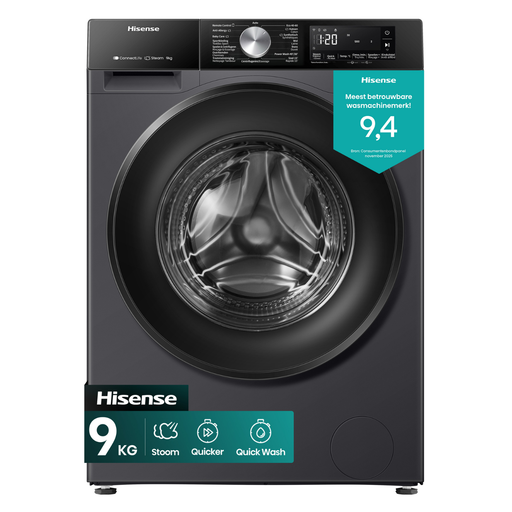
The stated capacity of 9 kg makes this model worth comparing for larger seasonal loads that can be washed together after sorting.
The product details list a steam function and quick-wash function. The maximum spin speed is 1400 rpm.
 No image available
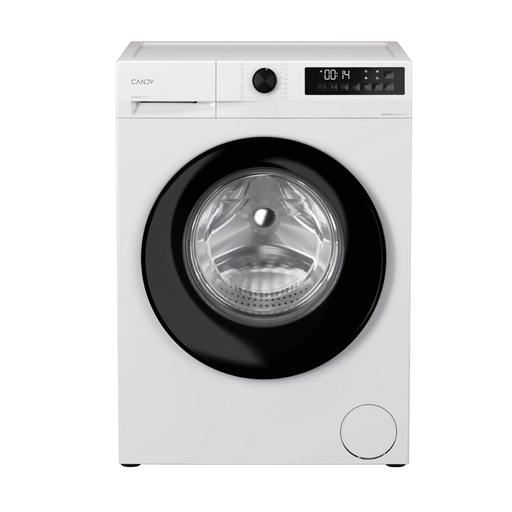
With a stated capacity of 9 kg, this model is worth comparing for larger loads that can be washed together after sorting.
The product details list 16 programmes, a steam function and a maximum spin speed of 1351 rpm. The stated depth is 601 mm.
 No image available
The stated capacity of 8 kg is a useful comparison point for medium-sized, sorted loads when changing over your wardrobe.
The product details list 16 programmes, a steam function and a maximum spin speed of 1351 rpm. The stated depth is 601 mm.
No. Check the care label to determine how to treat each garment. GINETEX explains that the temperature on the label indicates a maximum, not a required setting. Also look out for delicate components and finishes.
Follow the model’s instructions and place it on a flat, stable surface. Remove the transit bolts before use, connect the water supply and drain correctly, and use an earthed socket. The Consumers’ Association (Consumentenbond) also recommends levelling the machine.
Follow the machine’s maintenance instructions and measure detergent according to the directions. The Consumers’ Association (Consumentenbond) warns that using too much detergent can contribute to build-up in the machine; a maintenance wash doesn’t mean you can wash waterproof layers at high temperatures.
According to the Dutch government (Rijksoverheid), you’re entitled to a product that meets the terms of the agreement, and you should contact the retailer if there’s a fault. The appropriate remedy depends on the fault and the circumstances; your statutory rights are separate from any manufacturer’s warranty or extended warranty.
For domestic washing machines covered by EU rules, energy labels have run from A to G since 1 March 2021. The European Commission says the label shows, among other things, energy consumption per 100 cycles and water consumption per cycle; class A isn’t the legal minimum for every machine.