
A laundry area with limited width
You want to load the drum without needing space for a door at the front. Check that the top lid can open fully; the Consumentenbond describes top-loaders as narrower than front-loaders.


A top-loading washing machine is worth considering if space is limited widthways; a shallow front-loader may work if depth is the main constraint. The Consumentenbond also recommends allowing room for hoses and the door or lid. Choose a capacity that suits both your usual laundry and your bags, and follow the care label on each bag. Milieu Centraal advises against buying a machine that is too large, while YAYA recommends checking the garment’s care label.
You want to load the drum without needing space for a door at the front. Check that the top lid can open fully; the Consumentenbond describes top-loaders as narrower than front-loaders.
You have room for a front-loader widthways, but need to check the appliance depth, space for connections and clearance for the door. The Consumentenbond recommends allowing room for hoses and the door, too.
You want to choose the capacity and programmes to suit your usual laundry, not just an occasional load of bags. Milieu Centraal advises against buying a washing machine that is larger than you need.
Choose this when: width is limited and the lid can open freely above the machine. The Consumentenbond describes top-loaders as narrower than front-loaders.
Bear in mind: you need clear space above the machine; a top-loader won’t fit under a fixed worktop.
Choose this when: there’s enough room for the width and opening door, but depth is tight. Haier lists the HW80-BP14929A-S as measuring 595 × 477 × 850 mm.
Bear in mind: the stated appliance depth doesn’t automatically include space for hoses and the door to open; the Consumentenbond recommends measuring for these, too.
Choose this when: there’s room for a front-loader, including connections and clearance for the door, and you’ll also use it for everyday household laundry.
Bear in mind: the Consumentenbond gives the typical width of front-loaders as around 60 cm; a large drum won’t necessarily suit smaller loads.
| What to consider | What should you check? | Who is this important for? |
|---|---|---|
| Positioning and opening | Measure the width, height and depth, and allow for connections and the space needed for the door or lid to move. | I want to know in advance whether the machine will really fit in my laundry area and open properly; around 40% of consumers put placement first. |
| Capacity | Compare the stated capacity with your usual household laundry and check the permitted load for the programme. | I want to wash the bags without considering capacity separately from my everyday laundry; around 30% of consumers prioritise suitable load sizes. |
| The bag’s care instructions | Read the label, including any instructions for prints or handles, and compare them with the programmes and temperature settings. | I want to know which programme suits my particular bags before washing them; around 20% of consumers put bag care first. |
| Consumption for your routine | Compare the energy label for Eco 40-60 and check the manual for other programmes. | I want to assess consumption for the wash programmes I expect to use; around 10% of consumers prioritise running costs. |
A machine may look as though it will fit on paper, but there might not be enough room for the hoses or door. The Consumentenbond recommends allowing for connections and door clearance, too.
Measure the available space at several points and check the installation dimensions and opening clearance for the exact model.
The lid opens upwards, so the Consumentenbond says a top-loader isn’t suitable for installation under a worktop.
Choose a top-loader only if there’s enough clear space above the machine for the lid to open.
The load affects consumption per kilogram. The energy label describes the Eco 40-60 cycle and doesn’t automatically indicate consumption for other programmes.
Choose a capacity that suits your usual laundry and check the manual for the consumption of programmes you use often. Milieu Centraal advises against buying a machine that’s larger than necessary.
The TW 6521S SENSE WASH BE is a top-loader with stated dimensions of 40 × 60 × 90 cm. Whirlpool Netherlands lists a capacity of 6.5 kg in its technical specifications.
Haier Netherlands lists the HW80-BP14929A-S as 595 mm wide, 477 mm deep and 850 mm high, with a capacity of 8 kg.
Bosch Netherlands lists the WGE02400NL with a capacity of 7 kg and a maximum spin speed of 1400 rpm.
This selection focuses on standard front-loaders for anyone who wants to use their machine for everyday household laundry as well as cotton shopping bags.
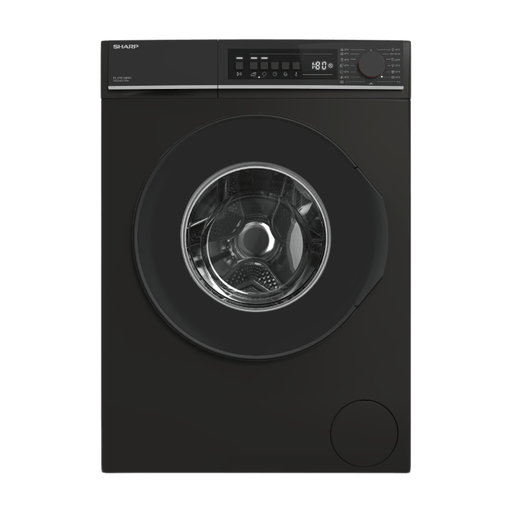 No image available
A standard front-loader to consider if you’re looking for a machine for everyday laundry as well as bags.
The product name lists 7 kg, 1400 rpm, energy rating A, an inverter motor and a black finish.
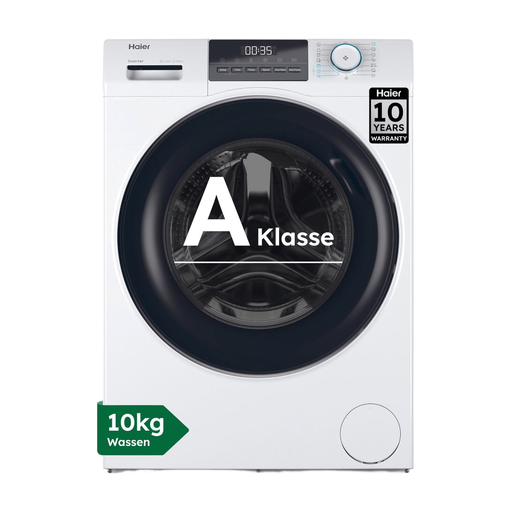 No image available
A standard front-loader to compare if you also want to use the machine for household laundry; check that its capacity suits your usual loads.
The product name lists 10 kg, 1400 rpm, an inverter motor, ABT, 70 dB and Steam.
 No image available
A standard front-loader to consider if you’re looking for a capacity that suits your usual laundry.
The product name lists 7 kg, 1400 rpm, energy rating C, 15 wash programmes and a silver finish.
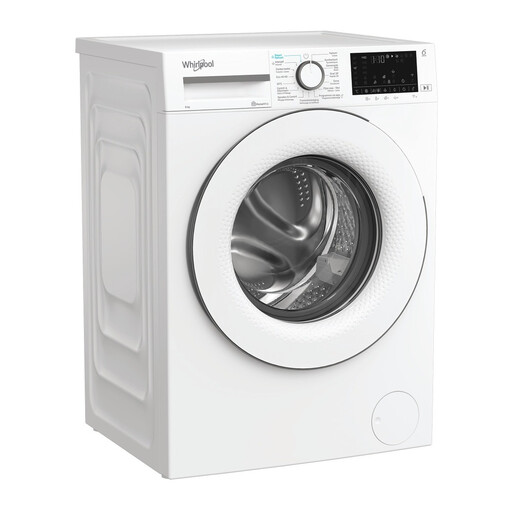 No image available
A standard front-loader to include in your comparison if there’s enough room for the door and connections.
The product name lists 7 kg and 1200 rpm.
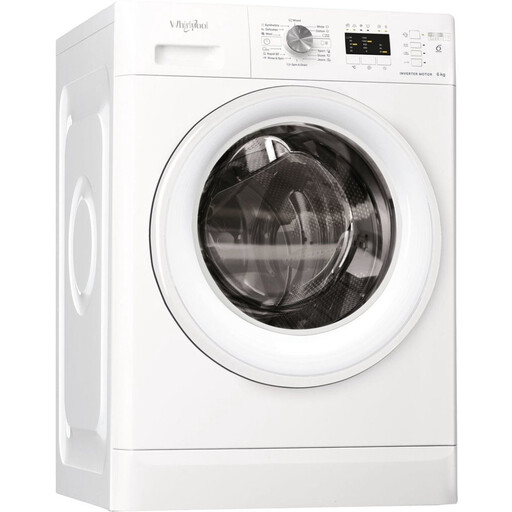 No image available
A standard front-loader to compare if 6 kg suits your household laundry and the machine fits in your laundry area.
The product name lists 6 kg and 1200 rpm.
No, the material alone doesn’t determine how a bag should be washed. YAYA recommends following the care label on the specific bag, even if general advice for cotton suggests otherwise.
Not necessarily. According to Electrolux, Eco 40-60 is the programme name and the temperature can’t be selected separately for the programme described. Check the manual for the exact model.
Measure the machine itself, but also allow for connections and space for the door or top lid. Follow the manual, too: Bosch recommends, among other things, installing the machine on a stable surface, using an earthed socket and removing the transit bolts before use.
No, the energy label doesn’t show the consumption of every programme. Energielabel.nl explains that the label relates to Eco 40-60; check the machine’s manual for other programmes.
No, the label doesn’t show water consumption for every individual programme. Energielabel.nl provides label information for the specified cycle; check the manual if you often use another programme.