
Reusable shopping bag users
You want to wash your bags according to their care labels, while allowing for possible shrinkage and small loads.


Choose a drum capacity that suits your usual shared wash, and always follow the care label on your shopping bags; a larger drum is not an advantage just for washing a few bags. In a shared utility room, also check the available space and connections, water protection and the spin noise level of the specific model.
You want to wash your bags according to their care labels, while allowing for possible shrinkage and small loads.
You take noise, vibration, installation and the potential impact of leaks on others into account when choosing a machine.
You want a machine that can handle users' everyday laundry too, without choosing a drum that is unnecessarily large for your needs. Milieu Centraal and the Consumentenbond recommend matching the drum capacity to the loads you actually wash.
Start with the care label and the loads you usually wash. Then assess the connections, water protection and spin noise level of the specific model.
| Consideration | What to look for | Who is this important for? |
|---|---|---|
| Bag care and drum capacity | Check the care label, the available cotton and delicates settings, and the maximum drum capacity. Also weigh a typical shared load. | If I want to wash cotton bags without overlooking their care instructions or the size of my usual load, the combination of programme and drum capacity matters; around 33% of consumers prioritise bag care and a suitable drum capacity. |
| Water protection | Check which protective features the exact model has and whether the water inlet, drain and installation space are suitable. | If I share a machine with others, I want to know which features can help limit leaks and what they protect against; around 27% of consumers put reducing the risk of leaks first. |
| Noise and installation | Compare the stated spin noise level for each model, and check the floor, available dimensions and stability of the installation. | If the utility room is next to spaces used by others, I want to take noise and vibration into account before choosing a machine; around 20% of consumers prioritise noise and a stable installation. |
| Consumption | Compare energy and water figures on the same label basis; the energy label does not automatically show the consumption of every individual programme. | If the machine is also used regularly for everyday shared laundry, I want to take running costs into account rather than looking only at programmes for bags; around 20% of consumers prioritise consumption. |
A higher capacity is not automatically useful if you usually wash small loads. For cotton, the Consumentenbond recommends filling the drum properly.
Weigh a typical shared load before choosing the drum capacity.
Protection against problems with the inlet hose, leaks inside the machine and overflow does not necessarily address the same risks.
Check which water protection features each model has and how the machine should be connected.
The energy figures on the label are based on eco 40-60. A bag's care label may require a different programme.
Follow the care label on the bag and compare label figures on the same basis; check separately for any information about the programme you actually use.
The BM3WFU38412CW is a freestanding front-loader with an 8 kg capacity and cotton and delicates programmes.
The Serie 4 WAN2827DNL is a freestanding front-loader with an 8 kg capacity and a maximum spin speed of 1400 rpm.
According to Miele, the W1 WEC388 WCS is a front-loader with an 8 kg capacity and a spin speed of up to 1600 rpm.
The iQ300 WM14N27DNL is a freestanding front-loader with an 8 kg capacity and a maximum spin speed of 1400 rpm.
These models are freestanding front-loaders for households that wash everyday shared laundry as well as bags; check that the capacity suits your needs.
 No image available
The product information lists cotton and delicates programmes and AquaStop; check whether the stated water protection is suitable for your shared space.
Freestanding front-loader; 8 kg; 1400 rpm. The product description lists 72 dB during spinning and 42 kWh per 100 cycles.
 No image available
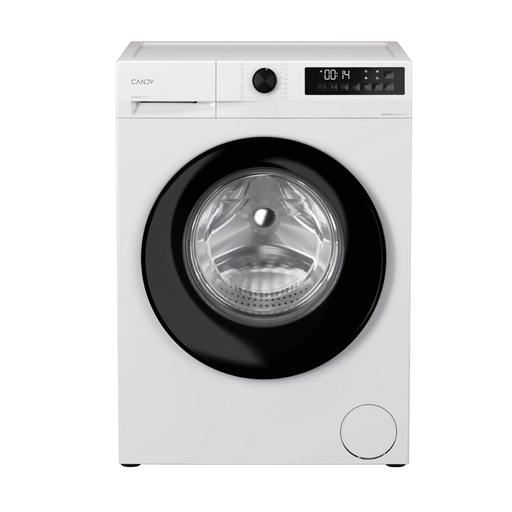
The stated 9 kg capacity may be useful if you regularly wash larger shared loads; weigh a typical load to see whether that capacity is right for you.
Freestanding front-loader; 9 kg; 1351 rpm; 16 programmes. The product information lists 69 dB(A) during spinning and 40 kWh per 100 eco 40-60 cycles.
 No image available
The 8 kg capacity is worth considering for shared laundry as well as bags; compare it with the loads you usually wash.
Freestanding front-loader; 8 kg; 1351 rpm; 16 programmes. The product information lists 69 dB(A) during spinning and 33 kWh per 100 eco 40-60 cycles.
 No image available
According to the product information, this model has cotton and delicates programmes; follow the care label on each bag.
Freestanding front-loader; 8 kg; 1400 rpm; energy class A. Beko lists 76 dBA during spinning; the product information states 47 kWh per 100 cycles.
 No image available
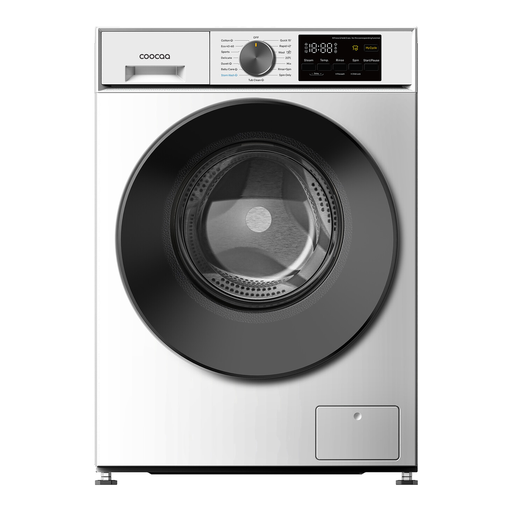
The 8 kg capacity and programme information can help you compare this model with your everyday shared laundry; check that the available settings suit the care labels on your bags.
Front-loader; 8 kg; 15 programmes. The product title lists a 15-minute quick wash programme.
No. Do not choose the temperature based on the material alone. Check the care label on the specific bag, as the recommended temperature and treatment can vary from bag to bag.
Check that the machine fits and that the water inlet, drain and electrical connection are suitable. Bosch recommends a stable surface and an earthed socket for its machines; also agree on the installation and use with whoever manages the space.
The EU energy label includes information such as energy consumption per 100 cycles, water consumption per cycle and noise. The energy figures are based on eco 40-60 and do not automatically predict the consumption of a short or delicates programme.
Contact the seller. According to the Dutch government, when you buy as a consumer you have statutory rights in addition to any manufacturer's warranty; the seller must provide a solution if something goes wrong.
Household washing machines are subject to EU energy labelling and ecodesign requirements. The European Commission sets out the applicable product requirements; check the information for the specific model and do not treat an old A+++ label as its current energy class.