What should you look for?
Start with the care label, then work out the size of your usual shirt load and measure the space and route to the shared laundry room. This helps you compare models based on what you actually need, rather than just the maximum load capacity.
| What to consider |
What should you check? |
Who is this important for? |
| Shirt care |
Check the temperature, spin speed and permitted load for the programme against the care labels. |
If I wash printed shirts, I want to match the treatment to the fabric and print. Around 28% of consumers prioritise shirt care. |
| Space and disruption |
Measure the space, access route and doorway. Also check the connections and whether the floor is stable. |
If I share a laundry room, the machine needs to fit and be usable without causing unnecessary disruption to others. Around 22% of consumers prioritise installation. |
| Capacity for team washing |
Weigh a typical sorted load and check the capacity of the programme you plan to use. |
If I wash a team’s shirts together, I want to know how many will fit in each suitable wash. Around 22% of consumers prioritise the size of the shirt load. |
| Machine availability |
Compare the duration and permitted load of the programme you want, and coordinate use with other users. |
If several people use the laundry room, I want to be able to plan when a programme will finish and the machine will be available again. Around 17% of consumers prioritise cycle time. |
| Energy use and service |
Check the energy label and product information sheet, and find out which installation and service terms apply. |
If I use the machine often, I want to take energy-use information and after-sales support into account. Around 11% of consumers prioritise energy use and service. |
The energy label helps you compare labelled information, but it doesn’t tell you how much a specific programme will use to wash your shirts. A larger drum isn’t automatically the better choice either if you usually wash small loads.
Washing machines at Joybuy
These Joybuy models give you a starting point for weighing up programmes, drum capacity and available space when washing club shirts. Before choosing, check that the programme you need is suitable for the care labels and your usual load.
 No image available
Samsung WW90DG6U25LE, 9 kg, 1400 rpm
Compare the programme load with your sorted shirt load. The 9 kg rating isn’t automatically a guide to synthetic washing capacity.
The product name also lists AI Ecobubble™, SuperSpeed, Wi-Fi and an energy rating of A.
View at Joybuy
 No image available
Midea MF110W80BA10/W-NL, 8 kg, 1400 rpm
If you want to compare programmes for delicate fabrics, check whether the available settings match the care labels on your shirts.
The product name lists 16 wash programmes.
View at Joybuy
 No image available
Comfee CFP01EW70W-JD, 7 kg, 400 mm deep
This model may be worth comparing if depth is a key constraint. Measure the space, including the clearance needed for connections.
The product name lists a 7 kg capacity and a 400 mm-deep design.
View at Joybuy
 No image available
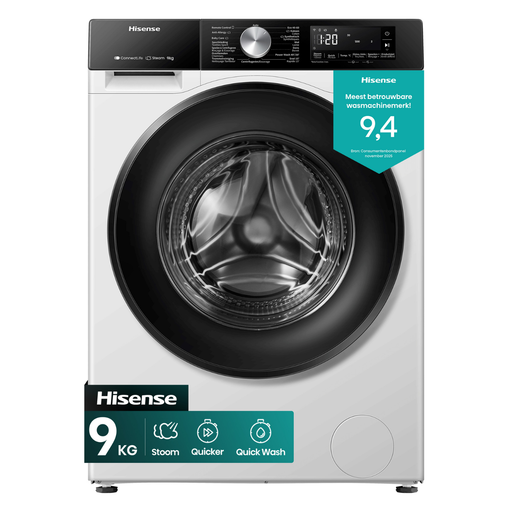
Hisense WF3S9045BW3/BLX, 9 kg, 1400 rpm
For a larger combined load, it’s important to check the capacity of your chosen programme, not just the nominal load capacity.
The product name lists 9 kg and 1400 rpm. Check whether the stated maximum temperature of 30 °C for a full load is suitable for the care labels you’re following.
View at Joybuy
 No image available
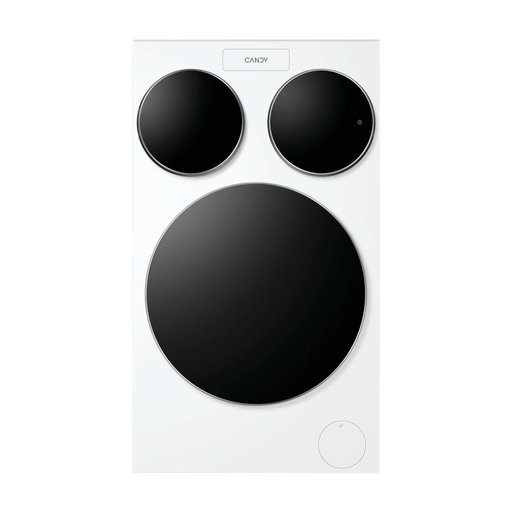
Candy MQD 410CBL9-S, three drums
The multi-drum layout may be worth comparing if you want to treat different loads separately. Check whether the individual drums suit your washing routine.
The product name lists a capacity of 10+1+1 kg, 1330 rpm and an energy rating of A. The stated height is 1070 mm; measure the available space.
View at Joybuy
Frequently asked questions
Can every machine-washable club shirt go on Eco 40-60?
No. According to the Consumers’ Association, Eco 40-60 is intended for normally soiled cotton that can be washed at 40 or 60 °C according to its care label. Follow the shirt’s own care label and check that the programme is suitable for the material.
How can you protect names and numbers when washing?
Start by checking the shirt’s care label. Nike recommends washing jerseys inside out, using a low spin speed and avoiding the tumble dryer, among other things. These are Nike’s recommendations, not universal instructions for every club shirt.
What should you check before installing a machine in a shared laundry room?
Measure the machine, access route and available space. Bosch recommends a stable surface, accessible water supply and drainage, an earthed socket, and removing the transit bolts before use. Also check the arrangements with whoever manages the room.
What energy-use information should be available for a new washing machine?
According to the Dutch Government, washing machines must have an energy label. It shows an energy rating from A to G and information about water use. Use this data to compare models, but don’t treat it as a measurement of the specific programme you choose for shirts.
Is the statutory warranty in the Netherlands always exactly two years?
No. The Dutch Government states that the Netherlands has no fixed statutory warranty period: what you can reasonably expect from a product depends, among other things, on the product itself. If a product is faulty, the retailer is your point of contact; any manufacturer’s warranty is in addition to this.


