
Shirts ready in time
You want to wash a small load before a family visit and need to know how many shirts the quick programme can handle. For example, Bosch specifies a limit of 3.5 kg for SuperKort 30’ on the WUU28T20NL.


First, choose a programme that suits the care label on your club shirts. Then check whether the permitted load and programme duration fit the time you have before your family visit. A quick programme can be useful for a small, lightly soiled load, but the drum capacity, energy use and extra features should mainly suit your everyday laundry.
You want to wash a small load before a family visit and need to know how many shirts the quick programme can handle. For example, Bosch specifies a limit of 3.5 kg for SuperKort 30’ on the WUU28T20NL.
You prioritise the care label, fabric and delicate details over the shortest wash time. The Consumers’ Association explains that the label indicates the appropriate temperature and how gentle the programme should be.
You’re not buying just for this load; you want a drum that suits your usual laundry. The Consumers’ Association advises choosing a large washing machine only if you can generally fill it.
Start by checking the care labels, then work out how much time you have, including drying. Next, compare the programme’s load limit with the number of shirts and choose a drum size that also suits your everyday laundry.
| What to consider | What should you check? | Who is this important for? |
|---|---|---|
| Programme time and load | Check the duration and maximum load for the specific quick programme. Leave enough time for the shirts to dry, too. | If I need the shirts clean before visitors arrive, I want to know whether my load is within the programme limit. Around 33% of consumers prioritise time and load size. |
| Fabric and shirt details | Follow the care label and check the temperature, suitable programme and corresponding load limit. | I don’t want to put unnecessary strain on the fabric or any details, so I choose based on the care label first. Around 27% of consumers give shirt care top priority. |
| Drum capacity for everyday laundry | Compare your usual load with both the rated capacity and the limit for the programme you use. | If I’m also buying the machine for the rest of the household, the drum needs to suit the laundry I do regularly. Around 20% of consumers focus mainly on household capacity. |
| Energy use and installation space | Check the energy label and dimensions. Measure the space where the machine will go and the route to get it there. | I want to know that the machine will fit and suit my everyday needs, not just one load of shirts. Around 20% of consumers mainly consider energy use, installation space and the practicalities of buying. |
The permitted load can vary from one programme to another. For example, Bosch specifies a maximum of 3.5 kg for SuperKort 30’ on the WUU28T20NL, even though the machine has a rated capacity of 8 kg.
Check the manual for the maximum load of the programme you want to use.
The care label tells you the maximum temperature and how gentle the wash needs to be. A quick cycle doesn’t change those requirements.
Sort the shirts by care label and fabric, then choose a suitable programme that fits the time you have.
The European Commission describes the EU energy label scale for washing machines as a comparison based on standardised conditions. The energy used for an individual wash also depends on the programme selected and the size of the load.
Compare the energy label for regular washing and check the conditions for the quick programme separately.
For the Dutch market, Bosch lists the WUU28T20NL as a front-loading washing machine with an 8 kg capacity and SuperKort 30’ for loads of up to 3.5 kg.
Samsung describes the Dutch-market WW90DG6U25LEU3 as a 9 kg front-loading washing machine with SuperSpeed and energy rating A.
According to Beko, the BM3WFT3841W has a rated capacity of 8 kg and a programme called Daily Xpress / Xpress Super Short 14 min.
Miele describes the WSJ883 WCS PWash&TDos&Steam as a 9 kg front-loading washing machine with automatic detergent dispensing and QuickPowerWash.
These Joybuy washing machines offer a range of quick programmes or programmes for delicate fabrics, as well as capacity for everyday household laundry. For club shirts, always follow the care label first and check the load limit and conditions for the programme you choose.
 No image available
Could suit you if you wash everyday household laundry as well as shirts. Check the full model number and the programme’s load limit for shirts.
Listed features: 9 kg, 1400 rpm and SuperSpeed.
 No image available
Could suit you if you’re looking for one machine for both club shirts and everyday laundry. Check that the programme you choose suits the care label and the number of shirts.
Listed features: 8 kg, 1400 rpm and 16 wash programmes.
 No image available
Could suit you if you’re also considering quick cycles, but only choose one if the shirts’ care labels and level of soiling allow it.
Listed features: 8 kg, 1351 rpm and energy rating A. The quick cycles listed range from 14 to 59 minutes; check which one suits your needs.
 No image available
Could be worth considering if you’re looking for a quick cycle, but Daily Xpress is designed for lightly soiled laundry. Check whether it’s suitable for your shirts.
Listed features: 8 kg, 1400 rpm and energy rating A.
 No image available
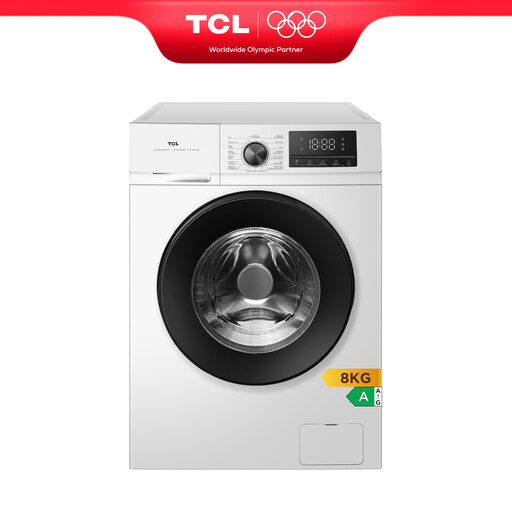
Could suit you if a quick cycle is suitable for the shirts according to their care labels. The Quick 15’ cycle is designed for lightly soiled everyday laundry.
Listed features: 8 kg, 15 wash programmes and Quick Wash 15 min.
No. Follow each shirt’s care label for the maximum temperature and how gentle the wash needs to be. Also check the maximum load for the quick programme you choose.
Not necessarily. According to the European Commission, eco 40-60 is intended for normally soiled cotton laundry that can be washed at 40 or 60 °C according to its care label. For synthetic shirts, check their labels first and choose a suitable programme.
Measure the space where the machine will go and the route to get it there, then compare these measurements with the dimensions of the exact model. Check separately with the seller what delivery, connection and removal of your old machine include.
Contact the seller. According to the Dutch government, the seller must provide a product that works properly and offer an appropriate solution if it is faulty, such as a free repair or replacement. They cannot simply refer you to the manufacturer.
Yes. The Dutch government lists washing machines among the appliances that must have an energy label. According to the European Commission, the scale for household washing machines has run from A to G since 1 March 2021; this doesn’t mean you have to choose class A.