First, measure the available space and allow room to open the machine’s door or lid. If width is limited, a top-loading machine may fit; if depth is the main constraint, a shallower front-loader could be an option. Then choose a programme and settings that suit your shirts’ care labels, and balance drum capacity against how much laundry you usually wash at once.
Who is this guide for?
People with a narrow alcove
If you have limited width or opening space, you’ll want to know whether a top-loader will fit without sacrificing useful space above the machine. The Consumers’ Association describes top-loaders as narrower than standard front-loaders.
People washing printed club shirts
If you wash shirts with logos, names or numbers on the back, you’ll want to choose the temperature and programme to suit the care label. Nike recommends checking the label inside a jersey.
People washing several kits
If you regularly wash several shirts or other laundry together, you’ll need to balance the drum capacity you want against the space available. The Consumers’ Association also recommends checking the load capacity for each programme.
What should you look for when buying?
Narrow top-loader
Suitable for: a space where width is the main constraint and the lid can open fully.
Bear in mind: the space above the machine and its smaller drum. The Consumers’ Association presents test results for top-loaders as a group; these are not test results for a specific model.
Shallower front-loader
Suitable for: a space with enough width but limited depth. Beko lists the BM3WFU3741S as 49,6 cm deep and 60 cm wide.
Bear in mind: the space needed for hoses and the open door. Also check the exact version and product information sheet.
Standard front-loader
Suitable for: a space that can accommodate a larger machine, especially if you regularly wash several shirts or other laundry together. The Bosch WGJ23400NL is one example, with an 8 kg capacity.
Bear in mind: the width and depth required. A larger drum isn’t necessarily convenient if you usually do small loads.
Washer-dryer
Suitable for: a situation where there’s no room for a separate tumble dryer either, provided the care labels allow tumble drying.
Bear in mind: a drying function won’t help with shirts whose care labels say not to tumble dry. Milieu Centraal says a washer-dryer uses more energy than washing and drying separately.
For people who want to wash club shirts at home but have limited space, four priorities can help guide your choice:
| Priority |
What should you check? |
Who is this important for? |
| Dimensions and access |
Measure the space at several points and allow for the hoses and the door or lid to open fully. |
If my alcove is narrow, I want to know whether the machine will fit and still be easy to access. Around 36% of consumers prioritise dimensions and access for this reason. |
| Shirt care |
Read the care label and check whether the programme, temperature and spin speed can be adjusted accordingly. |
For printed shirts, I want to be able to wash the fabric and print according to the garment’s own care label. Around 29% of consumers prioritise suitable shirt care. |
| Capacity per wash |
Work out how many shirts and other items you usually wash together, and check the load capacity for your chosen programme. |
If I regularly wash several kits together, I want the drum capacity to suit that. Around 21% of consumers prioritise the amount of laundry they can wash in one load. |
| Energy use and aftercare |
Compare EU label figures on a like-for-like basis and read the terms for servicing and any additional warranty. |
If energy use and aftercare are my main considerations, I want to weigh them up alongside fit and wash programmes. Around 14% of consumers prioritise energy use and aftercare. |
Things to watch out for when buying
-
Measuring only the alcove
A machine may look as though it will fit on paper, but hoses, an open door or the space above a top-loader could make installation or access difficult.
Measure the full operating space and check where the connections and the door or lid will be.
If the machine blocks the way, the space around your laundry area may become less useful.
-
Using the maximum load for every programme
The maximum capacity doesn’t automatically apply to every programme. The Consumers’ Association notes that mixed and synthetic programmes have a lower load capacity than the cotton programme.
Compare the permitted load for each programme with the number of shirts you usually wash.
If the permitted load is smaller, you may need to split your washing across more loads.
-
Choosing a drying function without checking the care labels
A drying function isn’t suitable for shirts whose care labels advise against tumble drying. Milieu Centraal says a washer-dryer uses more energy than washing and drying separately.
First check which clothes can actually go in the tumble dryer.
-
Assuming the same model number means the same version
For the Beko BM3WFU3741S, the listed colour and energy class differ between the manufacturer’s specifications and the Joybuy listing; the listing’s title and description also don’t match.
Ask for confirmation of the exact version and its product information sheet before making a decision based on those details.
Relevant brands to consider
AEG
The AEG LTR6162K is a top-loader that is 397 mm wide, with a 6 kg capacity. AEG lists programmes including Sport and Synthetics.
- Its narrow width may be useful if space in your alcove is limited.
- The lid needs room to open above the machine. The model specifications don’t prove that this machine washes club shirts better.
Beko
Beko lists the BM3WFU3741S as having a 7 kg capacity, a width of 60 cm, a depth of 49,6 cm and a programme for synthetic fabrics.
- Its stated depth may be useful if depth is the main constraint in your space.
- Before buying, confirm the exact version and product information sheet: the manufacturer’s specifications and the Joybuy listing differ on colour and energy class.
Bosch
The Bosch WGJ23400NL is a standard front-loader with an 8 kg capacity and dimensions of 598 mm wide by 590 mm deep.
- Its capacity may suit you if you regularly wash several shirts or other laundry together.
- Check that your available space is large enough; a bigger drum isn’t automatically useful for small shirt loads.
Washing machines at Joybuy
These Joybuy products are freestanding front-loaders, with a range of drum capacities and programmes for different types of laundry.
 No image available
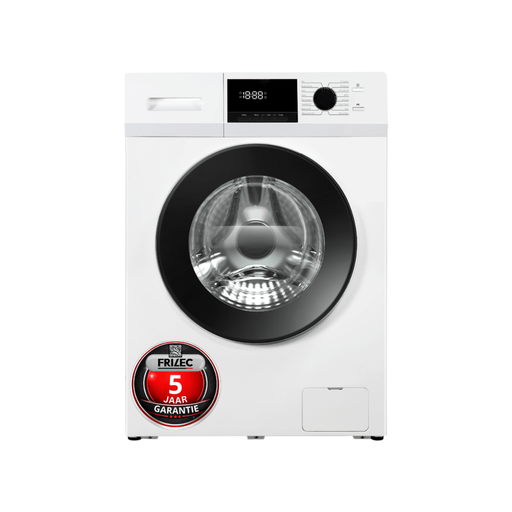
Frilec KOBLENZ8314WA-342
The product information lists a blouse and shirt programme, as well as adjustable temperature and spin speed. Set these to suit the care label.
8 kg capacity; 16 programmes, including programmes for delicates, silk and sportswear.
View at Joybuy
 No image available
Beko BM3WFU3741S
The listed programmes for shirts, synthetic fabrics and delicates offer different options; always follow each shirt’s care label.
7 kg capacity; 60 cm wide and 49,6 cm deep according to Beko; spin speed up to 1400 rpm. Check the exact version and product information sheet, as the listed colour and energy class differ.
View at Joybuy
 No image available
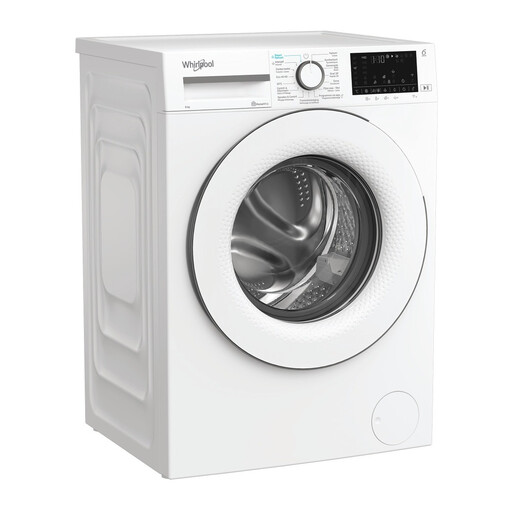
Whirlpool WAM 87W BE
The programme list includes Sport, Synthetics, Delicate and Hand Wash/Wool. Choose a programme that suits the care label.
7 kg capacity; the product information lists automatic adjustment to the load.
View at Joybuy
 No image available
Comfee' CFP01EW70W-JD
The product information lists 16 programmes for different types of laundry; follow the care label to choose a suitable option.
7 kg capacity; 400 mm deep according to the product information. The quick wash is designed for lightly soiled, small loads.
View at Joybuy
 No image available
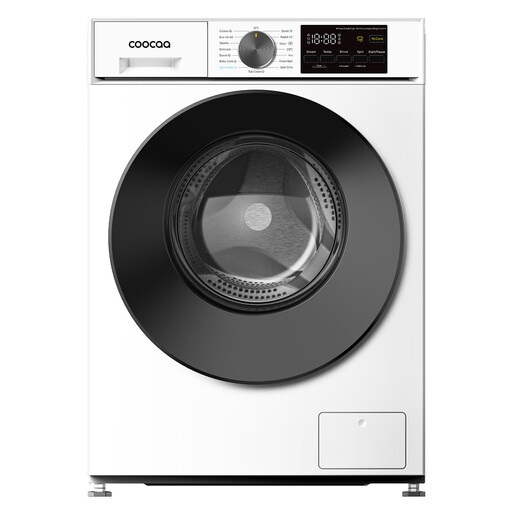
Coocaa Galaxy A3 Series F702A3AВC0
The product information lists 15 programmes, including Quick Wash, and temperature settings. Check they’re suitable for your shirts’ care labels.
7 kg capacity; 47 cm deep according to the product description; spin speed 1200 rpm.
View at Joybuy
Frequently asked questions
Can I simply choose Eco 40-60 for printed club shirts?
No, not based on the programme name alone. According to the European Commission, Eco 40-60 is intended for normally soiled cotton that can be washed at 40 °C or 60 °C according to its care label. Follow each shirt’s own label and choose a suitable programme and settings.
What should I check when installing the machine?
Measure the alcove at several points and allow for hoses and an open door or lid. Level the machine according to the installation instructions. Brandweer Nederland recommends plugging high-power appliances directly into a socket rather than using a cable reel or extension lead.
Do club shirts need to go in the tumble dryer to save space for an airer?
Not if the care label advises against tumble drying. For the jerseys discussed, Nike generally recommends avoiding the tumble dryer. A washer-dryer won’t solve a lack of drying space for shirts that shouldn’t be tumble-dried.
How can I compare electricity and water consumption?
Compare the EU energy label figures on a like-for-like basis: the label shows, among other things, energy use per 100 cycles and water use per cycle. These figures are based on Eco 40-60; don’t use them to infer the exact consumption of a different shirt programme.
Is the legal guarantee on a washing machine in the Netherlands always exactly two years?
No. According to the Dutch government, there is no fixed statutory guarantee period in the Netherlands; what you can expect from a product depends on factors including the type of product, its price and the seller’s statements. If a product is faulty, contact the seller; any extra guarantee you buy is in addition to your statutory rights.


