
Owner of printed club shirts
You wash shirts with names, numbers or logos and want to choose settings that match the care label. For jerseys, Nike Netherlands recommends checking the label before choosing washing and drying settings.


Choose a washing machine that suits your usual loads and lets you follow the care instructions on the garment label. A larger capacity or a sports programme is not automatically a better fit: compare the options for smaller loads too, and check the care instructions for each printed shirt. Nike Netherlands recommends using the garment label as your guide.
You wash shirts with names, numbers or logos and want to choose settings that match the care label. For jerseys, Nike Netherlands recommends checking the label before choosing washing and drying settings.
You may wash shirts separately when the season changes, but you also use the machine for everyday laundry. That makes a drum suited to your usual loads, with options for smaller loads, an important consideration.
You want to wash club shirts without losing sight of the size of your usual laundry loads. The Consumers’ Association and Milieu Centraal recommend choosing a drum capacity that suits the loads you normally wash.
Let the care label determine how a shirt should be washed, then compare the capacity with your everyday laundry. Nike Netherlands offers washing advice for jerseys, while the Consumers’ Association and Milieu Centraal cover choosing a suitable drum capacity.
| Concern | What to look for when buying | Who is this important for? |
|---|---|---|
| Care for printed shirts | Check which temperatures and spin speeds you can set, and whether the programmes suit the care label. A programme’s name alone does not prove that it is suitable. | If you wash shirts with names, numbers or logos, you’ll want to tailor the wash to each label. Around 37% of consumers put shirt care first. |
| Capacity for everyday and smaller loads | Compare the capacity with your usual laundry and check the load limit for the programme you want to use for shirts. The Consumers’ Association recommends choosing a large drum only if you can fill it. | If you mainly do regular household laundry as well as washing shirts, you’ll want a drum that suits those loads. Around 27% of consumers give suitable capacity top priority. |
| Energy use with your wash programmes | Use the kWh figure per 100 eco cycles to compare the energy labels, and consult the manual for other programmes. Energielabel.nl explains that the label’s energy consumption is based on eco 40-60. | If you want to know how much energy your usual programmes use, you’ll need to compare more than just the label figure. Around 18% of consumers prioritise energy use. |
| Space and installation | Measure the available space and allow room to open the door. Before ordering, check what needs to be arranged for delivery, connection and removal of an old appliance. | If space is limited, you’ll want to make sure the machine fits where you plan to put it and is practical to use. Around 18% of consumers start by considering space and the practicalities of buying. |
The programme name doesn’t tell you whether its temperature and washing action are right for a particular shirt. The care label is what matters.
Check the label on each shirt and make sure you can select the recommended settings on the machine.
An occasional load of shirts may not reflect how you usually fill the machine. So a larger drum isn’t automatically a better fit for your everyday laundry.
Compare the capacity with your usual loads and with the maximum load for the programme you want to use for shirts.
Energielabel.nl explains that the energy consumption shown on a washing machine’s label is based on eco 40-60 and does not show the consumption of other programmes.
Compare the eco 40-60 figure on the label, and check the model’s manual for programmes you often use for shirts.
The AEG 6000 ProSense LF6286BB4 is an 8kg model with programmes for delicates and synthetics. You can compare its programme options and drum capacity with your shirt labels and everyday loads.
According to Bosch, the Bosch Serie 6 WGG244FSNL has a capacity of 9 kg. Its listed features include i-DOS and water adjustment for smaller loads.
According to Miele, the Miele W1 WSJ883 WCS PWash&TDos&Steam combines a 9 kg capacity with automatic dosing and QuickPowerWash.
Washing machines to compare for club shirts and everyday laundry, with a focus on capacity and the settings required by your care labels.
 Image unavailable
The stated 9 kg capacity gives you a starting point for comparing it with your everyday laundry. Check the programme information to see whether the settings suit your shirts’ care labels.
The product name lists AI Ecobubble™, SuperSpeed, Wi-Fi and SmartThings.
 Image unavailable
With its listed 8 kg capacity and ProSense feature, this model is worth comparing for everyday and variable loads. Check which programmes and settings suit your shirts’ care labels.
The product name also lists Anti-Allergy Vapour, an inverter motor and energy class A.
 Image unavailable
The product name lists an 8 kg capacity and 16 wash programmes. Check the settings available for each programme before comparing them with your shirts’ care labels.
The product name also lists a steam function.
 Image unavailable
The 8 kg capacity gives you a basis for comparing it with your everyday laundry. Check whether the programmes and adjustable settings on this model suit your shirts’ care labels.
The product name lists EnergySpin, a ProSmart inverter motor and energy class A.
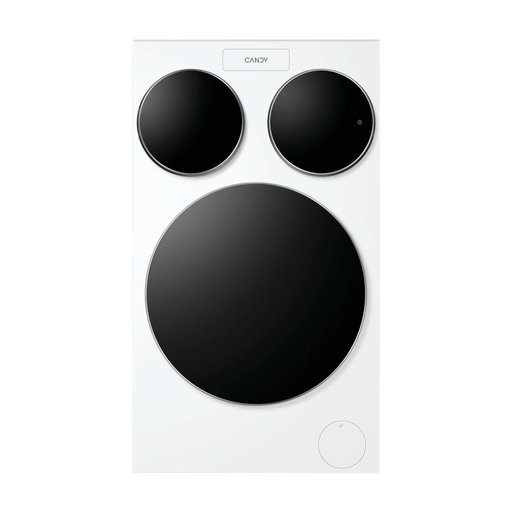 Image unavailable
The product name lists three drums, which may be useful if you want to wash shirts separately. Check how the layout and programmes suit your shirts’ care labels.
The product name lists a maximum spin speed of 1330 rpm and energy class A.
No. Follow the care label on each shirt, especially if it has a print. For jerseys, Nike Netherlands recommends, among other things, washing inside out in cold water on a low spin speed, but advises checking the garment label first.
Not necessarily. What matters is whether the temperature and settings match the care label. A programme called ‘sports’ is not, in itself, proof that it is suitable for a particular printed shirt.
Measure the available space and allow for the door to open. The Consumers’ Association points out that washing machines vary in depth, among other things; also check the installation information for your chosen model to see which connections are needed.
No. Energielabel.nl states that the energy consumption on a washing machine’s label is based on eco 40-60 and does not show the consumption of other programmes. For a different programme, consult the model’s manual.
According to the Dutch government, the seller is responsible for resolving issues with a faulty product; there is no fixed statutory warranty period for all products in the Netherlands. Free take-back of an old appliance when buying a new one is subject to conditions, including the purchase of a similar new appliance by a private individual. Check the conditions when you buy.