
Vandaag of morgen in huis

Kwaliteit gegarandeerd

Welkomstaanbiedingen ontgrendelen: GRATIS bezorging | Tot 80% korting | Gratis 30 dagen JoyPlus-proefperiode
Download de app
Choosing a new washing machine may seem straightforward on paper. Yet households often pay extra for features they rarely use, or only discover after delivery that the appliance does not fit in the space. Terms such as “quiet”, “hygienic” and “energy-efficient” are only meaningful when you check the specifications behind them.
This buying guide helps households, couples and families in the Netherlands choose a suitable front-loading washing machine. You’ll find out what to look for in terms of capacity, energy use, spin speed, programmes and smart features.
A 9 kg washing machine or 10 kg washing machine may sound appealing, but a larger drum also takes up more space. Always check the height, width and depth, including hoses and the door. For a small household, an 8 kg washing machine or a 7 kg model may be more practical. A large drum is particularly useful if you often wash bedding, towels or large loads of clothes.
A washing machine with short wash programmes, such as a 15-minute cycle, is usually intended for lightly soiled clothes or garments that need freshening up. A programme like this is not automatically suitable for a full drum of clothes with stubborn stains. Also check whether the stated cycle time applies to a small load.
A washing machine with a steam function can add extra steam to a programme, but how well it works depends on the temperature, programme duration, load and type of fabric. Claims about reducing bacteria or allergens should be treated as claims made by the brand. According to a brand’s own research or reports, specific percentages may apply under certain test conditions; they do not necessarily apply to every wash at home.
Use this guide as a starting point:
Don’t just look at the maximum load weight. A drum with a diameter of around 530 mm may give clothes more room to move, but the machine’s external dimensions are still key when it comes to installation.
EU energy labels for washing machines range from A to G. Where possible, compare the stated energy use in kWh per 100 wash cycles, rather than looking only at the letter on the label. For example, a model with an A energy rating may have different actual energy use from another model with the same rating.
Ratings such as A-10%, A-15% or A-30% are additional comparisons against the energy class A threshold. Always check what the manufacturer has based the comparison on. According to brands’ own claims, these ratings refer to specific EU reference values; they do not guarantee a fixed amount on your energy bill.
A 1,400 rpm washing machine can spin more water out of clothes than a 1,200 rpm model. This may reduce drying time. Results also depend on the fabric, load and spin-drying efficiency class.
If you live in a flat or do your washing in the evening, check the stated spin noise level in dB(A). On paper, a machine rated at 68 or 69 dB(A) emits less noise than one rated at 76 dB(A). A level floor, correct levelling and removing the transit bolts are just as important for minimising vibration.
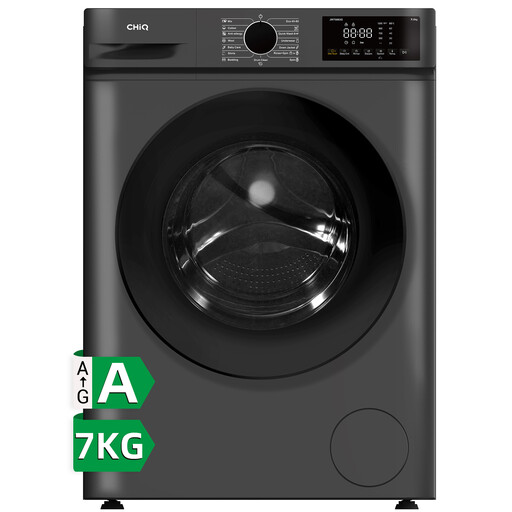
Why it suits this household: Its 7 kg capacity and 47 cm depth make it a practical choice for smaller households and compact laundry spaces.
The product information clearly lists its compact design, 1,200 rpm spin speed and 16 programmes. That means you’re not paying for an oversized drum that you rarely fill.
A energy rating, 16 programmes, a steam function and a stated 12-year motor warranty, according to the product description.

Why it suits this household: A good choice for households looking to combine a 9 kg capacity with app control, short programmes and automatic features.
The specifications list a 15-minute programme and a 39-minute SuperSpeed programme for a small load. This makes it clearer how the machine can be used than simply describing it as “fast”.
9 kg capacity, 1400 rpm, A energy rating, Wi-Fi via SmartThings and a stated spin noise level of 72 dB.
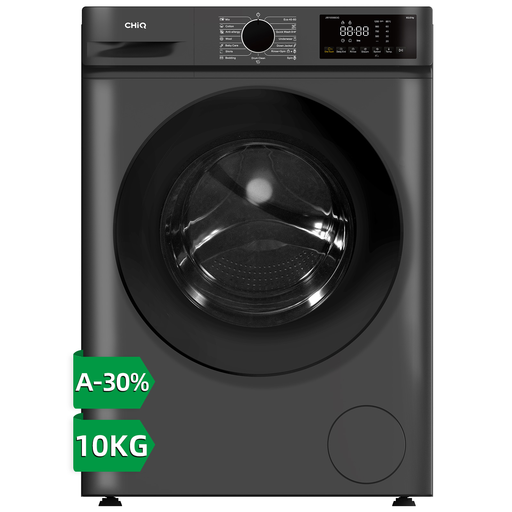
Why it suits this household: The 10 kg drum is designed for families with plenty of washing, bulky items and a preference for doing fewer loads.
The capacity, depth (approximately 52 or 57.7 cm, depending on the product variant) and 1400 rpm spin speed are listed separately. Before buying, check which dimensions apply to the model you’ve chosen.
10 kg capacity, 1400 rpm, 16 programmes, a steam function and an A-30% energy rating according to the manufacturer’s comparison.
We’ve put together a complete, up-to-date list of products that meet these strict selection criteria and the applicable European safety regulations.
For one or two people, 7 or 8 kg is often enough. Families may benefit from 9 or 10 kg, especially for bedding and towels. Also consider how often you do your washing and how much space you have.
No. 1200 rpm may be enough if you air-dry your clothes or don’t often wash heavy fabrics. 1400 rpm is particularly useful if you want to remove as much moisture as possible before drying.
It depends on the energy use per 100 cycles, the price of electricity, the programme you choose and how many loads you wash. Multiply the stated kWh consumption by your current electricity tariff, then divide the result by 100. This gives you a useful estimate per wash. Also consider water use, programme duration and maintenance.
