
Washing wet bags regularly
You often take cotton shopping bags out in the rain and want to be able to wash them with your usual laundry, provided their care labels allow it. Loom Home Textiles recommends checking the label on each bag.


Choose a washing machine to suit your usual laundry load; getting caught in the rain with cotton bags isn’t, on its own, a reason to buy a larger or separate machine. Check the care label on each bag and only select a programme and temperature that are suitable. Also compare energy and water use, dimensions and spin noise, based on how you use the machine and where it will be installed.
You often take cotton shopping bags out in the rain and want to be able to wash them with your usual laundry, provided their care labels allow it. Loom Home Textiles recommends checking the label on each bag.
You usually wash small loads and don’t want to choose a drum that’s too large just for a few bags. The Consumers’ Association recommends matching the capacity to the amount of laundry you typically have.
You need to install the machine in a tight space or want to keep noise to a minimum. Measure the space and check the spin noise; the Consumers’ Association also highlights the importance of a stable surface.
Start with the bag’s care label and the amount of everyday laundry you usually wash. The Consumers’ Association recommends choosing a drum that suits your typical load.
| What to consider | What should you check? | Who will find this important? |
|---|---|---|
| Suitable programme and protecting the bag | Check the care label and make sure the temperature and programme are suitable. Also look out for prints or embellishments. | If I have a printed bag, I want to know first whether it can be machine-washed and what kind of treatment it can withstand. Around 33% of consumers give a programme suitable for bags their highest priority. |
| Drum capacity for everyday laundry | Weigh a typical household load and compare it with the stated capacity; don’t choose based only on the number of bags. | If I usually wash small loads, I don’t want to choose a capacity I rarely need. Around 27% of consumers prioritise a drum that suits their everyday laundry. |
| Energy and water use | Compare the energy and water figures on the same basis. The energy label doesn’t automatically show the consumption of other programmes. | If the machine runs often, I want to factor in energy and water use without assuming that every programme uses the same amount. Around 20% of consumers give running costs their highest priority. |
| Installation and noise | Measure the space and access route, check how much room is needed to open the door or lid, and compare the noise level during the spin cycle on the label. Make sure the machine is installed on a stable, level surface. | In a tight or noise-sensitive space, I want to know whether the machine will fit and can stand securely. Around 20% of consumers base their choice mainly on installation and noise. |
The capacity should suit your everyday laundry load, not just the bags. The Consumers’ Association recommends choosing a large machine only if you’ll usually make use of that capacity.
Weigh a typical load before comparing models by drum capacity.
The energy label describes the eco 40–60 programme, but that doesn’t mean it’s automatically suitable for every bag. A print, finish or care label may call for a different treatment.
Check the care label first, then compare the permitted temperatures and programmes.
Even a machine with a good noise rating can vibrate annoyingly if it isn’t stable and level. The Consumers’ Association recommends placing it on a firm surface.
Measure the whole installation space and have the machine levelled according to the instructions.
The Bosch Serie 2 WGE03408NL is a front-loader with a stated capacity of 8 kg and adjustable programmes, for anyone who also uses the machine for everyday laundry.
The Miele W1 WWB360 WCS PWash&8kg is an 8 kg front-loader to consider if you’re looking for the programmes and controls offered by this model.
The Samsung WW90DG6U25LEU3 is a 9 kg front-loader with SuperSpeed and SmartThings features; compare its capacity with the amount of laundry you usually wash.
These Joybuy product picks are intended for comparing everyday laundry capacity and the options available for delicate or small loads. Only machine-wash a bag if its care label allows it.
 No image available
The product information lists a delicate programme and adjustable temperature; check the bag’s care label before choosing a programme.
Specifications: 9 kg, 1400 rpm, energy class A and NL/FR panel. Mini Load for small loads is also listed.
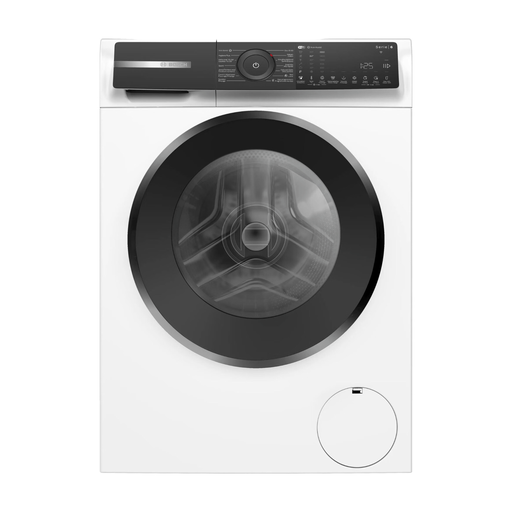 No image available
The product information lists a delicate programme and a Mini Load programme; check that the larger capacity suits your usual laundry load.
Specifications: 10 kg, 1600 rpm and energy class A. Wool/hand wash, cold wash and adjustable temperature are also listed.
 No image available
The product information lists a delicate programme, adjustable temperature and spin settings; check these options against the care label.
Specifications: 8 kg, 1400 rpm and 16 wash programmes.
 No image available
The product information lists adjustable temperatures from cold to 90 °C; only choose a temperature permitted by the bag’s care label.
Specifications: 7 kg and 15 programmes.
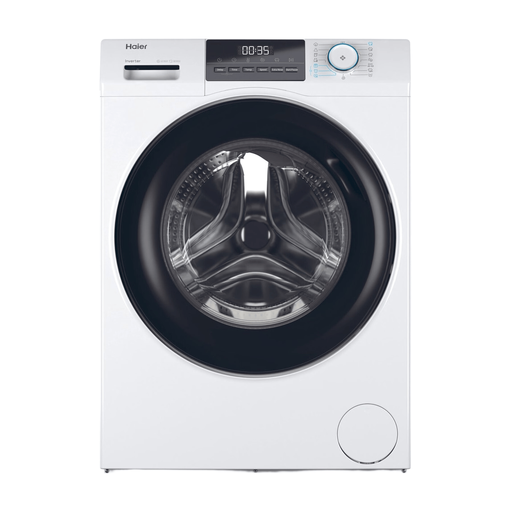 No image available
The product information lists a drum designed for delicate fabrics; still check whether the bag’s care label allows machine washing.
Specifications: 9 kg, 1400 rpm and energy class A.
No. Check each bag’s care label and construction. Loom Home Textiles notes that many basic cotton tote bags can be machine-washed, but recommends checking the label first; prints or embellishments may need more careful treatment.
No. According to Energielabel.nl, the washing machine label is based on eco 40–60; check the information for the specific model for other programmes.
Measure the installation space and delivery route, and make sure the machine is positioned on a firm, flat and level surface. Follow the installation instructions for your chosen model; an unstable position can cause vibration and noise.
The Dutch government states that washing machines must have an energy label. In the Netherlands, there’s no fixed two-year limit for the statutory warranty: you’re entitled to a product that does what you can reasonably expect it to do, and you can contact the seller if there’s a problem.
Remove the laundry from the machine after the programme and maintain the appliance according to the instructions. Milieu Centraal recommends running a 60 °C wash occasionally to remove detergent and dirt residues; don’t use this temperature on a bag if its care label doesn’t allow it.