
Vandaag of morgen in huis

Kwaliteit gegarandeerd

Welkomstaanbiedingen ontgrendelen: GRATIS bezorging | Tot 80% korting | Gratis 30 dagen JoyPlus-proefperiode
Download de app
Buying a new washing machine often feels like a complicated task. The market is flooded with models vying for your attention with endless features and complex specifications. As a Product Recommendation Officer at Joybuy, I see the challenges consumers face every day. Many marketing promises lead to disappointment and unnecessary costs. Let's cut through the noise and focus on what really matters.
Before you make a decision, it's important to recognise the most common pitfalls:
To make a smart choice, you don't need to study a technical manual. Concentrate on these three pillars. They determine 90% of whether a washing machine is right for your household.
The load capacity (in kg) indicates how much dry laundry fits in the drum. A machine that's too large is a waste of energy and water, while one that's too small leads to endless laundry days.
An energy-efficient washing machine is an investment that pays for itself. Pay attention to the energy label and look specifically at the energy consumption per 100 cycles (kWh). This figure gives a much clearer picture of the annual costs than the energy class A washing machine designation alone. A model with a consumption of 40 kWh is significantly cheaper to run than a model with 51 kWh, even if both are class A.
The spin speed (revolutions per minute, RPM) determines how dry your laundry comes out of the machine. A 1400 RPM washing machine is a popular and effective middle ground. Higher spin speeds (1600 RPM) extract more moisture from the laundry, which is useful if you use a tumble dryer.
Even more important is the type of motor. Preferably, choose a brushless motor (also known as an Inverter or BLDC motor). These motors are quieter, more energy-efficient, and last significantly longer because they have fewer wear-prone parts. A quiet washing machine almost always has such a motor.
Based on these criteria, we have selected a number of models that excel in their category, without making empty promises.
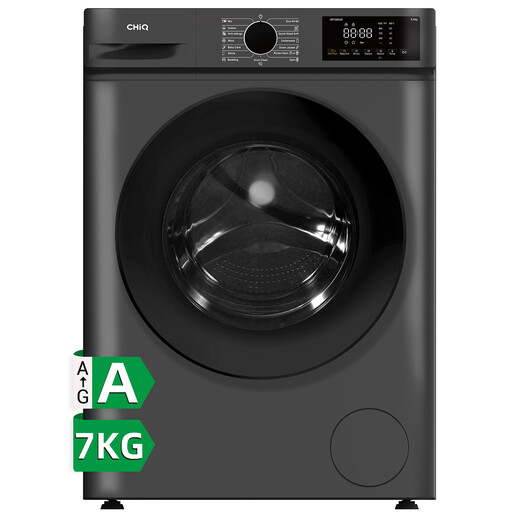
Why This Fits Their Persona: Ideal for singles or couples in an apartment. Its shallow 47 cm depth makes it perfect for a small bathroom or laundry room, without compromising on a full 7 kg capacity.
This machine offers useful features like a steam program and a quick wash, without an overload of options you won't use. The focus is on efficiency and ease of use.
Energy Class A and a very compact depth of 47 cm. The 1-Touch Smart Wash function automatically adjusts the cycle to the load, saving water and energy.
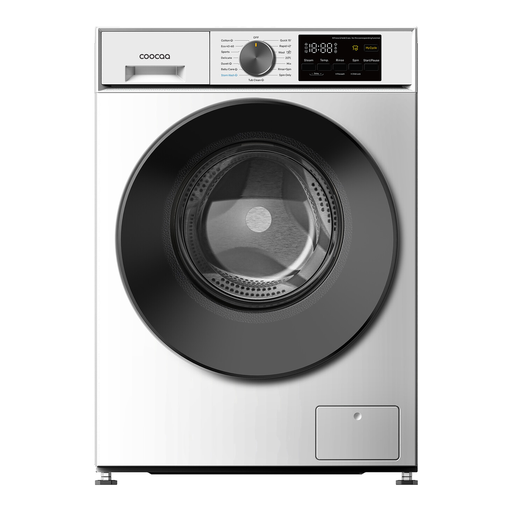
Why This Fits Their Persona: With an 8 kg capacity, this model is perfect for an average family. It combines a low energy bill with practical features for families, such as a special baby care program and steam cleaning.
This model goes beyond a standard A-label. According to the manufacturer, it is up to 20% more efficient than the norm, which delivers concrete savings. The BLDC motor tackles the pitfall of a noisy machine.
Energy Class A-20% and a durable, quiet BLDC inverter motor. The steam function removes stains and bacteria, which is ideal for families with young children or allergies.
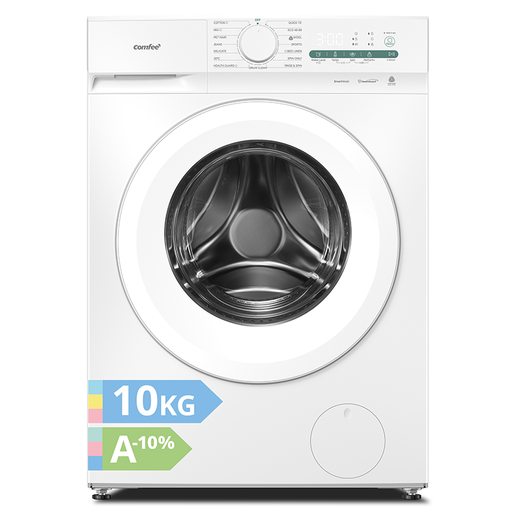
Why This Fits Their Persona: The dream of every pet owner. The large 10 kg capacity is perfect for blankets and pet beds, while the special pet hair program tackles stubborn fur and allergens.
Instead of a long list of generic programs, this model offers a highly specific solution to a common problem. The 'Pet Hair' program is not a marketing gimmick, but a targeted function.
Specific pet hair program and a hygienic steam function that tackles allergens and bacteria. The 10 kg capacity is ideal for large items and the whole family's laundry.
A good washing machine is one that lasts a long time and requires little maintenance. We have compiled a complete list of models that meet strict selection criteria and Dutch regulations.
For many households, yes. A steam function has three concrete benefits:
The lifespan depends heavily on the build quality, especially the motor. A traditional motor with carbon brushes wears out faster and lasts for about 2,000 wash cycles on average. A brushless motor (BLDC/Inverter) has a much longer lifespan, often up to 5,000 wash cycles. Manufacturers often provide a longer warranty on these motors, sometimes up to 10 years. A machine with such a motor is a more durable choice.
You can easily estimate this yourself. Look at the 'Energy consumption per 100 cycles' in kWh on the energy label. Divide this number by 100 and multiply it by the current electricity price per kWh (on average around €0.35 in 2026). For a machine that consumes 42 kWh per 100 cycles, the calculation is: (42 / 100) * €0.35 = €0.15 per wash cycle in electricity costs. Water costs are additional, but energy costs make up the largest part.
