
Someone moving with one wash to do
Wants to get their underwear clean before leaving and may not need their own machine afterwards. The Consumentenbond recommends following the care label when choosing a programme.


You don’t automatically need to buy a machine just to wash cotton underwear once before moving. First, check whether there’s an existing laundry facility with a programme that suits the care label. If you’ll be doing your own washing regularly after the move, choose a machine with a capacity, programmes, connections and dimensions suited to your usual needs. The Consumentenbond says that top-loading machines are narrower, but need space above the lid. Eco 40-60 is intended for normally soiled cotton that can be washed at 40 or 60 °C according to the care label, but it doesn’t guarantee a 60 °C wash.
Wants to get their underwear clean before leaving and may not need their own machine afterwards. The Consumentenbond recommends following the care label when choosing a programme.
Wants to do their own washing after moving and needs to consider both the available width and the space needed to open the lid or door. The Consumentenbond describes top-loading machines as narrower than standard front-loaders.
Is considering capacity and programmes for their usual laundry, rather than just the one-off underwear wash. The Consumentenbond recommends choosing a capacity to suit a typical load.
Start with the care label, then decide whether you’ll use the machine often enough after moving.
| What to consider | What should you check? | Who should consider this? |
|---|---|---|
| A suitable wash programme | Follow the care label and check whether, alongside Eco 40-60, there’s a regular cotton programme at the temperature you need. | When washing underwear, I want to choose a programme that suits the care label rather than relying on the name Eco 40-60 alone. Around 33% of consumers put choosing a suitable wash programme first. |
| Space in your new room | Measure the width, height and depth, and check there’s enough space to open the lid or door. | In a small room, I want to know whether the machine will fit and can be opened without hitting anything. Around 27% of consumers prioritise the space available. |
| Whether buying is worthwhile | Decide whether you’ll regularly do your own washing after moving, and choose a capacity to suit a typical load. | If it’s just for this one wash, I don’t want to buy a machine I’ll hardly use afterwards. Around 20% of consumers focus mainly on whether a machine is worthwhile for one wash or small loads. |
| Connecting and moving the machine | Check the water supply, drainage and power supply. Keep the transit bolts and follow the instructions when transporting the machine. | If I want to do my own washing after moving, I want to know in advance whether I can connect the machine and how to transport it safely. Around 20% of consumers prioritise installation and future transport. |
The programme name doesn’t mean that the wash actually reaches 60 °C. In tests reported by the Consumentenbond on 4 March 2026, the temperature reached varied from 20 to 50 °C depending on the machine.
Check the care label and, if you need a 60 °C wash, choose a regular programme that can reach the required temperature.
Depth, door clearance or space above the lid, and the connections also affect whether the machine will fit and work in the space.
Measure the full space available in your new room and check the installation requirements in advance.
A large drum may not be the right choice if you’re unlikely to fill it after moving. The Consumentenbond recommends choosing a capacity to suit your usual laundry load.
First decide whether you’ll regularly do your own washing afterwards, then choose a capacity that suits a typical load.
The Consumentenbond recommends securing the drum with the transit bolts supplied to help prevent damage during transport.
Keep the bolts and follow the model-specific instructions for transport and reinstallation.
These models illustrate different sizes and types. Their inclusion here doesn’t indicate availability or suitability for every room.
The Bosch WGE02404NL is a front-loader with a 7 kg capacity, according to Bosch Netherlands’ specifications.
The Consumentenbond lists the AEG LTR8763SL as a top-loader with a 6 kg capacity.
The Miele WEA128 WCS 8kg Active is a front-loader for anyone expecting to wash larger loads after moving, too.
The CFP01EW70W-JD is a front-loader with a 7 kg capacity and a depth of 400 mm, as listed for this model on Joybuy Netherlands.
This selection includes machines for small loads and for washing cotton after moving. Check that each model’s capacity and programmes suit your usual needs.
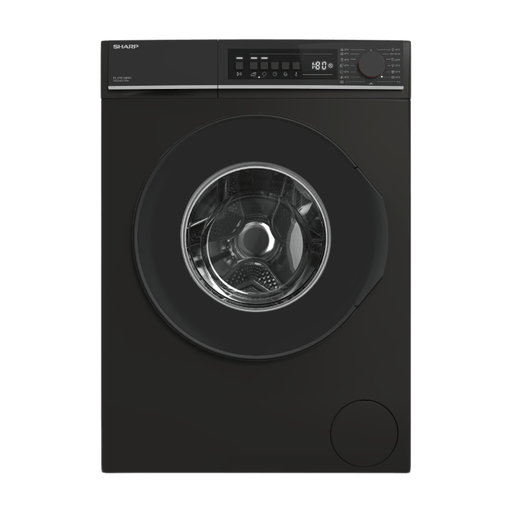 No image available
A freestanding front-loader for anyone who wants to wash cotton at home after moving, too.
Capacity: 7 kg. Spin speed: 1,400 rpm. Energy rating A. 15 programmes, including daily cotton. Dimensions: 597 × 845 × 600 mm.
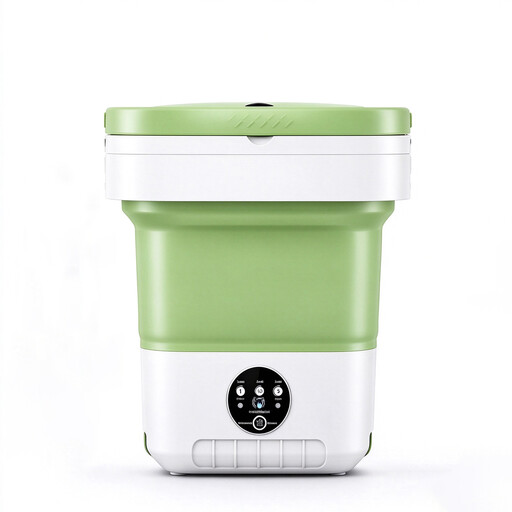 No image available
The product description says it’s designed for small loads of underwear or socks.
Maximum load: 1.5 kg. Capacity according to the product title: 12 litres. Foldable design with a spin basket.
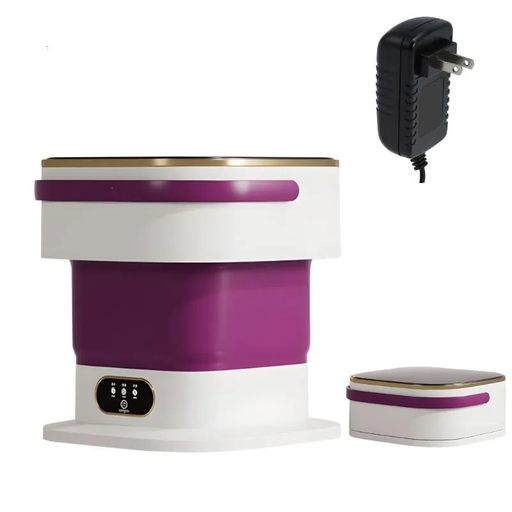 No image available
The product description says it’s designed for small loads of underwear or socks.
Maximum load: 1.9 kg. Capacity according to the product title: 15 litres. Foldable design with a spin basket.
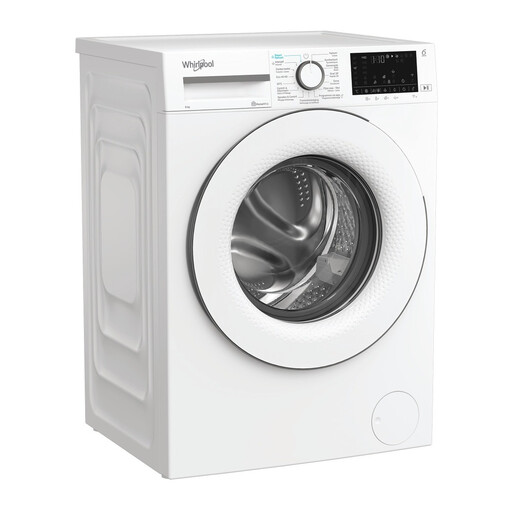 No image available
A freestanding washing machine for anyone wanting to use a cotton programme after moving.
Capacity: 7 kg. Spin speed: 1,200 rpm. The product details list a cotton programme and a Quick programme.
 No image available
A front-loader for anyone who wants to do their own washing after moving and has limited depth available.
Capacity: 7 kg. Depth: 400 mm. The product details list 16 programmes, including cotton, a 15-minute programme for small, lightly soiled loads and a 60 °C programme.
No. The material alone doesn’t determine the right temperature. Follow the care label and choose a programme to suit how soiled the laundry is. Milieu Centraal recommends 60 °C in certain situations, including infectious illness or a dust mite allergy.
No. The programme is intended for normally soiled cotton that can be washed at 40 or 60 °C according to the care label. The Consumentenbond’s tests show that the temperature reached can vary from machine to machine, so the programme name doesn’t prove that the wash reaches 60 °C.
Follow the instructions for your model and secure the drum with the transit bolts supplied before transport. The Consumentenbond also recommends turning off the tap, unplugging the machine and draining the hoses and any remaining water.
The Rijksoverheid says you’re entitled to a product that works properly. If there’s a problem, you should contact the seller first. A manufacturer’s guarantee or extended warranty doesn’t replace your statutory rights.
According to ACM ConsuWijzer, online purchases often come with a cooling-off period of up to 14 days after delivery. Before placing your order, check which terms and exceptions apply to your purchase.