Don’t automatically buy a washing machine just to wash one load of towels before your move. If you already have access to a suitable machine, you can wait. If you’ll be doing laundry regularly after the move, choose a machine to suit your new home and usual washing, then compare programme duration, spin performance and energy and water use. An eco programme can take longer and may not meet every hygiene need.
Who is this buying guide for?
Moving home with limited laundry space
You want to wash towels, but first need to know whether the machine will fit through the access route, fit in your new home and connect up there. The Consumers’ Association advises allowing space for hoses, the door and ventilation.
Anyone who washes towels regularly
You’re looking for a drum that suits your usual cotton washing, without choosing a capacity you’ll rarely use for smaller loads. The Consumers’ Association explains that the stated capacity applies to cotton; Milieu Centraal discusses how to match your machine to your laundry habits.
Living in a shared or noisy home
You’ll want to consider spin noise and the potential impact of leaks on other rooms. Compare these features for each model and think about where the machine will go; the Consumers’ Association covers water protection, while Energielabel.nl and Milieu Centraal explain energy labels.
What should you look for when buying?
First, measure the space in your new home and the access route. If you only want to wash towels before you leave, consider whether you can use an existing laundry facility before choosing a machine of your own.
Freestanding front-loader
Choose this if: the dimensions and connections are suitable and you’ll have enough laundry to do regularly after the move.
Keep in mind: a larger capacity isn’t automatically more convenient for small loads; also allow room for the hoses and an open door.
Top-loader or shallower front-loader
Choose this if: a standard front-loader won’t fit and the measured width or depth is the limiting factor.
Keep in mind: a top-loader needs clear space above the machine; a narrower model won’t necessarily solve a lack of depth.
Wait before buying
Choose this if: you only want to wash towels before you leave and don’t yet know where a machine of your own can be safely and suitably installed.
Keep in mind: you won’t automatically have your own machine after the move, so plan to wash and dry your towels before you leave.
| Buying concern |
What to look for |
Who should consider this? |
| Capacity |
Compare your usual laundry load with the stated cotton capacity, drum opening and programme limits. The Consumers’ Association emphasises that the stated capacity applies to cotton. |
If I usually wash towels after the move, I want a drum that suits my regular load. For around 29% of consumers, having the right capacity is their main buying concern. |
| Positioning and connections |
Measure the access route and the space in your new home, including room for hoses and an open door. Check the water inlet, drain and electrical connection; follow the model’s instructions when transporting it. The Consumers’ Association covers dimensions and installation. |
If the machine won’t fit into the new room or can’t be connected there, finding a suitable size is crucial. For around 24% of consumers, positioning and connections come first. |
| Time to wash and dry |
Check the care labels, programme duration and permitted load size. Compare the spin-drying class; the Consumers’ Association explains that the actual temperature of Eco 40-60 can vary between machines. |
With moving day approaching, I want enough time to wash and dry my towels. For around 18% of consumers, timing is their main buying concern. |
| Noise and leaks |
Compare spin noise on the same label basis and check the water protection features of the exact model. The Consumers’ Association covers the different types of water protection. |
In a noisy shared home, I want to take noise and potential water damage into account, including the impact on other residents. For around 18% of consumers, this is their top concern. |
| Consumption with regular use |
Compare kWh per 100 cycles, litres of water per cycle and programme duration on the same label basis. Energielabel.nl and Milieu Centraal point out that label values don’t necessarily reflect the consumption of other programmes. |
If I’ll continue doing laundry regularly after the move, I want to compare energy and water use with the programmes I actually use. For around 12% of consumers, ongoing consumption is their main buying concern. |
Common buying mistakes
-
Choosing a large drum for one unusual load
The stated capacity applies to cotton and doesn’t mean the machine will wash smaller loads better. The Consumers’ Association explains what the capacity rating is based on.
Base your choice on the laundry you’ll usually do after the move, not just the towels you need to wash before you leave.
-
Checking only the width of the cabinet
The depth, hoses, door opening and route to the laundry area could still get in the way. The Consumers’ Association also recommends measuring the space around the machine.
Measure the entire access route and the available space in your new home before ordering.
Moving or installing the machine may involve extra planning, so bear this in mind when organising your move.
-
Assuming Eco 40-60 guarantees a hot or quick wash
The actual temperature can vary between machines, and the programme can take a long time. The Consumers’ Association describes the temperature differences measured for Eco 40-60.
Allow time for drying. If you have a clear need for a hot wash, choose a suitable alternative programme that’s safe for the fabric.
-
Assuming similar model names mean the same machine
The model codes Beko BM3WFU3741W and BM3WFU3741S are different; there’s no evidence that the specifications are equivalent.
Check the full model code and specifications. Don’t treat a listing with a different model code as the same product.
Brands to consider
Beko
According to Beko, the Beko BM3WFU3741W is a freestanding front-loader with a stated capacity of 7 kg and a maximum spin speed of 1400 rpm. Check the exact dimensions against the space in your new home.
- Beko lists EnergySpin as a feature of this model.
- The brand’s claim isn’t an independent measurement of the benefit for your towel wash. There’s no evidence that the W model code is interchangeable with S.
Bosch
According to Bosch, the Bosch Serie 2 WGE02404NL is a freestanding front-loader with a stated capacity of 7 kg and a maximum spin speed of 1400 rpm. Compare its dimensions and features with the space available in your new home.
- The stated capacity and maximum spin speed give you clear points of comparison for your intended use.
- These specifications aren’t based on an independent towel-washing test; capacity alone doesn’t show how the machine handles a small load.
Samsung
According to Samsung, the Samsung WW80CGC04AAHEN is an 8 kg front-loader. Consider this capacity if you regularly have larger loads of laundry.
- Samsung lists Ecobubble and an app-controlled energy mode as features of this model.
- Any savings advertised by Samsung depend on the conditions of use and won’t necessarily apply to every wash. Don’t choose a larger capacity unless you need it.
Inventum
Inventum lists the VWM8010W with a capacity of 8 kg, a maximum spin speed of 1400 rpm and programmes including SteamClean. Check that the capacity and programmes suit your laundry and the space in your new home.
- The stated capacity and programme options give you specific points to compare.
- Claims about steam performance and suitability for towels haven’t been independently verified for this buying decision; check the programme limits.
Washing machines at Joybuy
These Joybuy picks are freestanding front-loaders. Compare the stated capacity with your usual laundry and measure the space and access route at your new address.
 No image available
Samsung WW90DG6U25LE, 9 kg, 1400 rpm
The stated capacity may be useful if you regularly wash larger cotton loads; check that it suits your usual laundry.
Stated capacity: 9 kg. Maximum spin speed: 1400 rpm. The product description lists dimensions of 600 × 550 × 850 mm.
The product name lists AI Ecobubble™, SuperSpeed and Wi-Fi (SmartThings); check that these features suit the way you use your machine.
View at Joybuy
 No image available
AEG LR73S840, 7000 Series, 8 kg, 1400 rpm
The stated capacity may suit a regular load of cotton towels; compare it with the loads you expect to do after the move.
Stated capacity: 8 kg. Maximum spin speed: 1400 rpm. The product description lists a spin noise level of 74 dB and dimensions of 84,7 × 59,6 × 57,2 cm.
The product name lists ProSteam and PreciseWash; check which features and programmes you actually need.
View at Joybuy
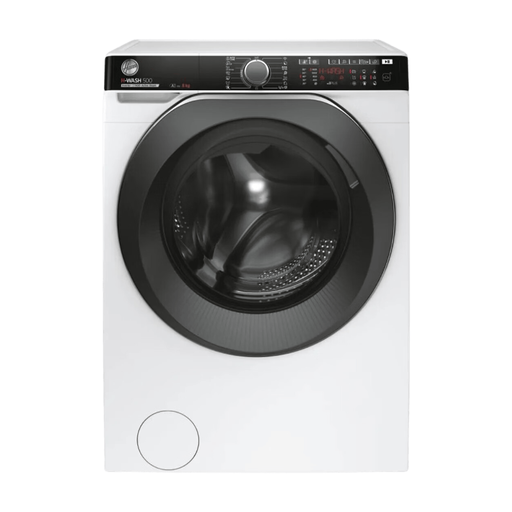 No image available
Hoover HWP 48AMBC7/1-S, 8 kg, 1400 rpm
The stated capacity and maximum spin speed are worth considering when planning how to wash and dry your laundry before you leave.
Stated capacity: 8 kg. Maximum spin speed: 1400 rpm. The description lists a programme that maintains 60 °C for more than 20 minutes; check the programme limits and care labels.
The product description lists dimensions of 600 × 540 × 850 mm and a weight of 63 kg. According to the description, at least two people are needed to move or install it; remove the transit bolts before use.
View at Joybuy
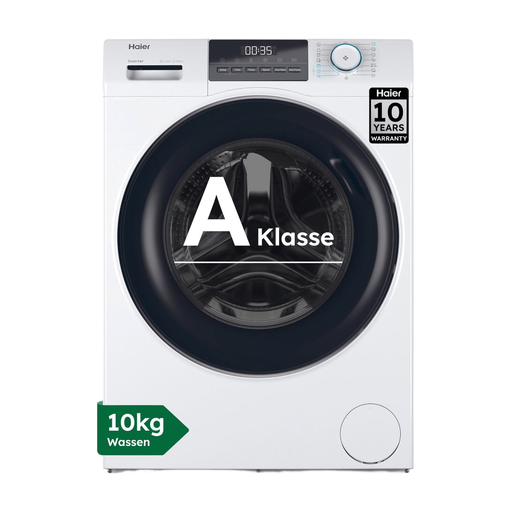 No image available
Haier HW100-BP14929A i-Pro 1, 10 kg, 1400 rpm
The stated capacity is worth considering if you often wash larger cotton loads; compare it with the amount of laundry you expect to do after the move.
Stated capacity: 10 kg. Maximum spin speed: 1400 rpm. The product name lists an inverter motor, ABT, 70 dB and steam.
Check the dimensions and what the listed programmes offer for the space and type of use you have in mind.
View at Joybuy
 No image available
Midea MF110W80BA10/W-NL, 8 kg, 1400 rpm
The stated capacity may suit a regular towel wash; compare it with your usual load and the space available.
Stated capacity: 8 kg. Maximum spin speed: 1400 rpm. The description lists dimensions of 850 × 595 × 475 mm, a spin noise level of 72 dB and AquaStop water protection.
The description lists 16 programmes; check that they suit your fabrics and laundry routine.
View at Joybuy
Frequently asked questions
Do everyday bath towels always need to be washed at 60 °C?
No. According to Milieu Centraal, towels usually don’t need to be washed at 60 °C. Follow the care label and consider any special hygiene requirements separately; a hot wash may sometimes be appropriate.
Is Eco 40-60 the same as a hygienic 60 °C wash?
No. The Consumers’ Association measured a range of actual maximum temperatures for Eco 40-60. If the care label or circumstances mean that an item needs a hot wash, check whether a suitable cotton, hygiene or allergy programme is available.
How do you transport a washing machine when you move?
Follow the instructions for your specific model: disconnect the hoses, collect any leftover water and refit the transit bolts before transport. Remove the bolts again before using the machine in your new home; the Consumers’ Association covers what to consider when moving and installing a machine.
Are you only entitled to a manufacturer’s guarantee in the Netherlands?
No. According to the Dutch government, you’re entitled to a product that works as it should when you buy it; your statutory rights are separate from any manufacturer’s or extended guarantee. If there’s a problem, the retailer must provide a solution.
What does a washing machine’s energy label tell you?
The EU label includes information such as the energy class, electricity and water consumption, and spin noise. The European Commission and Energielabel.nl explain the label information; consumption figures are based on Eco 40-60 and don’t necessarily predict the consumption of other programmes.


