Choose a drum capacity to suit the full bedding load you usually wash, not just the number of pillowcases. A standalone washing machine is a good fit if you can dry the laundry separately. Choose a washer-dryer only if your load also fits its separate drying capacity. Milieu Centraal recommends separate appliances for energy-efficient washing and drying, and the EU energy label does not show the consumption of every programme.
Who is this guide for?
Holiday-let hosts with lots of bedding to change
If you usually wash sheets or duvet covers as well as pillowcases, choose a capacity that suits the full load you typically wash. Milieu Centraal advises against buying a washing machine that is unnecessarily large.
Holiday-let hosts with little time between guests
Plan washing and drying together: a short wash programme does not necessarily mean a short drying time or that you can dry the whole load at once. Check the programmes and drying capacity of the exact model.
Holiday-let hosts with limited space
If you only have room for one appliance, a washer-dryer may be worth considering. Check the dimensions and bear in mind that washing and drying capacities differ.
What should you look for when buying?
Separate washing machine and tumble dryer
A good fit if: you can schedule washing and drying separately and have room for a tumble dryer.
Trade-off: the tumble dryer takes up extra space. Milieu Centraal recommends separate appliances for energy-efficient washing and drying.
Washer-dryer
A good fit if: you have room for one appliance and your usual load fits within its drying capacity.
Trade-off: washing and drying capacities differ. Bosch lists a maximum washing capacity of 8 kg for the WNA13400EU, and a maximum capacity of 5 kg for washing and drying.
Start with the amount of bedding you wash each time. Then check which programme suits the fabric and the treatment you need, and whether you can wash and dry everything in the time between guest changeovers.
| What to consider |
What should you check? |
Who should pay particular attention? |
| Load capacity |
Compare the capacity with a typical full load of dry laundry and the maximum load allowed for the programme you choose. |
If I want to wash sheets or duvet covers with the pillowcases, I need a drum that suits that load without being oversized as standard. Around 36% of consumers prioritise a suitable load capacity. |
| Programme and fabric |
Read the care label and check the temperature and conditions for the cotton or hygiene programme on the exact model. |
If I want to wash pillowcases at a particular temperature, I first need to know whether the fabric can withstand that treatment. Around 29% of consumers prioritise a suitable wash programme. |
| Drying time and capacity |
For a washer-dryer, check the drying capacity separately. With separate appliances, also consider the space available. |
If there is little time between guests leaving and arriving, I need to be able to plan for both washing and drying. Around 21% of consumers prioritise having dry bedding in time. |
| Consumption and installation |
Compare energy labels on the same basis and check what the installation and connection service you choose includes. |
If the machine runs often, I want to be able to compare its consumption and know in advance what installation involves. Around 14% of consumers prioritise consumption and other practical considerations. |
The EU energy label includes information such as energy consumption per 100 cycles and water consumption per cycle. The European Commission explains that these figures apply to the labelled programme; do not use them as consumption figures for a different programme.
Common pitfalls
-
Assuming Eco 40-60 washes at 60 °C
The programme name does not mean that the laundry is washed at 60 °C. The Consumentenbond advises against using this programme when bedding needs to be washed at a higher temperature.
Check the fabric care label. If the fabric allows it, compare a cotton programme at the temperature you need with a suitable hygiene programme.
-
Confusing washing capacity with drying capacity
With a washer-dryer, the amount you can wash and dry in one continuous cycle may be lower than its washing capacity. Bosch lists a maximum washing capacity of 8 kg for the WNA13400EU, and a maximum capacity of 5 kg for washing and drying.
Check both capacities for the exact model and compare them with the bedding load you usually need to wash.
As a result, a larger load may need to be dried in batches or dried separately.
-
Looking only at drum size and the energy label
A large drum is not automatically an advantage if you rarely fill it appropriately. The consumption figures on the energy label also apply to a specific programme.
Compare the capacity with your usual load, compare labels on the same basis and check in advance what installation and connection include.
Brands to compare
Bosch
Options to consider include the WGG24409NL front-loader and the WNA13400EU washer-dryer.
- Bosch lists a 9 kg capacity and energy class A for the WGG24409NL.
- The manufacturer’s claims about Hygiene Plus apply to that model and do not prove that every pillowcase or wash meets a specific hygiene requirement. The WNA13400EU washes up to 8 kg, but can wash and dry up to 5 kg in one cycle.
Miele
The W1 WSA123 WCS 8 kg Active is a front-loader worth comparing if your usual bedding load fits within 8 kg.
- Miele lists an 8 kg capacity and 1400 rpm for this model.
- Do not assume that the spin speed guarantees a particular washing or drying time, or that the machine is suitable for intensive commercial use.
Haier
The I-Pro Series 1 HW90-BP14929A is a 9 kg front-loader worth comparing if you usually wash larger loads.
- Haier lists a 9 kg capacity, 1400 rpm and energy class A for this model.
- Haier’s claim about its ABT technology does not prove that every full bedding load meets a specific hygiene requirement.
Washing machines at Joybuy
These standalone washing machines are for holiday-let hosts looking to match capacity, programmes and scheduling to their bedding loads.
 No image available
Samsung WW90DG6U25LE, 9 kg, white
The stated capacity may be useful if you wash other bedding as well as pillowcases.
9 kg; 1400 rpm; Quick 15 min; Super Speed for 5 kg in 39 minutes; steam programme.
The stated Super Speed time is for 5 kg, not automatically for a full drum or a hygiene treatment.
View at Joybuy
 No image available
Bosch WGB2440BFG Serie 8, 9 kg, NL/FR panel
The stated capacity is suitable if your usual bedding load is within the load limit for the programme you choose.
9 kg; 1400 rpm; energy class A; Mini Load programme for small loads.
View at Joybuy
 No image available
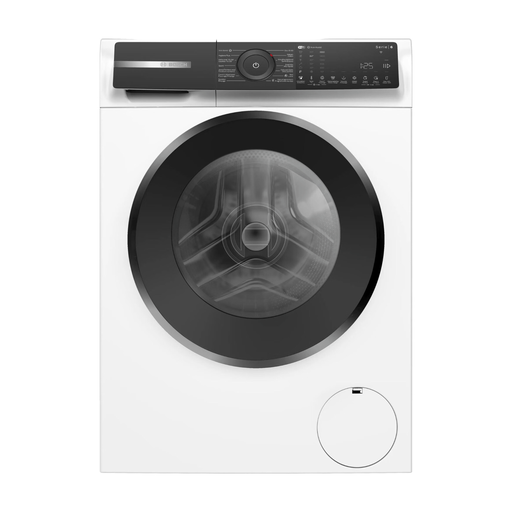
Bosch WGH25605FG Serie 6, 10 kg, NL/FR panel
The capacity may suit larger loads, but check that it matches the amount of laundry you actually wash.
10 kg; 1600 rpm; energy class A; Mini Load programme for smaller loads.
View at Joybuy
 No image available
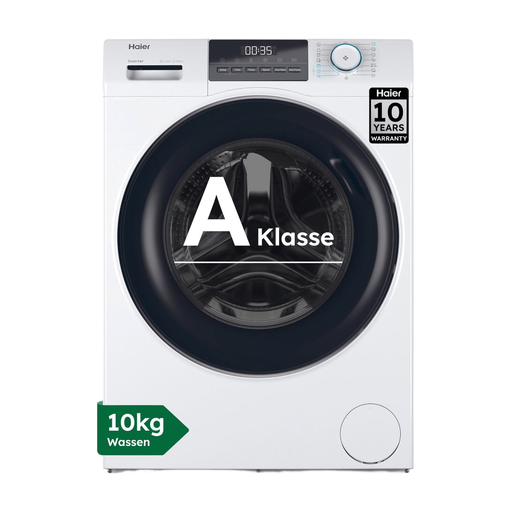
Haier HW100-BP14929A i-Pro 1, 10 kg
The stated capacity is useful if you regularly wash larger loads of bedding.
10 kg; 1400 rpm; steam function; automatic load weighing and adjustment of water consumption and cycle time.
View at Joybuy
 No image available
Midea MF110W80BA10/W-NL, 8 kg, white
The bedding programmes and end-time delay may be handy for scheduling laundry around guest changeovers.
8 kg; 1400 rpm; Bedding and Allergy Care programmes; end-time delay of 0–24 hours.
Check the conditions for the programme you choose and make sure the treatment is suitable for the fabric care label.
View at Joybuy
Frequently asked questions
Can you choose Eco 40-60 if you want to wash pillowcases at 60 °C?
Not based on the programme name alone. The Consumentenbond recommends cotton at 60 °C or a suitable hygiene programme when bedding needs to be washed at a higher temperature. First check whether the pillowcases’ care labels allow this treatment.
How do you compare electricity consumption if you often use a hygiene programme?
Use the EU energy label to compare the stated figures on the same basis, but do not treat them as the exact consumption of a different programme. The label includes information such as energy consumption per 100 cycles and water consumption per cycle. If you need figures for a specific programme, ask for model-specific information.
What should you check before the washing machine is installed?
Measure the space available and check the connections required and the model’s installation instructions. Also ask what your chosen delivery and connection service includes; the Consumentenbond notes that installation is sometimes arranged separately.
Do the same statutory warranty and cooling-off period apply to personal and business purchases?
No. According to Ondernemersplein, the statutory consumer guarantee does not apply to sales between businesses; business warranty arrangements are set out in the sales agreement. The statutory 14-day cooling-off period for online purchases applies to consumers, not automatically to business purchases. Before ordering, decide whether you are buying as a consumer or a business and check which terms apply to your purchase.
Does a household washing machine need an energy label?
Yes. The Dutch government says an energy label is compulsory for household electrical appliances. The European Commission describes the A to G scale used for household washing machines since 1 March 2021. When comparing older labels, bear in mind that the scale has changed.


