
For washing large loads
You wash several beach towels at once and regularly do larger loads of laundry, too. Choose the drum capacity based on your usual sorted loads; according to the Consumentenbond, the stated maximum applies to cotton.


Choose a washing machine based on your usual sorted loads, not just that one big pile of beach towels. Also check the maximum load for the programme you plan to use, the energy label figures, and the space available for the machine, hoses and door. Extra drum capacity is not automatically an advantage if you rarely need it.
You wash several beach towels at once and regularly do larger loads of laundry, too. Choose the drum capacity based on your usual sorted loads; according to the Consumentenbond, the stated maximum applies to cotton.
You want a machine that suits your everyday laundry, and compare the EU energy label and the consumption figures for eco 40-60. The European Commission describes the label scale from A to G.
You need room not only for the machine, but also for the hoses and the door to open. The Consumentenbond recommends allowing for this when measuring.
First, weigh a typical sorted load and check the load limit for the programme you use. Then compare the energy label and measure the full space available for installation.
| What to consider | What should you look for? | Who should pay particular attention? |
|---|---|---|
| Suitable drum capacity | Weigh a typical sorted load and check the programme load limit; the maximum applies to cotton. | I want to wash beach towels without choosing an unnecessarily large drum for everyday laundry. For around 36% of consumers, suitable drum capacity is their main concern when buying. |
| Energy and water consumption | Compare the energy label and the number of kWh per 100 cycles based on eco 40-60; don’t use these figures to estimate consumption for other programmes. | I’m mainly interested in the consumption of the loads I wash throughout the year. Around 29% of consumers prioritise consumption for their regular washes. |
| Fabric and programme | Follow the care label and check that the machine has a suitable programme; choose a spin speed that’s appropriate for the fabric. | I want to wash different beach towels according to their care instructions. Suitable fabric care is the main buying concern for around 21% of consumers. |
| Installation and space | Measure the space, including room for hoses and the door to open; for a top-loader, also check that there’s enough clearance above it. | I need to be able to install the machine and open its door or lid in the space available. For around 14% of consumers, getting the right fit is the priority. |
Since 1 March 2021, the EU energy label scale has run from A to G. The label figures are based on eco 40-60; Milieu Centraal warns that the label doesn’t show the consumption of other programmes.
A large capacity won’t necessarily suit you for the rest of the year. The Consumentenbond reports that machines with a capacity of 10 kg or more often wash less effectively with a half load.
Choose based on the loads you usually wash, and consider seasonal laundry separately.
The label figures are based on eco 40-60, so they don’t necessarily tell you how much a quick or other programme will use.
Compare models on the same label basis, and consult the manual if you mainly use a different programme.
Remember to allow space for the hoses and for the door to open when installing the machine.
Measure the full installation space and check that the door can open before choosing a model.
The BM3WFU3741W is a front-loading machine with a 7 kg capacity, making it a useful reference for smaller everyday loads.
The Serie 2 WGE02404NL is a 7 kg model to consider when comparing machines for everyday loads.
With an 8 kg capacity, the LR6KOLN is a mid-sized option to compare if 7 kg seems too small and 9 kg would usually be more than you need.
With a 9 kg capacity, the WW90CGC04AAH is a useful reference if you also wash larger loads outside the seasonal changeover.
A Dutch comparison option with models in a range of capacities and configurations.
These models have a stated capacity of 8 or 9 kg and offer useful points of comparison for larger loads and regular everyday laundry. Check the programme load limit and available space before choosing a model.
 No image available
The stated capacity makes this model worth comparing if you regularly wash larger loads; check the limit for the programme you choose.
Capacity: 9 kg. Maximum spin speed: 1400 rpm. Energy rating: A. Listed programmes include Eco 40-60, synthetics and delicates.
 No image available
The stated capacity gives you a useful comparison if you’re weighing up everyday laundry against a larger seasonal wash; check the limit for each programme.
Capacity: 8 kg. Maximum spin speed: 1400 rpm. 16 wash programmes.
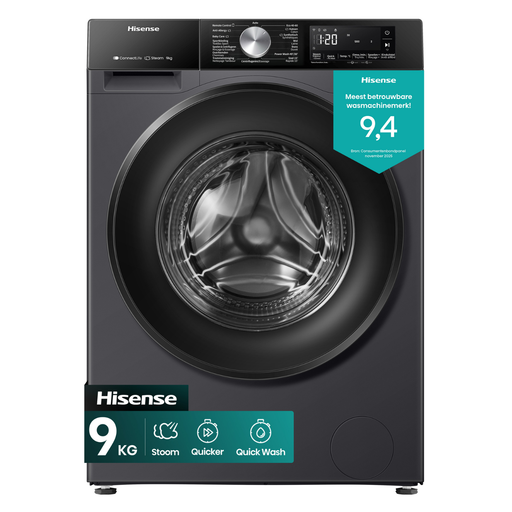 No image available
The stated capacity may be useful if you also wash larger loads outside the seasonal changeover; make sure the load is suitable for the programme.
Capacity: 9 kg. Maximum spin speed: 1400 rpm. Energy rating: A. The product information lists 15 programmes.
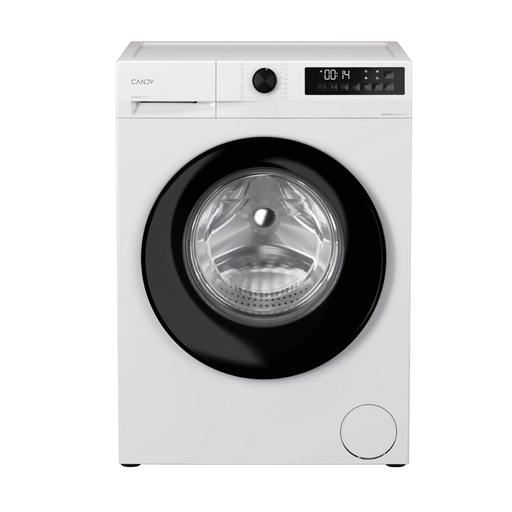 No image available
Compare the stated capacity with your usual sorted laundry and the maximum load for the programme you need.
Capacity: 9 kg. Maximum spin speed: 1351 rpm. Energy rating: A. 16 wash programmes.
 No image available
The 8 kg capacity is a useful comparison if you’re weighing up everyday and larger loads; check how much laundry each programme can take.
Capacity: 8 kg. Maximum spin speed: 1351 rpm. Energy rating: A.
Weigh a typical sorted load and compare it with the machine’s capacity and the load limit for the programme you plan to use. The Consumentenbond points out that the stated maximum applies to cotton; a lower load may be suitable for delicates or synthetics.
No. According to Milieu Centraal, washing normally soiled towels at 60 °C is usually unnecessary. Follow the care label on the particular beach towel; special hygiene requirements may call for a different approach.
Allow space for the hoses and for the door to open, and follow the installation instructions for your chosen model. The Consumentenbond recommends allowing for the space needed around the machine when measuring.
Since 1 March 2021, the EU label scale has run from A to G. The European Commission bases the consumption figures on eco 40-60; don’t use them to estimate the consumption of a quick wash or another programme.