Who is this buying guide for?

Weekly towel washer

You collect several bath towels and want to choose a drum that suits your usual load, without buying a much larger machine than you need. The Consumentenbond advises taking the cotton load capacity into account when making your choice.

Busy Sunday washer

You want to get the washing done before Monday and need to know how long your chosen programme takes and how much laundry it can handle. The Consumentenbond explains how programmes and settings affect this.

Washer with limited drying time

You want your towels to be dry in time after washing. So, as well as the wash time, consider the spin settings and how you’ll dry the laundry. Milieu Centraal discusses spinning as something to bear in mind if you use a tumble dryer.

What should you look for when choosing?

What to consider What should you check? Who is this important for?
Drum capacity that suits your needs Compare your usual load with the cotton load capacity, drum opening and installation dimensions. Check the load limit for each programme. If you often wash several towels at once, you’ll want a drum that suits the load and is practical to fill. Around 36% of consumers put suitable capacity first.
Weekend wash time Check both the duration and maximum load of your chosen short programme in the manual. If you want the washing done before Monday, you need a programme whose duration and load capacity fit your schedule. Around 29% of consumers give the time available for washing top priority.
Drying time Compare the spin settings with what the fabric care label allows, and factor in your drying method when planning. If the towels need to be dry the same day, you’ll want to leave enough time after washing and choose a suitable spin setting. Around 21% of consumers put drying time first.
Energy and water use Compare kWh per 100 cycles, water per cycle and programme duration on the EU label, using the same label basis. Also consider the programme and load you expect to use. If you do a wash every week, you’ll want to weigh recurring consumption against the time and washing performance of the programme you use. Around 14% of consumers put running costs first.

Common buying mistakes

  • Assuming the drum capacity also applies to the quick programme

    The stated maximum load capacity applies to cotton. A shorter programme may have a different maximum load.

    For each model, check the permitted load and duration of the programme you want to use for your towels.

    If the programme has a lower load limit, you may need to split the towels across more washes, which takes extra time.

  • Always choosing the largest drum

    A larger machine isn’t automatically more efficient if you usually wash small loads. According to the Consumentenbond, load detection doesn’t adjust consumption very precisely when the machine is only partly full.

    Choose a machine based on the loads you usually wash, and check that it will fit in the available space.

  • Planning only for when the wash programme ends

    The towels still need to dry after washing. If you use a tumble dryer, a faster spin can reduce the work it has to do, provided the fabric care label allows it.

    Allow time for both washing and drying before the working week, and check which spin setting is suitable for your towels.

  • Assuming an energy label figure applies to every programme

    The figures on the EU label are based on a specified programme. Your consumption may differ if you use another programme or load size.

    Compare label figures on the same basis, and also check the programme you expect to use for your towels.

Brands to consider

Beko

The BM3WFU3741W, sold in the Netherlands, is a front-loading washing machine with a stated load capacity of 7 kg and a spin speed of 1400 rpm. It can serve as a comparison point if you’re looking at a smaller drum.

  • Beko describes EnergySpin as an energy-saving technology.
  • This is a manufacturer’s claim about the product range, not proof that this model is the most efficient for your towel programme. Compare the product information sheet and programme figures.

Samsung

The WW90DG6U25LEU3, sold in the Netherlands, is a 9 kg model from the SuperSpeed range. If you want to wash a larger load, compare the permitted load and programme duration.

  • Samsung highlights Ecobubble and shorter wash cycles as benefits of this range.
  • Check the maximum load for the quick programme separately; the brand’s claim doesn’t tell you how a full drum of bath towels will wash.

Bosch

According to Bosch, the Serie 6 WGG244FSNL, sold in the Netherlands, has a maximum load capacity of 9 kg and a spin speed of 1400 rpm. This gives you a useful comparison point for larger cotton loads.

  • Its stated capacity and spin speed make it worth comparing with your usual load.
  • The maximum capacity doesn’t necessarily apply to every programme. Check the programme limits and dimensions before installation.

Miele

According to Miele, the W1 WWE380 WCS, sold in the Netherlands, combines an 8 kg capacity, 1400 rpm and a QuickPowerWash programme. It’s worth considering if you’re comparing a mid-sized drum with a separate shorter programme.

  • QuickPowerWash is a named feature of this model.
  • Check the permitted load and duration of QuickPowerWash for your towels; the programme name doesn’t mean every load will fit.

LG

The F4Y510WBLN1, sold in the Netherlands, is a front-loading washing machine with a stated capacity of 10 kg. It’s worth comparing if you regularly build up large loads.

  • Its stated capacity gives you a useful reference point for larger loads.
  • A higher capacity isn’t automatically better for smaller weekly washes. Choose based on your usual load size and the space available.

Washing machines at Joybuy

This selection focuses on washing machines with a stated drum capacity and a named shorter programme. For each model, compare the programme load limit with the number of towels you want to wash.

Samsung WW90DG6U25LE washing machine, white

Samsung WW90DG6U25LE, 9 kg

Worth considering if you want to compare a 9 kg drum with a shorter wash cycle.

Stated load capacity: 9 kg. Stated spin speed: 1400 rpm. SuperSpeed: 39 minutes for 5 kg, not the full rated capacity.

View at Joybuy
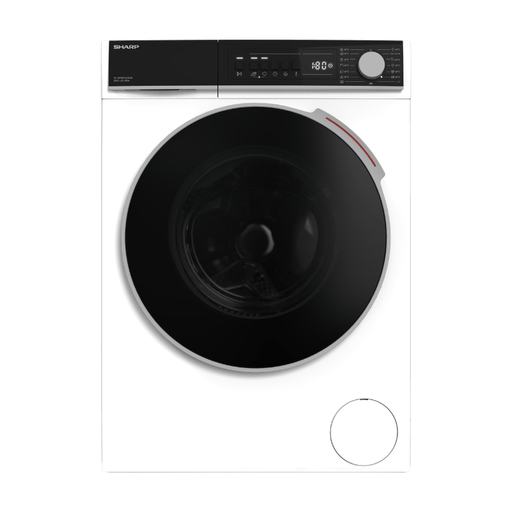
SHARP ESNFB814CWDACB washing machine, white

SHARP ESNFB814CWDACB, 8 kg

Worth considering if you want to compare an 8 kg washing machine with a named short programme.

Stated load capacity: 8 kg. Stated spin speed: 1400 rpm. The product information lists a 12-minute programme.

View at Joybuy

Midea MF110W80BA10/W-NL washing machine

Midea MF110W80BA10/W-NL, 8 kg

Worth considering if you want to weigh up an 8 kg capacity and a named short programme.

Stated load capacity: 8 kg. Stated spin speed: 1400 rpm. The product information lists 16 wash programmes and a 15-minute programme.

View at Joybuy
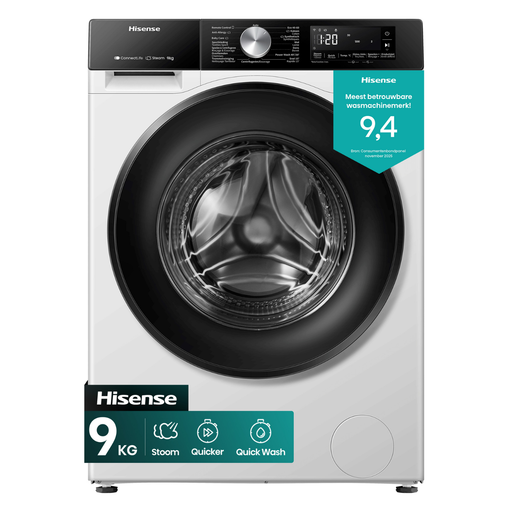
Hisense WF3S9043BW3 washing machine, white

Hisense WF3S9043BW3, 9 kg

Worth considering if you want to compare a 9 kg drum with several named shorter programmes.

Stated load capacity: 9 kg. Stated spin speed: 1400 rpm. The product information lists Quick 15' and Power Wash 49'.

View at Joybuy

Candy GD 48B9-S washing machine

Candy GD 48B9-S, 8 kg

Worth considering if you want to compare an 8 kg capacity with several short cycles.

Stated load capacity: 8 kg. Stated spin speed: 1351 rpm. The product information lists quick cycles from 14 minutes.

View at Joybuy

Frequently asked questions

Should bath towels always be washed at 60 °C?

No. According to Milieu Centraal, in most cases there’s no need to wash towels at 60 °C. A hot wash may be appropriate in specific circumstances, such as an infectious illness or a dust mite allergy; always follow the fabric care label too.

Is Eco 40-60 suitable if the towels need to be ready quickly on Sunday?

Not necessarily. Eco 40-60 is designed for normally soiled cotton that’s suitable for the programme, and the cycle may take longer. The Consumentenbond discusses the trade-offs involved in washing and rinsing effectively, so compare the duration and load capacity with a suitable cotton or shorter programme.

Which information on the EU label can I compare?

The EU label includes information such as energy consumption per 100 cycles, water consumption per cycle, programme duration and noise. The European Commission explains that these figures apply to the stated label basis; they don’t measure the energy and water used for your own towel wash.

What should I check before installation and during maintenance?

Measure the installation space and access routes, and follow the model’s installation instructions, including guidance on the transit bolts. After washing, leave the drum and detergent drawer to dry, and clean the door seal and filter as instructed.

What costs and rights should I be aware of when buying in the Netherlands?

Before buying, check which delivery and installation costs are listed. If a product is faulty, contact the seller about your statutory guarantee; an additional guarantee doesn’t replace those rights.
