What should you look for in a washing machine for bath towels?
Measure the space and room for the door to open before comparing models, then weigh a typical load of towels. The Consumers’ Association recommends allowing for connections and the door or lid, while Milieu Centraal emphasises that the drum should suit the load you actually wash.
| What to consider |
What to look for |
Who is this important for? |
| Dimensions and access |
Measure the width, height and depth. Also check there is room for the hoses and for the door or lid to open fully. |
I want to make sure the machine will fit in the space and remain accessible. Around 36% of consumers say suitable dimensions and access are their main concern. |
| Room for towels |
Weigh a typical dry load and compare it with the cotton capacity. Check that you can load the towels without cramming them in. |
If I wash several bath towels together, I want enough capacity for my usual load. Around 29% of consumers put their towel load first. |
| Drying without a second appliance |
Decide whether you need to dry your towels electrically. For a washer-dryer, compare the separate washing and drying capacities, as well as the energy used for a complete wash-and-dry cycle. |
I don’t have room for a separate tumble dryer and want to know whether I can machine-dry my towels. Around 21% of consumers say drying without a second appliance is their main concern. |
| Electricity and water consumption |
For models that meet your size and capacity requirements, compare the energy label, kWh per 100 eco 40-60 cycles and water consumption per cycle. |
Even for regular washes, I want to consider running costs, not just the maximum towel load. Around 14% of consumers prioritise electricity and water consumption. Milieu Centraal recommends choosing a machine that suits your household and usual load. |
Washing machines at Joybuy
These Joybuy picks are for anyone looking to wash bath towels in a front-loader, with both shallow-depth and standard-depth models to choose from.
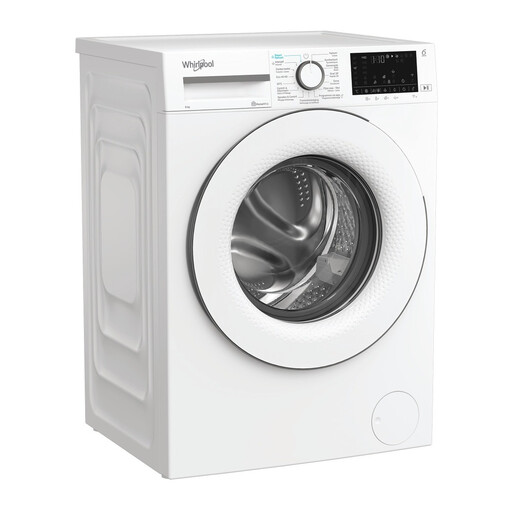 Image unavailable
Whirlpool WAM 87W BE, 7 kg
A front-loader to consider if you have room for the door to open and its capacity suits your usual towel load.
Capacity: 7 kg. Spin speed: 1200 rpm. The product information lists cotton and eco programmes, and water consumption of 47 litres per cycle.
Joybuy
 Image unavailable
Comfee CFP01EW70W-JD, 7 kg
The stated depth may be useful if your space is shallow; also check there’s room for the hoses and the door to open.
Capacity: 7 kg. Stated depth: 400 mm. The product information lists a cotton programme and 40 kWh per 100 cycles.
Joybuy
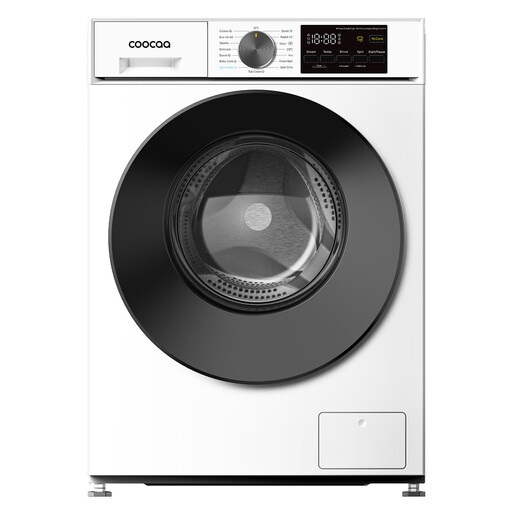 Image unavailable
Coocaa Galaxy A3 Series F702A3AВC0, 7 kg
A front-loader with stated dimensions that may suit a shallow space. Measure the area, including room for connections and the door to open.
Capacity: 7 kg. Dimensions: 595 × 440 × 850 mm. The product information lists 40 kWh per 100 cycles.
Joybuy
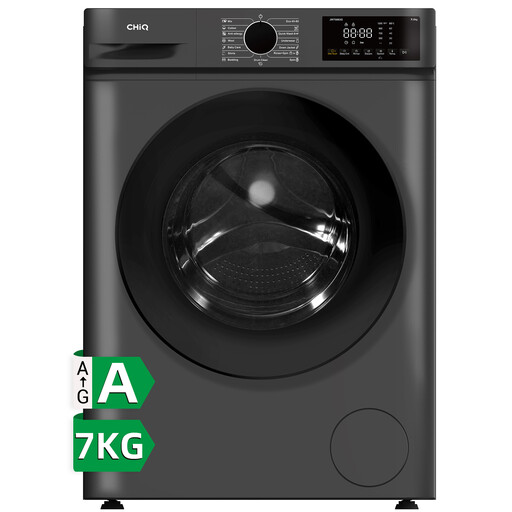 Image unavailable
CHiQ JW75883G, 7 kg
The stated depth may suit a shallower space; remember to leave room for connections and for the door to open.
Capacity: 7 kg. Depth: 47 cm. The product information lists 16 programmes, including a steam wash and a quick wash cycle.
Joybuy
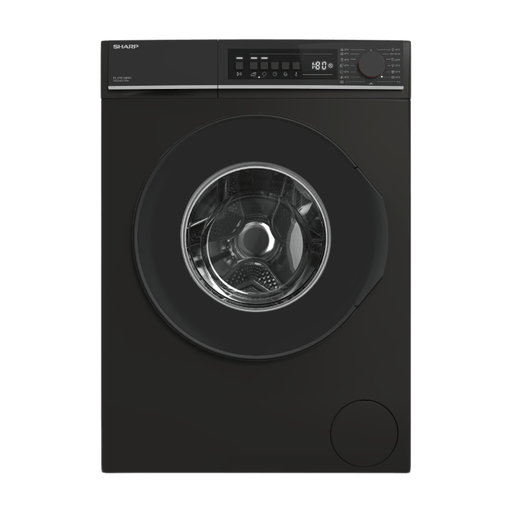 Image unavailable
Sharp ESNFB714BBNACB, 7 kg
This front-loader is best suited to spaces with enough depth. The stated appliance depth is 600 mm, in addition to the room needed for hoses and the door.
Capacity: 7 kg. Spin speed: 1400 rpm.
Joybuy
Frequently asked questions
Is a top-loader automatically the best choice for a small space?
No, it depends on which dimension is limited. A top-loader can help if width or space in front of the machine is an issue, but the lid needs clear space above it. If depth is your main constraint, compare shallow-depth front-loaders as well.
How do I choose a programme for cotton bath towels?
First, check the care label on your towels. According to the Consumers’ Association, eco 40-60 is intended for normally soiled cotton laundry with care labels that allow washing at 40 °C or 60 °C. The programme name does not guarantee that the machine actually reaches 60 °C during the cycle.
What should I check when installing and maintaining the machine?
As well as checking the appliance dimensions, make sure there’s enough room for the hoses and for the door or lid to open. Level the machine according to the instructions. Milieu Centraal also recommends running a wash at 60 °C regularly to remove detergent and dirt residue.
Which energy label should I compare in the Netherlands?
Compare the mandatory energy label on the current A to G scale, and also check the stated electricity and water consumption. According to information from the Dutch government, the washing machine figures on the label are based on eco 40-60; they do not automatically reflect the consumption of every other programme.
What warranty applies when buying a washing machine in the Netherlands?
You are entitled to a product that meets the expectations you can reasonably have of it; there is no fixed two-year statutory warranty period in the Netherlands. According to the Dutch government, the expected lifespan depends, among other things, on the product and the information provided at purchase. A manufacturer’s warranty or an extended warranty you buy is in addition to your statutory rights.


