Buying concerns and things to consider
Start with the dimension that’s tightest in your space, then check that the mat, programme and load are compatible.
Narrow top-loader
Suitable if: width is the limiting factor and you can open the top lid freely. AEG lists the LTR6363A as 397 mm wide, with a 6 kg load capacity; Whirlpool lists the TW 6521S SENSE WASH BE as 40 cm wide, with a 6,5 kg capacity.
Bear in mind: you’ll need to leave clear space above the lid. The kilogram figure alone won’t tell you whether a particular bath mat will fit.
Shallower front-loader
Suitable if: you have enough width but limited depth. Haier lists the HW70-BP14357TU1 as measuring 595 × 468 × 850 mm, with a 7 kg load capacity.
Bear in mind: you’ll need to allow extra space beyond the cabinet dimensions for the hoses and to open the door, so measure the full installation space.
Front-loader with a larger drum
Suitable if: your mat or usual mixed wash load is difficult to fit into a more compact machine, and you have enough space. Choose a load capacity that suits what you normally wash; Milieu Centraal recommends choosing a drum size that fits your household’s needs.
Bear in mind: a higher load capacity doesn’t guarantee that the mat will fit through the door or have enough room to move freely in the drum.
Washer-dryer
Suitable if: you also want to tumble-dry laundry but don’t have room for two appliances, and the care label says the mat can be tumble-dried.
Bear in mind: check the drying capacity separately; a mat that’s machine-washable isn’t automatically suitable for tumble-drying.
| Buying concern |
What should you check? |
Who is this important for? |
| Will the machine fit? |
Measure the width and depth at several points; allow for connections and the space needed to open the lid or door. |
If my alcove is tight, I want to make sure the machine not only fits, but can also be opened and connected. Around 36% of consumers put fitting the machine in their space first. |
| Will the mat fit in the drum? |
Check the mat’s dimensions and care label, the loading opening and the load limit for the chosen programme. |
I want to wash my own mat with my usual laundry without overfilling the drum. This is a concern for around 29% of consumers looking to fit both the mat and the wash load. |
| Care instructions and balance |
Compare the care label with the programme instructions and follow the manual’s advice on distributing the load. |
If my main concern is avoiding damage to the mat or an unbalanced spin cycle, I check the instructions for both the mat and the machine. Around 21% of consumers prioritise mat care and load balance. |
| Running costs and load capacity |
Compare the EU label’s kWh per 100 cycles and water use per cycle; choose a load capacity that suits your usual laundry load. |
I want to weigh up running costs against my usual load, rather than choosing a larger machine just for the occasional large mat. Around 14% of consumers put running costs first. |
Washing machines on Joybuy
These Joybuy products are front-loading machines with different stated depths and capacities. Compare the external dimensions with your available space, and check that the drum and programme suit your bath mat and usual wash load.
 No image available
Samsung WW90DG6U25LE, 9 kg, 1400 rpm
A front-loader to compare if you want to wash larger everyday loads as well as a bath mat, and have room for the stated depth.
Stated capacity: 9 kg. Stated depth: 550 mm. The title lists 1400 rpm and energy class A.
As well as the stated depth, allow room for the hoses and to open the door.
Joybuy
 No image available
Comfee CFP01EW70W-JD, 7 kg
A front-loader to consider if depth is the main constraint; compare the stated measurement with the space needed for the door and connections.
The product information lists a 400 mm design and a 7 kg capacity.
As well as the stated measurement, allow room for the hoses and to open the door.
Joybuy
 No image available
TCL FF1006WB0, 6 kg
This front-loader may be worth considering if your available space is particularly shallow; also check the room needed to open and connect it.
The title lists a depth of 45 cm and a capacity of 6 kg. It also lists energy class B.
As well as the stated depth, allow room for the hoses and to open the door.
Joybuy
 No image available
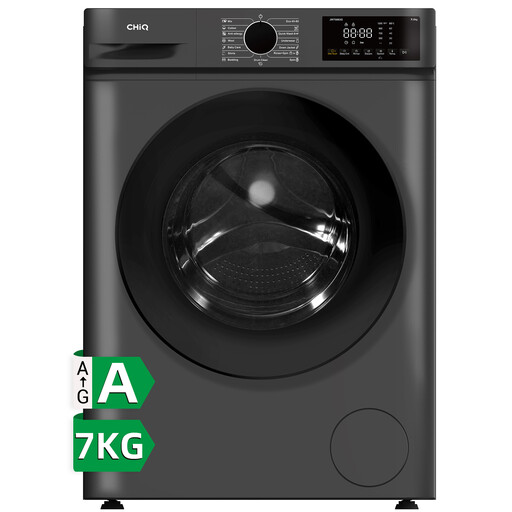
CHiQ JW75883G, 7 kg
A front-loader to compare if depth is limited and you want to weigh up the drum space against the room available.
The product information lists a depth of 47 cm, a capacity of 7 kg and a 530 mm drum.
As well as the stated depth, allow room for the hoses and to open the door.
Joybuy
 No image available
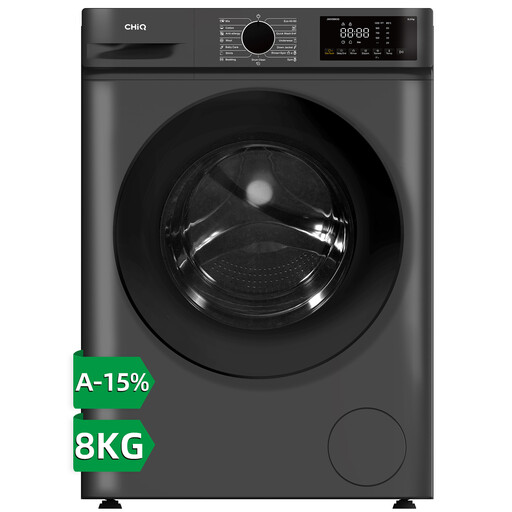
CHiQ JW85883G, 8 kg
This front-loader is worth comparing if you’re looking for more drum space and have enough depth available.
The product information lists a depth of 52 cm, a capacity of 8 kg and a 530 mm drum.
As well as the stated depth, allow room for the hoses and to open the door.
Joybuy
Frequently asked questions
Can every machine-washable bath mat be washed at 60 °C?
No. Follow your mat’s care label. For example, IKEA recommends a maximum of 40 °C for its latex-backed FINTSEN bath mat; that instruction doesn’t automatically apply to other bath mats.
Why does a single bath mat sometimes come out of the machine still wet?
An unevenly distributed, absorbent load can slow down or interrupt the spin cycle. Follow your machine’s loading instructions and redistribute the load if the machine reports an imbalance.
How can I prevent musty smells if I regularly wash at low temperatures?
Remember to maintain your washing machine, too. Milieu Centraal recommends running a wash at 60 °C about once a month to remove soap and dirt residue. Use laundry whose care label allows this temperature; don’t assume that your bath mat can be washed at 60 °C.
What does the energy label tell me about running costs?
The EU energy label shows, among other things, energy use per 100 cycles and water use per cycle. Compare like with like; your annual costs will also depend on how often you use the machine and your tariffs.
What can I do if my washing machine turns out to be faulty after purchase?
In the Netherlands, the retailer is your point of contact for a solution if a product is faulty. According to the Dutch government, the manufacturer’s warranty is in addition to your statutory rights; what applies in your case depends on the fault and the circumstances.


