
Housemates who do their washing together
You want to wash aprons with other suitable items and choose a drum you can usually fill. Milieu Centraal and the Consumentenbond highlight the importance of choosing the right capacity.


Choose a drum that suits the loads your housemates can realistically wash together; a bigger machine isn’t automatically more convenient. Milieu Centraal and the Consumentenbond recommend checking the aprons’ care labels, spin-cycle noise, available connections and the energy and water figures on the energy label too.
You want to wash aprons with other suitable items and choose a drum you can usually fill. Milieu Centraal and the Consumentenbond highlight the importance of choosing the right capacity.
You want to take spin-cycle noise, a stable position and the stated water protection into account when deciding where to put the machine. The Consumentenbond covers noise and water protection, while Bosch Nederland recommends placing the machine on a stable surface.
You want to wash aprons according to their care labels alongside your everyday laundry, so you’ll need to check the available programmes and the usage figures on the energy label. The Consumentenbond and Milieu Centraal offer advice on washing and buying.
Start with the loads you can realistically wash together, then check the care labels, installation requirements and usage figures on the energy label.
| What to consider | What should you look for? | Who is this important for? |
|---|---|---|
| Drum capacity | Estimate how many aprons and other items can be washed together, then compare this with the stated load capacity. | I want to wash shared loads without choosing a drum that’s often too large. Around 31% of consumers say that having the right drum capacity for shared laundry is their top priority. |
| Care instructions | Check which temperature and programme settings suit the aprons’ care labels; don’t assume that every apron needs the same temperature. | I want to wash my aprons according to their individual care instructions, rather than choosing a programme based on its name alone. Around 23% of consumers prioritise finding a suitable programme for their aprons. |
| Noise and water protection | Compare the stated spin-cycle noise in dB(A), the described water protection and whether the machine is suitable for its intended position. | If the machine will be near bedrooms or above another living space, I want to consider noise and the possible consequences of a leak. Around 23% of consumers say noise or water protection is their top priority. |
| Energy and water use | Compare the energy and water figures on the energy label on the same programme basis, and consider how often you do laundry. | I want to know which usage figures apply to the programmes we’ll actually use. Around 15% of consumers put energy and water use first. |
| Positioning and connections | Measure the space and access route, then check the model dimensions and installation instructions, including the connections required. | If space or connections are a deciding factor, I want to know in advance whether the chosen model can be installed there. Around 8% of consumers say fit and connections are their top priority. |
A larger capacity won’t automatically be an advantage if the drum is often underfilled.
First work out which aprons and other items your housemates can realistically wash together. Milieu Centraal advises against choosing a washing machine that’s larger than you need.
The name of an extra feature doesn’t tell you how a particular apron can be treated. Refreshing clothes is also different from washing dirty fabric.
Read the care label and check that the temperature and programme are suitable.
An energy label gives you usage figures, but the loads and programmes you actually use matter too.
Compare energy and water figures on the same programme basis, and choose a capacity that suits the laundry loads in your home.
External dimensions vary by model. The access route, connections and installation instructions also determine whether it can be installed.
Measure the space and route, and check the model-specific dimensions and installation manual before buying.
The WAN28274NL is worth considering if you’re comparing washing machines with an 8 kg capacity and stated water protection.
The B1W764W BE and BM3WFU6843A are examples of models with capacities of 7 kg and 8 kg respectively.
The LR73844 is an 8kg model for which AEG lists a Steam Refresh function and eco-programme data.
According to its Dutch product page, the WW80CGC04AAEEN is an 8 kg front-loading washing machine with an A energy label and Ecobubble.
This selection includes washing machines with a range of stated drum capacities. Compare the capacity with the loads you can realistically wash together, and check the care labels and available space.
 Image unavailable
The stated 8 kg capacity gives housemates a useful point of comparison when washing loads together; choose a machine to suit the loads you actually wash.
The product name lists 1400 rpm, an A-40% energy label, ProSteam, PreciseWash and Inverter Motor+.
 Image unavailable
If you often wash smaller loads, 9 kg isn’t automatically an advantage. Compare the capacity with what your housemates actually wash together. Milieu Centraal advises against choosing an oversized washing machine.
The product name lists 1400 rpm, an A energy label and an NL/FR panel.
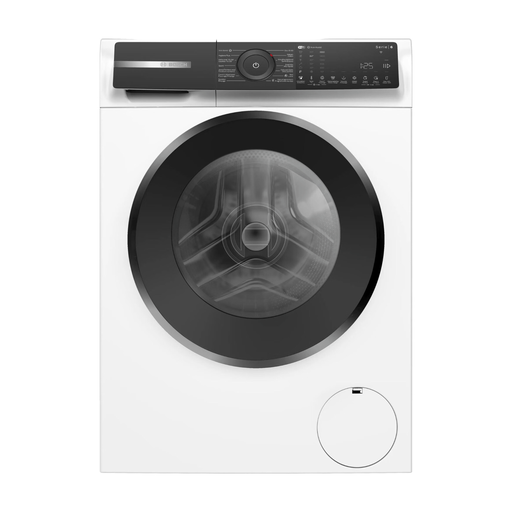 Image unavailable
Compare the stated 10 kg capacity with the shared loads you can usually combine; a bigger drum isn’t automatically more useful if you often do smaller washes.
The product name lists 1600 rpm, an A energy label and an NL/FR panel.
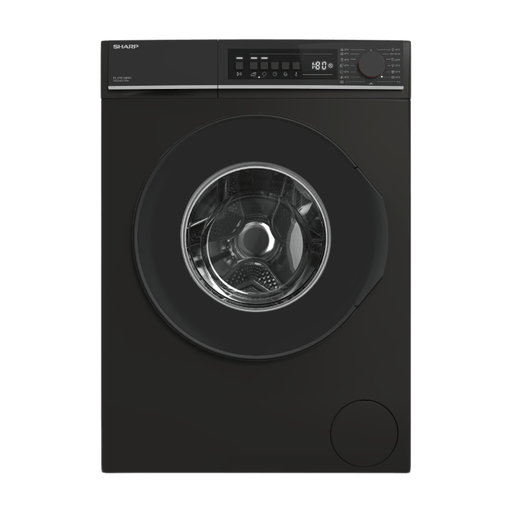 Image unavailable
The stated 7 kg capacity is worth comparing if your housemates often wash smaller loads; check that it suits the aprons and other items you can wash together.
The product name lists 1400 rpm, an A energy label and an Inverter Motor.
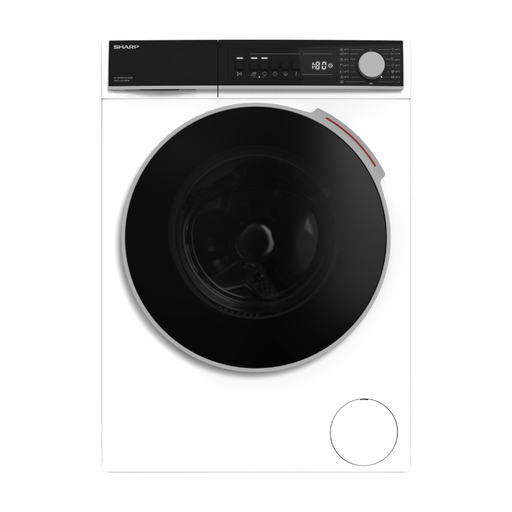 Image unavailable
The stated 9 kg capacity should be compared with the loads you actually wash together; Milieu Centraal advises against choosing a machine that’s too large.
The product name lists Steam+, Inverter Motor, AquaStop and a white finish.
No. The word ‘washable’ doesn’t mean that. The care label gives the maximum temperature and recommended programme gentleness. Milieu Centraal recommends 60 °C in certain hygiene-related situations, not as a general requirement for all aprons.
Measure the space and check the water inlet and outlet, hose lengths and manual for your chosen model. Bosch Nederland recommends a stable surface and an earthed socket. Its instructions also include removing the transit bolts before first use and checking for leaks after connecting the machine.
No. According to the Rijksoverheid, the Netherlands has no fixed statutory warranty period. If a consumer product is faulty, the retailer is your point of contact; what you can reasonably expect from a product depends on factors including the product itself and normal use.
Yes. The Rijksoverheid states that washing machines must have an energy label, with information about energy and water use. The label helps you compare models, but it doesn’t specify a particular energy class.