
Washing in a narrow alcove
You’re looking for a permanent machine for your aprons, but width is limited. With a top-loader, you’ll also need enough room above the machine to open the lid.


First, measure the available width and depth, and check how much room you need to open the machine. Then check the care label on your aprons. A top-loader may suit a narrow, fixed space, provided its lid can open fully. A front-loader is another option if there’s enough room for the machine and its open door. A portable mini washing machine is best for small, occasional loads if you’re happy to fill, rinse and drain it by hand.
You’re looking for a permanent machine for your aprons, but width is limited. With a top-loader, you’ll also need enough room above the machine to open the lid.
You wash aprons regularly, possibly with your household laundry. The programmes need to suit the care labels and how dirty your aprons are.
You want to put the machine away after a small load and can manage filling, rinsing and emptying it.
Choose this if: width is the main constraint and the lid can open fully above the machine.
Bear in mind: the top of the machine needs to remain clear, so it can’t go under a worktop. Consumentenbond reports that the top-loaders it tested washed less effectively than a standard front-loader; this is not a test finding about every individual model.
Choose this if: there’s enough room for the machine, hoses and a fully open door, for example if you want to wash aprons with your household laundry.
Bear in mind: a front-loader needs enough width and room for the door to open. Measure the space rather than relying on the word ‘compact’.
Choose this if: you wash small loads between regular washes and want to put the machine away after use.
Bear in mind: for the Mestic MW-120, the manufacturer gives separate maximum loads for washing and spinning: 3,5 kg of dry laundry and 1,5 kg of wet laundry. Filling, draining and rinsing also involve extra steps.
| What to consider | What should you check? | Who is this most important for? |
|---|---|---|
| Fit and opening space | Measure the width, depth and height, allow for the hoses, and check how much room the lid or door needs. Consumentenbond points out that opening space matters too. | If the alcove is tight, you’ll want to make sure the machine not only fits but is practical to use. Around 33% of consumers prioritise fit and opening space. |
| A suitable wash programme | Check that the temperature and gentleness of the programme match the care label on your aprons. Don’t assume a short cycle or steam function is suitable on its own. | If you wash aprons regularly, you’ll want a programme that suits their care labels and how dirty they are. Around 27% of consumers prioritise a suitable programme for washing aprons. |
| Storage and small loads | Weigh your usual load of dry aprons, and check separately how wet laundry is spun and where the machine can be stored after use. | If you don’t have a permanent spot for a machine, being able to store it may matter more than washing a large load at a time. Around 20% of consumers prioritise easy storage. |
| Connections and steps involved | Check the water supply, drainage and power requirements. Factor in the work involved in filling, draining and rinsing by hand. | If a permanent connection is difficult, you’ll want to know how much work each wash involves. Around 20% of consumers prioritise connections and ease of use. |
A narrow machine won’t be practical if its lid catches on a shelf, worktop or other obstruction.
Measure the whole space and check how much clearance is needed above the machine before choosing a model.
If the space isn’t suitable, you may need to alter the layout or move the machine elsewhere.
For the Mestic MW-120, the stated maximums are 3,5 kg of dry laundry for washing and 1,5 kg of wet laundry for the separate spin dryer.
Compare each figure separately with your usual load, and consider how you’ll dry wet aprons afterwards.
A difference between the wash and spin load capacities could mean extra spin cycles and more hands-on work.
The care label sets the permitted temperature and how gentle the programme needs to be. A feature name alone doesn’t mean it’s suitable for your apron.
Check the care label and the programmes actually available on the exact model, especially for heavily soiled aprons.
An unsuitable temperature or programme could damage the fabric or mean you have to wash it again.
According to AEG Netherlands, the AEG LTR6162K is a top-loader with a 6 kg capacity and a width of 397 mm.
According to Whirlpool Netherlands’ product specifications, the Whirlpool TW 622S FRESHCARE BE is 40 cm wide and has a stated capacity of 6 kg.
According to Haier, the Haier THASN466TM5-S is a top-loader measuring 405 mm wide, with a 6 kg capacity.
Mestic offers portable mini washing machines for small loads, including the MW-120 and MW-100.
These products include folding mini washing machines for small loads and full-size machines for a permanent spot. Check that each model’s capacity, features and space requirements suit your aprons and their care labels.
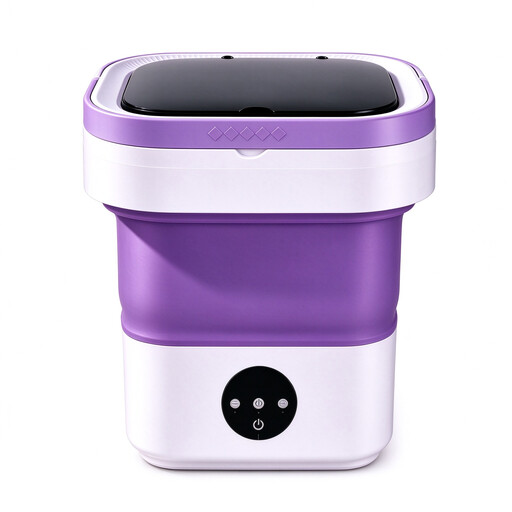 No image available
A portable, foldable option if you want to put your mini washing machine away after use.
The product title also mentions a portable dryer. Check that the features described meet your needs for washing aprons.
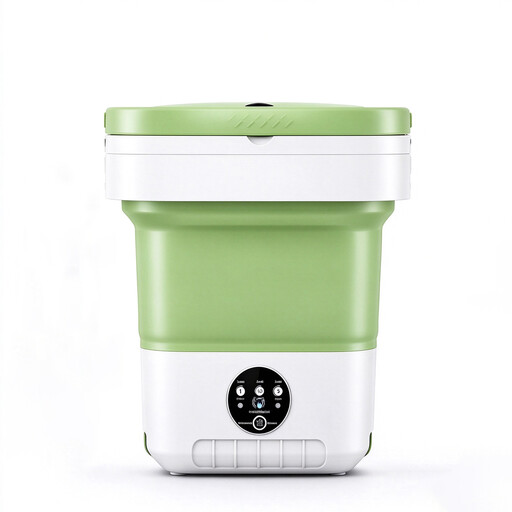 No image available
A foldable model for small loads if you want to put the machine away after use.
The product title lists a 12-litre capacity, a spin basket and 50 dB. Capacity in litres is not the same as the weight of laundry the machine can wash in one load.
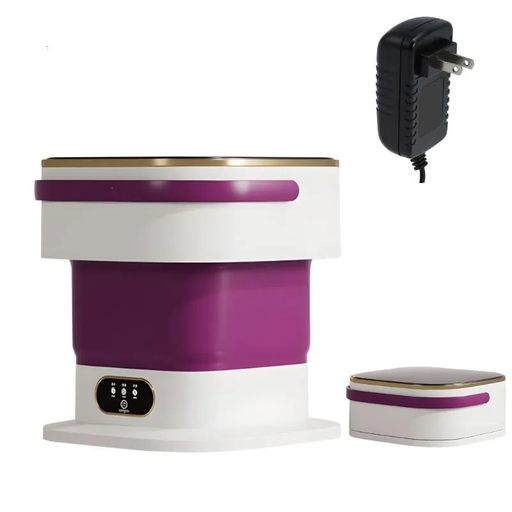 No image available
A portable option for small loads that you want to put away after use.
The product title lists a 15-litre capacity, a spin basket and 50 dB. Check separately how much laundry the model can handle in one load.
 No image available
A full-size machine to consider if depth is your main constraint. Remember to allow space for connections and for the door to open.
The product title lists a depth of 45 cm, a 6 kg capacity, a BLDC inverter motor, steam washing, a 15-minute quick wash programme, automatic load detection and an energy rating of B. Check that the programmes suit the care labels on your aprons.
 No image available
A full-size machine to consider if you have a permanent laundry space and its capacity suits your usual load.
The product title lists an 8 kg capacity, 1400 rpm, ProSteam and the 7000 Series. Check the dimensions, connections and available programmes for the exact version before deciding.
No. Follow the maximum temperature and programme guidance on the care label for that particular apron. A steam function or short cycle doesn’t replace checking the label.
It depends on the model. Mestic says the MW-120 can be filled using a hose or bucket. Draining the water and running a rinse are also part of using it.
Allow space for the hoses and to open the door or lid. For a full-size machine, follow the installation instructions, including guidance on placing it on a stable surface and removing the transit bolts. Consumentenbond recommends running a wash programme at 60 °C or above periodically to maintain the machine. This doesn’t mean you should wash aprons at a higher temperature than their care labels allow.
Not necessarily. The NVWA checklist for the hospitality industry mentions clean clothing for staff as part of working safely with food. This isn’t a general washing temperature recommendation for every apron or household.