
Someone with a cramped laundry area
Your choice depends on the width and depth available, and the space needed to open a front door or top lid. The Consumers’ Association explains that top-loaders and front-loaders have different space requirements.


First, measure the available width and depth, as well as the space needed to open the machine: a top-loader may work when width or clearance in front of the machine is limited, while a shallow front-loader is a good option when depth is restricted and there is room for the door to open. The Consumers’ Association points out that top-loaders and front-loaders have different space requirements, so compare the dimensions and clearance needed for the exact model. Then choose a drum size that suits your usual load and check the care labels on your aprons.
Your choice depends on the width and depth available, and the space needed to open a front door or top lid. The Consumers’ Association explains that top-loaders and front-loaders have different space requirements.
You need a drum that suits your usual laundry load. Follow the care label on each apron for the temperature and washing instructions; Milieu Centraal recommends choosing a drum size that suits the load.
If the machine is near your living space or your neighbours’, pay extra attention to noise and vibration during the spin cycle. The Consumers’ Association notes that spinning is the loudest stage.
| What to consider | What should you check? | Who should consider this? |
|---|---|---|
| Fit and opening clearance | Measure the width, depth and height; check clearance for the door or lid, and allow for hoses and connections. | If my space is tight, I need to know whether both the machine and its door or lid will fit. Around 33% of consumers prioritise finding a machine that fits. |
| Washing aprons and drum size | Check the maximum temperature and recommended wash setting on the care label; compare your usual load with the drum capacity and available programmes. | I want to wash my aprons according to their care labels and avoid choosing a drum that doesn’t suit my usual load. Around 27% of consumers prioritise washing aprons. |
| Noise and vibration | Compare noise levels during the spin cycle using the same labelling basis, and check that the machine can stand level and stable. | If my machine is close to my living space, I want to take spin noise and vibration into account. Around 20% of consumers prioritise a quieter home. |
| Energy use and water protection | Compare energy and water figures on the same labelling basis; check what water-protection features the model has and what is included in the installation. | If a leak could affect other homes, I want to know what protection is in place and how energy use and installation fit into my decision. Around 20% of consumers prioritise these costs and risks. |
The energy and water figures on the energy label are based on the eco 40-60 programme; they don’t automatically reflect the consumption of other programmes. The European Commission describes the EU energy label scale for household washing machines as running from A to G. So compare noise and consumption figures on the same labelling basis.
A top-loader may be narrower, while a front-loader may be shallower. One measurement alone won’t tell you whether the machine will fit in your space.
Measure the width, depth and height separately. Compare them with the exact model dimensions, and check the clearance needed for the door or lid, hoses and connections.
A drum that doesn’t suit your usual load can make it harder to fill the machine appropriately. A larger capacity isn’t automatically necessary for small loads.
Estimate or weigh your usual load, including any other laundry that can be washed with the aprons, before choosing a capacity. Milieu Centraal recommends matching the drum size to your household and laundry load.
The energy and water figures on the energy label are based on eco 40-60. An apron’s care label may specify a different temperature or washing treatment.
Use label figures to compare models on the same basis, and separately check whether the available programmes are suitable for the aprons you want to wash.
Hose protection, overflow protection and a base sensor don’t necessarily respond to the same problem. The impact of a leak also depends on where the machine is installed.
Check which features the model you’re considering actually has and assess the installation location, particularly if water could reach other homes.
According to Whirlpool, the TDLR 6261BS BE is a top-loader with a capacity of 6,0 kg and a spin speed of 1200 revolutions per minute.
Beko lists a capacity of 7 kg, a width of 60 cm and a depth of 49,6 cm for the BM3WFU3741S.
Bosch lists a capacity of 7 kg and dimensions of 848 × 598 × 588 mm for the Serie 2 WGE02406NL.
These Joybuy products may be worth considering for laundry in a small home. Check the exact dimensions, clearance for opening and drum capacity before choosing a model.
 Image unavailable
Only consider this model if its stated capacity suits your usual load and it fits in the space available.
The product title lists 9 kg, 1400 rpm, energy class A, an NL/FR control panel and a white finish.
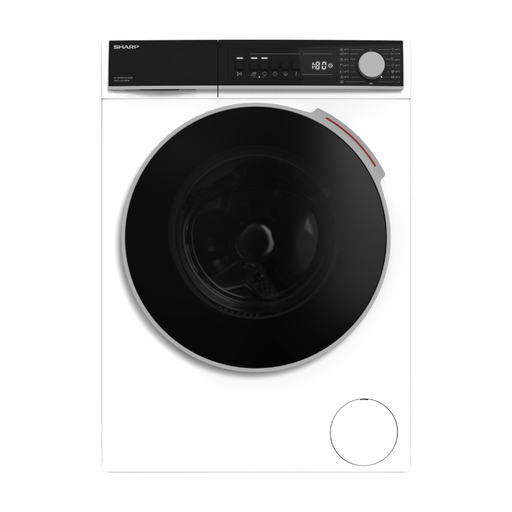 Image unavailable
Compare the capacity with your usual laundry load and check that the model and the space it needs are suitable for your flat.
The product title lists 9 kg, 1400 rpm, energy class A (-20%), Steam+, an Inverter Motor and AquaStop. It also lists a white finish.
 Image unavailable
The stated depth may be useful if space is limited; also check the connections and clearance needed for the door.
The product title lists 6 kg, a depth of 45 cm, a BLDC Inverter Motor, Steam Wash, Quick Wash 15mn and energy class B.
No. Follow the maximum temperature and recommended wash setting on the apron’s care label. General advice for certain hygiene situations doesn’t change the washing instructions for a specific apron.
Measure the installation space and access route, and check the clearance needed for the door or top lid, the water inlet and drain, and a stable floor. Find out whether installation is included, and make sure the machine is level once it’s in place.
No. The Dutch government explains that there is no fixed statutory guarantee period in the Netherlands; what you can expect in terms of a product’s lifespan depends, among other things, on the product and the information provided by the seller. If a product is faulty, you can contact the seller.
Compare the energy, water and noise figures on the same labelling basis. According to the European Commission, the EU energy label for household washing machines runs from A to G; the figures for eco 40-60 don’t necessarily predict the consumption of other programmes.