What should you look for when choosing?
Start with the usual shared load, then check which programmes, noise levels and consumption figures suit the way you use the machine. The Consumers’ Association describes Eco 40-60 as intended for normally soiled laundry that is suitable for this programme; that label is no guarantee that it will suit every apron or stain.
| What to consider |
What should you look for? |
Who is this important for? |
| Washing aprons appropriately |
Compare cotton, synthetics and adjustable programmes with the care labels; assess unusually heavy soiling separately. |
If I wash aprons with different care labels or levels of soiling, I want to be able to choose a suitable programme. Around 33% of consumers prioritise effective cleaning of aprons. |
| Capacity and scheduling |
Estimate your usual shared load and compare the drum capacity with the programme duration and load limits of the programmes you use. |
If we share the machine for aprons and everyday laundry, I want enough drum space and a wash cycle that fits our schedule. Around 27% of consumers prioritise capacity and a manageable laundry schedule. |
| Noise |
Compare the dB(A) value and noise class during spinning on the energy label, and take the machine’s location into account. |
If the washing machine is close to a living room or bedroom, I want to consider the noise during the spin cycle. Around 20% of consumers say reducing noise is their main priority. The Consumers’ Association points out that the label’s spin noise value applies to Eco 40-60. |
| Consumption when washing frequently |
Compare energy and water consumption on the same label basis, and check whether Eco 40-60 suits the laundry you usually wash. |
If we wash frequently, I want to take consumption into account without choosing a programme that isn’t suitable for the laundry. Around 20% of consumers prioritise the running costs of regular washes. Milieu Centraal also advises matching the drum capacity to your usual load. |
Washing machines for shared laundry
These product picks are suited to shared household laundry, with a focus on drum capacity, programme options and different types of loads.
 Image unavailable
Midea MF110W80BA10/W-NL, 8 kg
The stated capacity and delayed end time may be useful when housemates share wash cycles and want to plan them in advance.
The product information lists an 8 kg capacity, 1400 rpm and 16 wash programmes. It also mentions a 15-minute quick wash, an extra rinse and a 0–24-hour end-time delay.
View at Joybuy
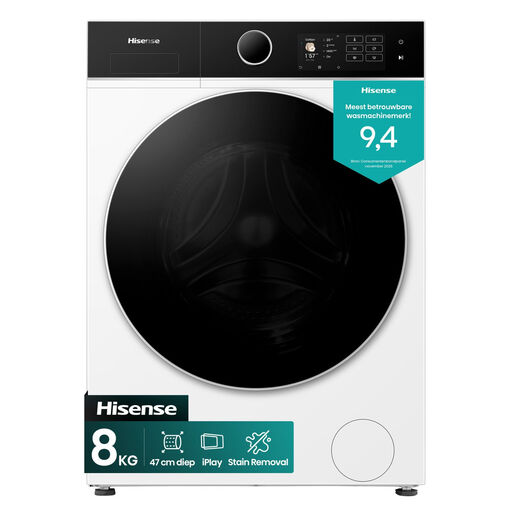 Image unavailable
Hisense WF5I8043BWF, 8 kg
The stated capacity and depth are useful to compare with shared loads and the space available for installation.
The product information lists an 8 kg capacity, 1400 rpm, 18 wash programmes and a depth of 47 cm. It also mentions steam, Power Wash and Quicker Wash features; these names do not prove results for specific apron stains.
View at Joybuy
 Image unavailable
Beko BM3WFU38412CW, 8 kg
The listed programmes and extra-rinse option may be useful if you want to adjust the settings for different types of household laundry.
The product information lists an 8 kg capacity, 1400 rpm, energy class A and programmes for cotton, synthetics, mixed loads and Eco 40-60, among others. It also mentions StainExpert, Hygiene+ and an extra-rinse option; these names are not an independent cleaning test.
View at Joybuy
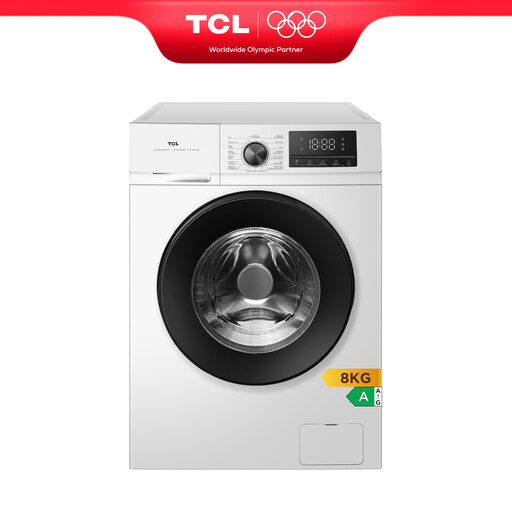 Image unavailable
TCL FF2408WA2, 8 kg
The quick programme is described as suitable for lightly soiled everyday laundry; check whether the programmes also suit the care labels on your aprons.
The product information lists an 8 kg capacity, a BLDC motor, 1400 rpm and energy class A. It also mentions 16 programmes and a 15-minute quick programme for lightly soiled everyday laundry.
View at Joybuy
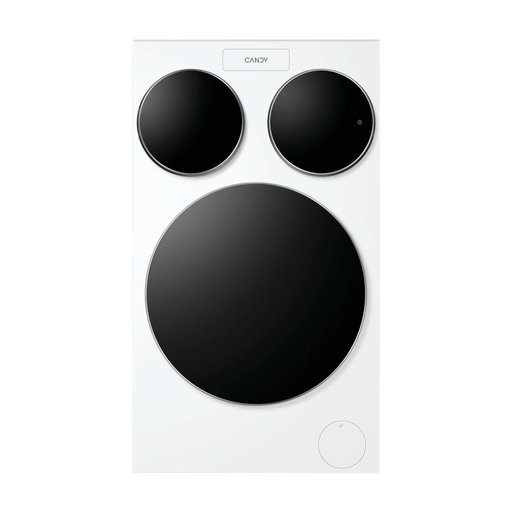 Image unavailable
Candy MQD 410CBL9-S, 10+1+1 kg
The separate drums and the stated option to wash loads at the same time or separately may be useful if housemates want to schedule different washes.
The product information lists three drums, a capacity of 10+1+1 kg, 1330 rpm and energy class A. It also mentions programmes for different types of laundry.
View at Joybuy
Frequently asked questions
Should an apron always be washed at 60 °C?
No, there is no single washing temperature that applies to every apron. Follow the care label and take the level of soiling into account. The Netherlands Nutrition Centre recommends a minimum of 60 °C for items including tea towels and dishcloths; this is not automatically the right washing instruction for every apron.
Is Eco 40-60 automatically suitable for dirty aprons?
No, Eco 40-60 is intended for normally soiled laundry that is suitable for the programme. For unusually heavy soiling, check the care label and the programmes available. The Consumers’ Association also reports that detergent sometimes rinses out poorly in tests of this programme.
What does the energy label tell me about my own washing costs?
The label provides comparison information about things such as energy and water consumption for Eco 40-60, but it is not a bill covering every programme and load your housemates use. Compare figures with the same units and measurement basis, and check that the programme suits the laundry you wash.
Do catering rules apply to aprons in a shared house?
Not simply because housemates share a washing machine. If the aprons are used by a business that sells food or drink, the relevant food safety rules for that business activity also apply. The Netherlands Food and Consumer Product Safety Authority includes clean clothing in its checklist for working safely with food; what applies depends on the specific business context.
Who should I contact about a fault with a washing machine bought in the Netherlands?
Report the fault to the retailer. According to ACM ConsuWijzer, statutory guarantees are separate from any manufacturer’s warranty; the appropriate solution depends on the circumstances and applicable terms. So, an advertised manufacturer’s warranty period does not automatically mean your statutory rights have ended.


