
Anyone washing stained aprons
If you want to tackle recurring stains, choose a programme that suits the fabric and its care label. Milieu Centraal and the Consumers’ Association stress the importance of using the right treatment and programme.


Choose a drum capacity that suits the laundry you usually wash together, then check that the programmes match the care labels on your aprons. If stains are a regular problem, pre-wash or stain options may be useful, but they don’t guarantee that every stain will come out. The energy label shows consumption for eco 40-60; it doesn’t automatically predict how much energy the programme you use for an apron will consume.
If you want to tackle recurring stains, choose a programme that suits the fabric and its care label. Milieu Centraal and the Consumers’ Association stress the importance of using the right treatment and programme.
If you usually wash a few aprons with other laundry, it makes sense to choose a capacity that suits your typical load rather than an occasional peak. The Consumers’ Association recommends taking your capacity needs into account when choosing a machine.
If you also regularly wash larger loads, weigh up capacity against the space available and energy consumption. Milieu Centraal and the Consumers’ Association highlight size, capacity and energy use as factors to consider.
Choose a drum capacity that suits the laundry you usually wash together, then check that the programmes are suitable for your aprons.
| What to consider | What should you check? | Who is this important for? |
|---|---|---|
| Stains and fabric programmes | Check the care label and compare the programmes, including any pre-wash or stain options. Milieu Centraal warns that not every stain will come out in the washing machine. | If you regularly wash stained aprons, you’ll want to match the treatment to the fabric and the stain. Around 33% of consumers prioritise stains and suitable fabric programmes. |
| Capacity | Compare the drum capacity with your usual combined load and check any limits for the programme you want to use. The Consumers’ Association recommends factoring in your capacity needs. | If you usually wash aprons with a small or mixed load, don’t base your choice on an annual peak alone. Around 25% of consumers give suitable capacity top priority. |
| Purchase and running costs | Compare the purchase price and energy label. The Consumers’ Association explains that the label’s energy and water consumption figures relate to eco 40-60. | If you’ll use the machine often outside seasonal changes, weigh up the costs against the features you really need. Around 25% of consumers prioritise overall costs. |
| Installation and noise | Check the exact model’s external dimensions and stated noise level during the spin cycle, as well as its capacity and programmes. | If you have limited space or use a laundry room close to living areas, check in advance that the size and spin noise will suit your home. Around 17% of consumers prioritise installation or noise. |
Your usual load matters too, as you’re likely to use the machine for everyday laundry more often than for seasonal loads of aprons.
Work out how much laundry you usually wash together and compare capacities on that basis; don’t use an occasional larger load as your only benchmark.
The consumption figures on the energy label are based on eco 40-60 and don’t automatically tell you how much another programme will use.
Where possible, compare information for the programmes you actually use and follow the care instructions suitable for your apron.
An extra feature doesn’t prove that every stain will come out or that the programme is suitable for every apron. The care label should always guide you.
Check the label, treat the stain in a way that’s suitable for the fabric, and assess features for the exact model and the laundry you plan to wash.
According to ACM ConsuWijzer, there is no fixed two-year period for statutory guarantees in the Netherlands. With normal use, a product must meet what you could reasonably expect from it.
Keep your proof of purchase and contact the retailer if there’s a fault. Each case is assessed according to its circumstances.
The features listed apply to the models named and are not a judgement on the entire brand.
The BM3WFT3841B1 is worth comparing if you’re looking for a stain option as well as standard programmes.
The LR6ALPHEN from the 6000 ProSense range is worth comparing if you wash loads of varying sizes.
The WGG244ZANL is worth comparing if you want to weigh up different programmes and options.
The F4X1008NWH is worth comparing if you’re considering an 8 kg front-loader with additional features.
The WEA128 WCS 8 kg Active is worth comparing if additional fabric programmes and dosing options are important to you.
These models offer a range of capacities and programme options for seasonal laundry and aprons with different care requirements. Compare the listed programmes with the care labels on your aprons.
 No image available
The stated capacity and programmes for different fabrics may be useful if you wash aprons with other laundry.
The product details list a 9 kg capacity and programmes for delicates or silk, synthetics, wool and pre-wash.
 No image available
The stated capacity and programmes for different fabrics are worth considering if you’re washing a seasonal load of aprons.
The product details list an 8 kg capacity and programmes for delicates, wool, mixed loads and pre-wash. Do not wash items contaminated with flammable substances.
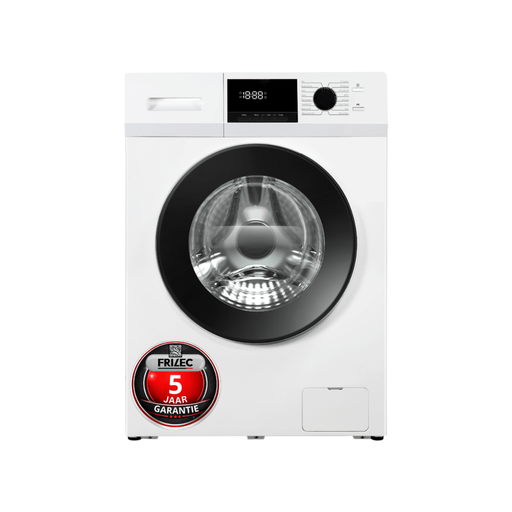 No image available
The stated capacity and programmes for different fabrics may be a factor if you wash aprons with other laundry.
The product details list an 8 kg capacity and programmes for cotton, delicates, wool and quick wash. Do not wash items contaminated with flammable solvents, oil or chemicals.
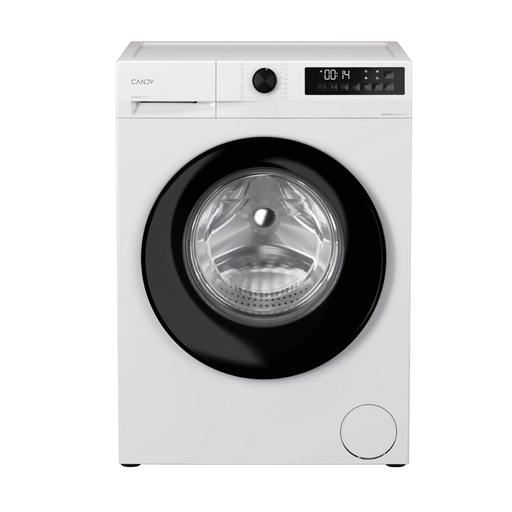 No image available
The stated capacity is relevant if you regularly wash larger loads; also check that the programmes suit your aprons.
The product details list a 9 kg capacity, 16 wash programmes and short cycles.
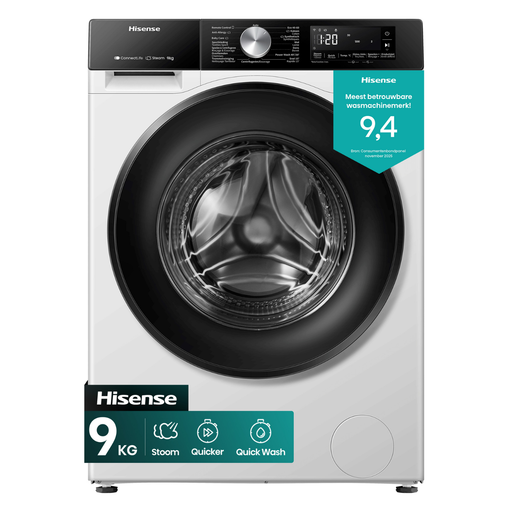 No image available
The stated capacity and pre-wash option may be useful for a larger seasonal load; choose a programme that matches the care label.
The product details list a 9 kg capacity and programmes including pre-wash, wool and quick wash.
No. Only use it if the care label allows this treatment. Eco 40-60 is designed for normally soiled cotton that the care label says can be washed at 40 or 60 °C. If the apron is made from another material or has different care instructions, check the label first. Milieu Centraal recommends following the care instructions.
First check the care label and choose a treatment that suits the stain and fabric. Milieu Centraal warns that some stains won’t come out in the washing machine.
No. According to ACM ConsuWijzer, there is no fixed two-year period for statutory guarantees in the Netherlands. With normal use, the product must meet what you could reasonably expect from it. Contact the retailer if there’s a fault; each case is assessed according to its circumstances.
The Dutch government lists options including the shop or online retailer where you buy a new, similar appliance, and your local council recycling centre. When placing your order, check how collection on delivery is arranged.