What should you look for when choosing?
Start with the load you usually wash, then check that the programmes you want and the space available are suitable.
| What to consider |
What to look for |
Who is this important for? |
| Capacity for varying loads |
Weigh a typical load and compare it with both the drum capacity and the maximum load for the programme you’ve chosen. |
If my weekly wash varies from one load to the next, I want enough room for a typical load without basing my choice solely on the number of aprons. Around 36% of consumers prioritise a suitable capacity. |
| Care labels and stains |
Check the colour, fabric type and care labels, and see which cotton, mixed-load or synthetic programmes are available. |
When washing soiled aprons, I want to choose a suitable programme without washing other fabrics incorrectly. Around 29% of consumers prioritise this combination of stain removal and fabric care. |
| Energy and water use |
Compare kWh per 100 eco 40-60 cycles and the water consumption shown on the label; check the manual for other programmes you use often. |
If I do laundry regularly, I want to weigh the consumption figures against my own routine. Around 21% of consumers prioritise energy and water use. |
| Space and controls |
Measure the available space and compare its height, width and depth with the dimensions of the exact model. |
If space is limited, I want to know in advance whether the machine will fit where I plan to put it. Around 14% of consumers prioritise dimensions and practicality. |
Washing machines at Joybuy
These Joybuy products are aimed at washable aprons and varying loads. Check the programme instructions, load limits and dimensions for each model.
 No image available
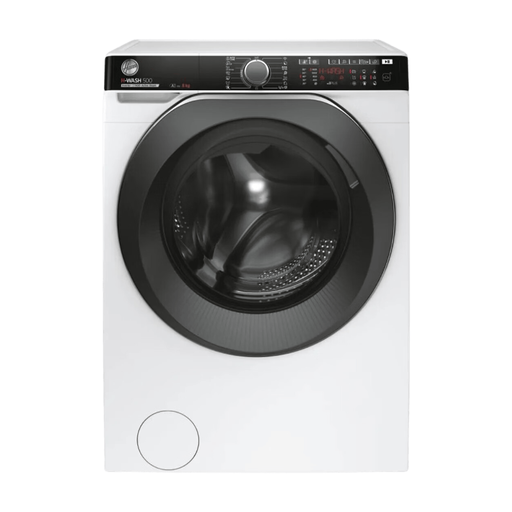
Hoover HWP 48AMBC7/1-S, 8 kg
The Auto Care feature adjusts the programme to the fabric type and load, according to the product description.
8 kg capacity; the description also mentions a hygiene cycle that stays at 60 °C for more than 20 minutes.
Joybuy
 No image available
Midea MF110W80BA10/W-NL, 8 kg
The Mixed Load and add-garment features are worth comparing if your loads vary.
8 kg capacity, 16 programmes and 42 kWh per 100 cycles according to the product description, which also says you can add laundry early in the cycle.
Joybuy
 No image available
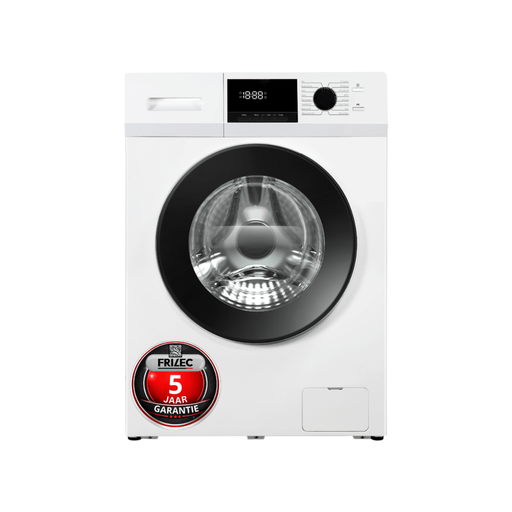
Frilec KOBLENZ8314WA-342, 8 kg
The Mix programme makes this model worth comparing for mixed loads; check the permitted load in the programme table.
8 kg capacity, A energy rating and 42 kWh per 100 cycles according to the product description, which also mentions automatic adjustment to the amount of laundry.
Joybuy
 No image available
Beko BM3WFU3741S, 7 kg
The product description lists both a Mix and a Stain programme, which you can compare with your aprons’ care labels.
7 kg capacity, 1400 rpm, C energy rating and 15 programmes according to the product name and description; half-load and automatic load adjustment are also mentioned.
Joybuy
 No image available
Beko BM3WFU38412CW, 8 kg
The Mixed Load and StainExpert programmes are worth comparing with the fabric type and care labels of your aprons.
8 kg capacity, 1400 rpm and A energy rating according to the product name; the description also lists 15 programmes, OptiSense load detection and 47 kWh per 100 cycles.
Joybuy
Frequently asked questions
Can you wash aprons with the rest of your weekly laundry?
Yes, if the colour, fabric type and care labels allow you to use a suitable programme. Also check the programme’s maximum load: for mixed loads, it may be lower than the machine’s maximum drum capacity. The Dutch Consumers’ Association advises sorting laundry by colour and fabric type.
Is eco 40-60 suitable for every soiled apron?
No. Use eco 40-60 only for cotton that the care label says can be washed at 40 °C or 60 °C, and that is suitable for the programme. For other fabrics and types of soiling, follow the care label and programme instructions.
How do you work out what drum capacity you need?
Weigh a typical load and compare it with both the maximum drum capacity and the permitted load for the programmes you use most often. The Dutch Consumers’ Association advises choosing a large washing machine only if you’ll make use of the capacity.
Can you rely on a stain-removal programme for aprons?
Check how the feature works on each model, and follow the care label and programme instructions too. A stain function doesn’t guarantee that every stain will disappear; pre-treat light stains if necessary.
What should you consider when installing and maintaining your machine?
Compare the model’s full height, width and depth with the space available. Sort laundry by colour and fabric type, and follow the care labels. The Dutch Consumers’ Association advises running a programme at 60 °C or higher at least once a month to maintain the machine.


