
A washing machine with no permanent home
You wash small loads of flannels and want to be able to put the machine away after use. Allow for the space needed to fill it and drain the water. The Salora WMR5350 is one example of this portable option.


A foldable mini washing machine is a good choice for small loads if you want to put it away after use and can manage the water supply and drainage. A slim top loader may be a better fit if you have a permanent spot with limited width, while a front loader is worth considering if you want to wash flannels with other items and have enough room for the machine and door. If you need a standard 60 °C cotton programme for certain loads, check that your chosen model offers one; Eco 40–60 is not automatically the same.
You wash small loads of flannels and want to be able to put the machine away after use. Allow for the space needed to fill it and drain the water. The Salora WMR5350 is one example of this portable option.
You have a permanent spot and the necessary connections, but limited width. A top loader could work, as long as there is enough room above the machine to open the lid. The Dutch Consumers' Association points out that you cannot use the top as a shelf, and that a top loader is not suitable for fitting under a worktop.
You wash flannels with other suitable fabrics and want a capacity that suits the loads you usually do. The Dutch Consumers' Association stresses that the stated load capacity refers to a cotton wash.
Ideal for: small loads and a machine you want to put away after use, provided filling and draining it are practical.
Bear in mind: washing and spin-drying capacities may differ; also check which temperature settings are available.
Ideal for: a permanent spot where width is the main constraint and there is clear space above the machine.
Bear in mind: the top must be clear so you can open the lid; it is not suitable for fitting under a worktop.
Ideal for: a permanent space for the machine and enough other laundry to wash with your flannels.
Bear in mind: check the width, depth and clearance for the door; a larger drum is not necessarily practical for small, separate loads.
| What to consider | What to check before buying | Who should pay particular attention? |
|---|---|---|
| Space for installation and storage | Measure the space you have for using and storing the machine, including room to open the lid or door and drain the water. The Salora WMR5350 measures 380 × 420 × 635 mm (width × depth × height). | If I want to put the machine away after every wash, its size and how easy it is to move matter a lot; around 36% of consumers prioritise how easy it is to store. |
| A suitable wash programme | Follow the fabric care label and check whether the model has a suitable cotton or hygiene programme. The Salora WMR5350 does not list an adjustable temperature. | If I need a warmer programme for a particular load, I want the settings to suit the fabric; around 29% of consumers prioritise the right wash programme. |
| Capacity for your load | Compare the load capacity with the sorted loads you usually wash. With a mini washing machine, also check whether the spin-drying capacity is listed separately. | If I want to wash flannels with other suitable laundry, I look for a capacity that suits the load; around 21% of consumers prioritise load size. |
| Running costs and ease of use | For household washing machines, compare energy use per 100 cycles and water use per cycle on the same labelling basis. Also check the connections and installation space. | If I want to weigh up the number of washes and running costs against the machine’s size, I want to compare these figures on a like-for-like basis; around 14% of consumers prioritise running costs. |
For the Salora WMR5350, the manufacturer lists a maximum wash load of 4.6 kg and a spin-drying capacity of 2 kg. If you only look at the wash load, you may find you need extra spin cycles and more handling.
Compare both maximum capacities separately with the amount of laundry you usually want to wash.
Allow for extra handling if you need to spin the laundry in several loads.
You need to be able to open the lid above the machine. The Dutch Consumers' Association says that fitting one under a worktop is not suitable.
As well as measuring the width, check the clearance above the machine and make sure the space remains practical with the lid open.
The programme name does not mean every wash runs at 60 °C. For fabrics that need to be washed at this temperature according to their care instructions and the circumstances, you may need a different programme.
Check the fabric care label and look in the model’s manual for a suitable cotton or hygiene programme. The Dutch Consumers' Association suggests a standard 60 °C cotton programme or a suitable hygiene or allergy programme as an alternative.
The WMR5350 is a portable mini washing machine for small loads, ideal if you do not want a standard machine permanently installed.
The LTR7573A is a freestanding top loader worth comparing if width is limited.
The BM3WFU3741W is a front loader worth comparing if you want to wash flannels with other laundry.
The WGE02404NL is a freestanding front loader worth comparing if you have a suitable space for it.
The TW 622S FRESHCARE BE is a top loader worth comparing for its dimensions and programmes.
These products are suited to small loads and can be put away after use, or to a permanent space for a compact front loader.
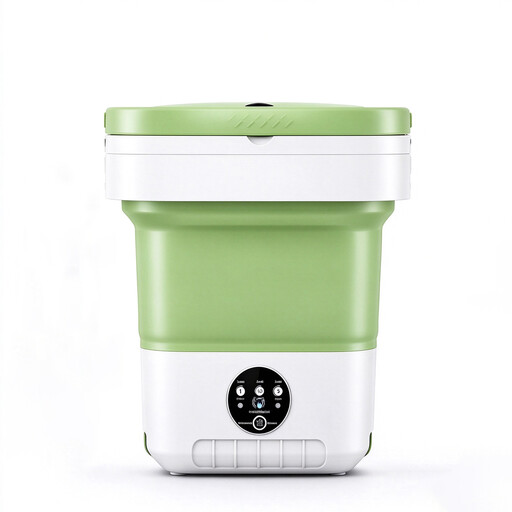 No image available
Ideal for small loads if you want to put a portable machine away after use.
The product description lists a maximum load of 1.5 kg and a separate spin-drying basket.
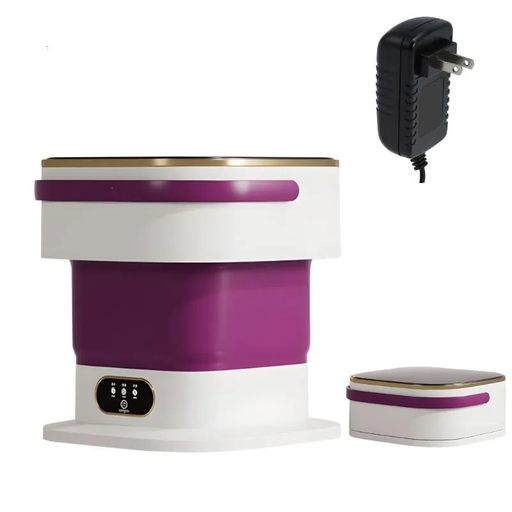 No image available
Ideal for small loads if you want to store a foldable machine neatly.
The product description lists a maximum load of 1.9 kg and a separate spin-drying basket.
 No image available
Ideal for a permanent space if you want to wash flannels with other laundry and have limited depth.
The product title lists a depth of 45 cm, energy class B, steam washing, a 15-minute quick wash and automatic load sensing. Check that the dimensions and door leave enough room in your chosen spot.
No, Eco 40–60 is not automatically the same as a standard 60 °C wash. For fabrics that need a warmer wash in the circumstances concerned, the Dutch Consumers' Association recommends a standard 60 °C cotton programme or a suitable hygiene or allergy programme. Always follow the fabric care instructions too.
Check that the installation space, water supply and drainage are suitable for your chosen model, and follow the installation instructions. Bosch lists items such as inlet and outlet hoses and transit bolts for its washing machines; do not automatically apply these model-specific instructions to a portable mini washing machine.
For household washing machines covered by EU labelling rules, the label includes information such as the energy class, energy use per 100 cycles and water use per cycle. The European Commission explains these figures; check whether the labelling also applies to the type of appliance you are considering.
No, legal protection does not always have a fixed two-year term. ACM ConsuWijzer explains that you are entitled to a product that works properly for as long as you could reasonably expect it to under normal use. Any manufacturer’s guarantee does not replace this legal right.
Online consumer purchases generally come with a statutory cooling-off period that ends 14 days after delivery. ACM ConsuWijzer advises checking the applicable terms and any possible exceptions.