
No room for an airer
You wash reusable fabric napkins but have little space to hang them up. In this case, the drying function and the drying symbol on the fabric care label are important considerations. GINETEX explains how to read care symbols.


If you can dry your napkins in small batches on an airer, a standard washing machine may be enough. Set the spin speed according to the care label, and ventilate the room. If you have virtually no space to hang them, a washer-dryer could be a good solution. However, base a combined load on the lower drying capacity, and only tumble-dry napkins if the care label allows it.
You wash reusable fabric napkins but have little space to hang them up. In this case, the drying function and the drying symbol on the fabric care label are important considerations. GINETEX explains how to read care symbols.
You can hang napkins up in small batches and want to know whether a standard washing machine will do the job. Consider the spin settings, the risk of creasing and ventilation. Consumentenbond discusses the link between spin speed and creasing.
The fabric and care label determine how your napkins should be treated. A delicate programme or a lower spin speed may matter more to you than the shortest possible drying time. GINETEX explains the meaning of care symbols.
Choose this option: if you can hang your napkins up in small batches and ventilate the drying space.
Bear in mind: you’ll still need to hang them up, and a faster spin can cause more creasing. Consumentenbond highlights this trade-off.
Choose this option: if you have virtually no space to dry your napkins and the care label allows tumble drying.
Bear in mind: drying capacity may be lower than washing capacity. A full wash-and-dry cycle usually takes longer and may use more energy than washing alone. Consumentenbond outlines these limitations.
Choose this option: if an airer won’t fit but you have room for two appliances.
Bear in mind: you’ll need two appliances and a suitable place to install them. Milieu Centraal notes that a heat-pump dryer generally costs more to buy than a less energy-efficient dryer.
The table breaks the choice down into four key priorities. Compare the settings and capacity listed with your own napkins and usual laundry load.
| Consideration | What should you check? | Who is this more important for? |
|---|---|---|
| Drying without an airer | Check the drying capacity, programme duration and energy label for the full wash-and-dry cycle. | If I don’t have space to hang my napkins, I want to know whether their care labels allow tumble drying. Around 36% of consumers give drying without an airer top priority. |
| Caring for fabric and reducing creases | Check the delicate programmes available, adjustable spin speed, and the washing and drying symbols. | For crease-prone table linen, I want to follow the care label, even if it takes longer. Around 29% of consumers put fabric care first. |
| Choosing the right drum capacity | Weigh a typical load and compare it with the washing capacity. For a washer-dryer, check the drying capacity too. | For small batches of napkins, I want a drum that suits my usual load, not just a high capacity. Around 21% of consumers make choosing the right load capacity their top priority. |
| Energy use when drying | Compare the label details for the same type of cycle. If you’re considering two separate appliances, take the available installation space into account. | If I dry laundry regularly, I want to be able to compare energy use based on how I actually use the machine. Around 14% of consumers give recurring drying costs top priority. |
The washer-dryers listed have a lower drying capacity than washing capacity. So a full wash load won’t necessarily fit into one uninterrupted wash-and-dry cycle.
Compare both capacities and plan a combined cycle around the drying load.
Otherwise, some of the load may need a separate drying cycle or still need to be hung up.
A higher spin speed can cause more creasing. The programme and load size also play a part. If the load is unbalanced, the maximum spin speed may be reduced automatically, as Bosch notes for the WGG246ZWNL.
Check the adjustable programmes and care label rather than looking only at the highest spin speed.
Washing alone and a full wash-and-dry cycle are different uses. The washing label therefore won’t tell you how much energy regular drying uses.
Compare the label details for the cycle you expect to use. If you’re buying separate appliances, include both in your comparison.
Regular drying means ongoing energy use.
The LWR73864 is a condenser washer-dryer for anyone considering an all-in-one appliance.
The F4DR3096N3W is a washer-dryer designed for a one-appliance setup.
The WD90HG6U94BEU3 is a washer-dryer for anyone without space for an airer.
The WGG246ZWNL is a standalone washing machine for anyone with a small, well-ventilated drying space.
The WEC395 WPS PWash&Steam&8kg is a standalone washing machine worth comparing if adjustable spin settings and fabric programmes matter to you.
These Joybuy products are washer-dryers for anyone who doesn’t want to dry napkins on an airer. Check the drying capacity of each model, and only tumble-dry napkins if their care labels allow it.
 Image unavailable
The built-in drying function may suit you if you have little space to hang your napkins.
The stated capacity is 9 kg for washing and 5 kg for drying. For a combined cycle, bear the drying capacity in mind and check whether the napkin care label allows tumble drying.
 Image unavailable
The built-in drying function may be useful if you have little space to hang your napkins.
The stated capacity is 9 kg for washing and 6 kg for drying. For a combined cycle, work to the drying capacity and check the care label before tumble-drying your napkins.
 Image unavailable
The built-in drying function may be a good fit when hanging space for napkins is limited.
The stated capacity is 8 kg for washing and 6 kg for drying; the product description lists a depth of 47 cm. Check the space you’ll need for installation and the care labels on your napkins.
 Image unavailable
The built-in drying function is worth considering if you have little space to hang your napkins.
The stated capacity is 9 kg for washing and 6 kg for drying; the product name lists a maximum spin speed of 1400 rpm. Check the care label before tumble-drying your napkins.
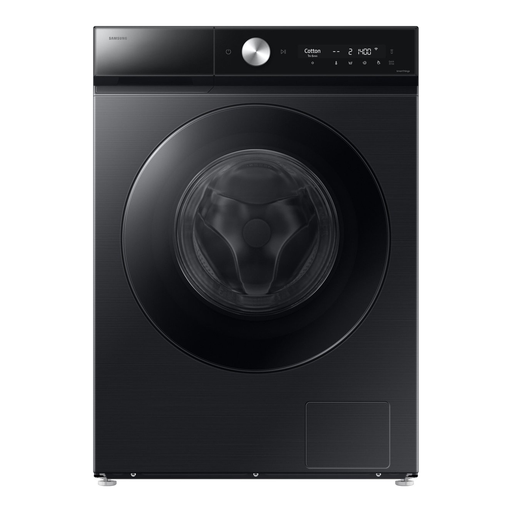 Image unavailable
The built-in drying function may be useful if you have little space to hang your napkins.
The stated capacity is 11 kg for washing and 6 kg for drying. The product description lists a spin speed of 1400 rpm and an adjustable spin speed. Also check the care label to see whether tumble drying is allowed.
No. Don’t assume that the same temperature or drying setting is suitable for every fabric napkin. GINETEX explains that the number in the washing symbol indicates the maximum washing temperature. Check the drying symbol too before tumble-drying a napkin.
For an uninterrupted wash-and-dry cycle, use the stated drying capacity as your guide, not the larger washing capacity. For example, AEG lists 8 kg for washing and 5 kg for drying for the LWR73864; these figures apply to that model.
Measure the available space and follow the installation instructions for your chosen model, including guidance on connections and door clearance. If you hang your napkins on an indoor airer, make sure the room is ventilated. Milieu Centraal recommends line drying where possible.
Compare the same type of cycle on the energy label: washing alone or the full wash-and-dry cycle. The Dutch energy label for household appliances provides information about energy use. A label for washing alone doesn’t show the energy use of a full drying cycle.
Yes. Your statutory guarantee is separate from a manufacturer’s or seller’s guarantee. ACM ConsuWijzer explains that the seller is responsible for providing an appropriate solution free of charge if an appliance breaks down sooner than you could reasonably expect under normal use. There isn’t one fixed statutory guarantee period for every washing machine.