
Vandaag of morgen in huis

Kwaliteit gegarandeerd

Welkomstaanbiedingen ontgrendelen: GRATIS bezorging | Tot 80% korting | Gratis 30 dagen JoyPlus-proefperiode
Download de app
Washing coloured clothes may seem simple, but using the wrong product can cost you more than necessary. A universal detergent, using too much detergent or choosing a capsule that is unsuitable for a small load can result in dull colours, stains that remain and unnecessary waste.
If you’re looking for a washing detergent for coloured clothes, don’t focus solely on the brand name or fragrance. The product format, dosage, temperature and suitability for the type of fabric are just as important. Below, you’ll find the key points to consider, along with some popular choices for different households.
Terms such as “colour protection” or “vibrant colours” sound appealing, but they don’t automatically tell you how the product will perform in your washing routine. Check whether the packaging specifically says that the detergent is suitable for coloured or mixed loads. Also look at the recommended washing temperature and dosage.
Claims about colour protection come from product information provided by the brand or retailer. For example, according to Dreft’s product description, its formula is designed to care for colours and fibres. However, this does not guarantee that every fabric or colour will stay looking its best for the same length of time.
More detergent doesn’t automatically mean cleaner clothes. Overdosing can leave residue in the machine or on fabrics, while increasing consumption per wash. Pay attention to:
A concentrated washing detergent may require fewer millilitres per wash than a standard liquid detergent. So compare the number of washes, not just the volume of the bottle.
A low-temperature washing detergent may be suitable for programmes from 20 or 30 °C, but that doesn’t mean every stubborn stain will disappear on a short programme. Product descriptions for OMO, g’woon and Robijn mention effectiveness at lower temperatures; always follow the care label and dosage instructions.
Grease, oil, grass and blood stains may require pre-treatment. Wash heavily soiled clothes according to the care label, and don’t use a higher temperature if the fabric does not allow it.
Colour washing powder is convenient for households that prefer to measure out a set dose and compare larger packs by price per wash. Powder does take up more space and may dissolve less effectively at lower temperatures.
Liquid detergent for colours is practical for short programmes and low temperatures. You can adjust the amount for a half load or lightly soiled clothes. Take care not to pour it directly onto delicate garments unless the label permits this.
Colour washing capsules are easy to use: place one capsule in the empty drum before adding the washing. There’s no need to measure, but the dosage is less flexible. Handle capsules with dry hands, keep them sealed and store them out of the reach of children. Ariel’s product description states that its capsules are suitable from 30 °C; Lenor mentions a water-soluble film. Always check the safety information on the packaging.
A large pack isn’t automatically better value. Divide the price by the stated number of washes. With liquid detergents, a concentrated formula may work out more cost-effective, but only if you use the recommended smaller dose.
Examples from the range:
A detergent for coloured clothes is not automatically suitable for wool, silk or other delicate fabrics. Check the care label. According to its product description, Ecover Wool & Delicates is intended for materials including wool and silk, while several standard detergents for coloured clothes are not suitable for these fabrics.
You should also sort light, dark and new coloured garments. New clothes may release dye. Wash them separately for the first few washes and fasten zips before filling the drum.
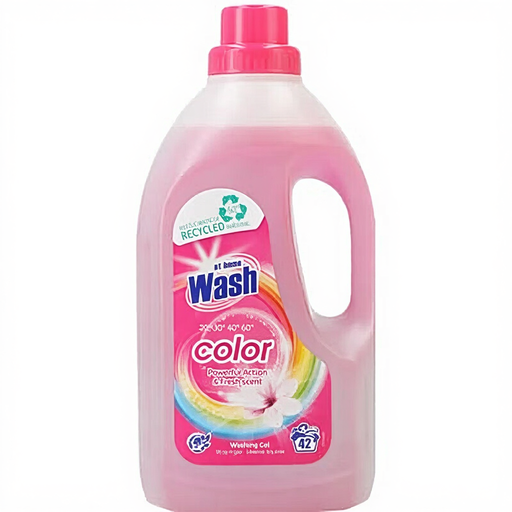
Why it suits this profile: The bottle is suitable for both machine and hand washing and states that it provides up to 42 washes. This makes it easy to compare the cost per wash.
The measuring cap helps to prevent overdosing. According to the product description, the detergent is suitable from 20 °C to 60 °C.
1.5-litre capacity, stated to provide up to 42 washes; measuring cap and pouring spout.
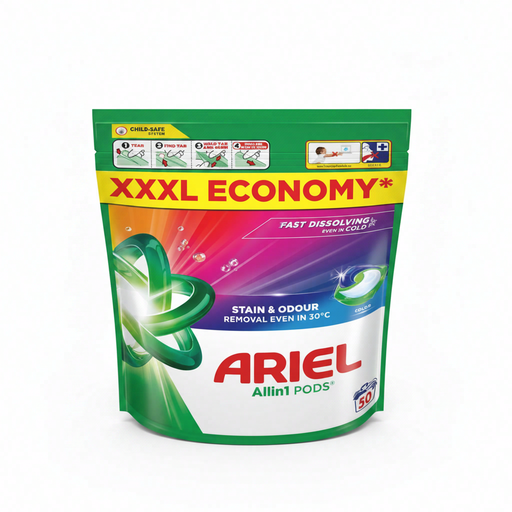
Why it suits this profile: Ideal if you value a pre-measured dose and getting the wash started quickly.
The capsule eliminates the need to measure. According to the product description, it dissolves from 30 °C and one capsule is intended for each wash.
50 capsules; concentrated formula; packaging with film stated in the product information to be biodegradable.
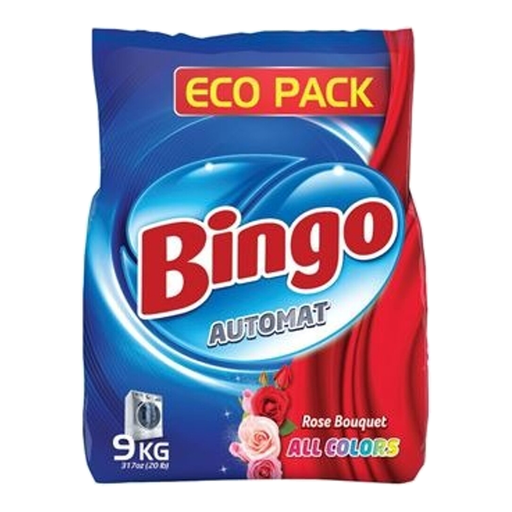
Why it suits this profile: A large pack is ideal for households that do a lot of machine washing and have room for storage.
The product information gives dosages for normally and heavily soiled washing. This allows you to adjust the amount instead of routinely using too much.
9 kg of powder; intended for automatic washing machines; according to the product description, suitable for coloured and mixed fabrics.
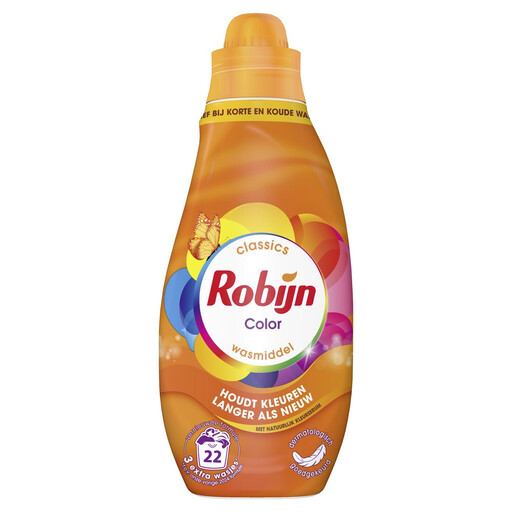
Why it suits this profile: The liquid, ultra-concentrated formula is designed for coloured and mixed loads at 15, 30 and 40 °C.
The stated 30 ml dosage makes it easier to measure smaller amounts for short programmes.
665 ml; stated to provide 22 washes; suitable for coloured and mixed loads.
We’ve put together a complete, up-to-date list of products that fully meet these strict selection criteria and the applicable European safety regulations.
Choose a product that states that it is suitable for coloured or mixed loads. A detergent for brightly coloured washing may be available as powder, liquid or capsules. Then compare the dosage, number of washes and recommended temperature.
That depends on the product formula. Some detergents, such as g’woon Color and Robijn Small & Powerful Color, are described in their product information as suitable for low temperatures. Always check the label and use an appropriate pre-treatment for stubborn stains.
Follow the expiry and storage information on the packaging. Keep liquid detergent tightly closed in a cool, dry place. Powder must be kept dry, and capsules must not become damp. Using the correct dosage and storing the product properly will help prevent waste.
