
Shopping for a narrow laundry space
You have very little width to spare and want to know whether a top-loader will fit and whether its lid can open freely. The Consumentenbond recommends considering top-loaders when width is limited.


If width is your main constraint and you can open the lid freely, consider a top-loader. If depth is the main constraint and there’s room for a front-opening door, compare shallow front-loaders. Measure the entire space, including hoses and clearance for opening, and choose a programme and load size to suit the care label on your covers: machine-washable doesn’t mean every cover can handle the same programme or drying method.
You have very little width to spare and want to know whether a top-loader will fit and whether its lid can open freely. The Consumentenbond recommends considering top-loaders when width is limited.
You have more width than depth available and want to open a front-loader without blocking the way through. Remember to allow for the hoses and the open door too; the Consumentenbond points out that models can vary in both width and depth.
Your choice depends on the washing and drying instructions on the care labels, as well as how many covers you wash at a time. For example, IKEA Netherlands lists different temperature and drying instructions for cushion covers.
Choose this when: width is the limiting factor and there’s enough space above the machine to open the lid.
Bear in mind: you’ll need clearance above the machine, and you can’t use its top freely if the lid needs to open.
Choose this when: depth is limited, there’s enough width and the front door can open freely.
Bear in mind: even a shallow model needs room for the hoses and for the door to open fully.
| What to consider | What should you check? | Who should pay extra attention? |
|---|---|---|
| Space and clearance | Measure the width, height and depth, including the hoses. Check that the door or lid can open fully too. | If the alcove is particularly narrow, I want to know whether the machine will fit and whether I can open it properly; around 36% of consumers prioritise where it will go. |
| Care labels | Read the care label on each cover and check that the machine offers a suitable programme and the recommended temperature. | If my covers have different care instructions, I want to be able to choose the right programme for each one; around 29% of consumers base their choice mainly on how the covers need to be cared for. |
| Load size per programme | Weigh a typical load and compare it with the maximum load for the programme you want to use. | I want to know whether my usual number of covers will fit into one suitable wash; around 21% of consumers focus mainly on finding a suitable load size for each wash. |
| Energy use and operation | Compare energy and water consumption using the same label basis, and check how long the programme suitable for your covers takes. | Once I know the machine fits and suits my laundry, I also want to consider its consumption and programme length; around 14% of consumers prioritise running costs and service. |
A top-loader may take up less width, while a shallow front-loader saves depth but may still be wide. A machine that seems to fit based on one measurement alone may be unusable because of the hoses or a blocked door or lid.
Compare the exact model’s external dimensions with the space available, including room for connections. Check which way the door or lid opens and that it can open fully.
Cushion covers can have different temperature, washing and drying instructions. A programme isn’t automatically suitable just because a cover is machine-washable.
Start with the care label on each cover, then check which programmes and temperatures the machine offers.
According to the Consumentenbond, the stated capacity applies to cotton washes; for delicate or synthetic laundry, it recommends a smaller load.
Weigh your sorted load of covers and compare it with the maximum load for the cycle you can use for them.
If the suitable cycle allows a smaller load than you usually wash, you may need to split the covers across several washes.
Whirlpool offers top-loaders for anyone looking to save width. The dimensions and capacity quoted here apply to the TW 6521S SENSE WASH BE.
The AEG LTR6363A is a top-loader worth comparing if width is limited.
The Candy CO4474TWM6/1-S is an example of a front-loader for anyone who needs to check the depth of their space carefully.
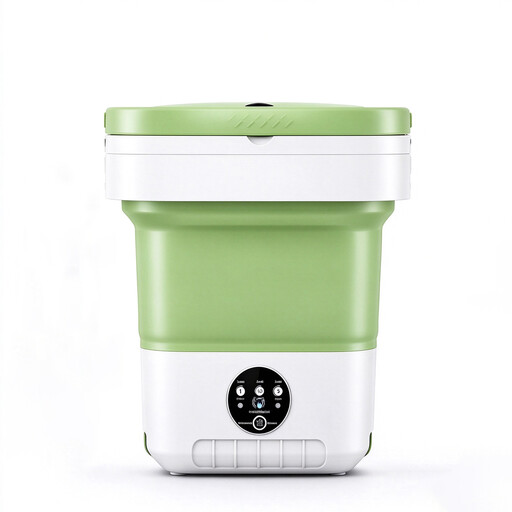
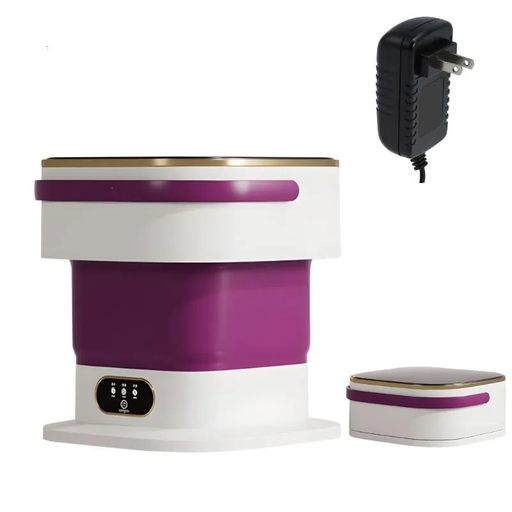
The Joybuy options below range from mini washing machines for small loads to front-loaders. For cushion covers, always check that the care label and the instructions for your chosen model are compatible.
 No image available
The product description mentions small loads; check whether the manual allows you to wash your cushion covers in it.
The product title lists 12 litres, 50 dB and a spin-drying basket.
 No image available
The product title describes a compact mini washing machine; check that the model and its instructions are suitable for your covers before use.
The product title lists 15 litres, 50 dB and a spin-drying basket.
 No image available
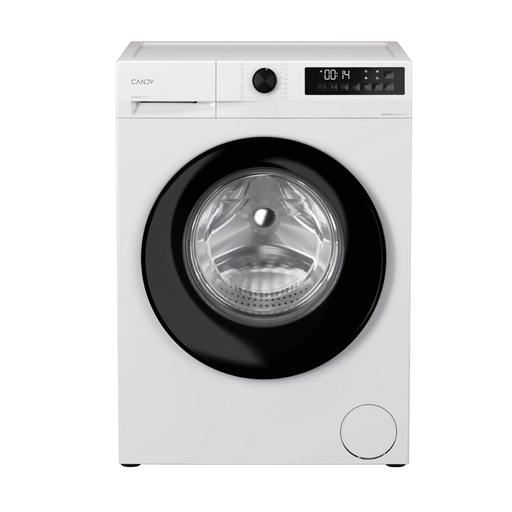
A front-loader to compare if there’s room for both the machine and its front-opening door.
The product title lists 9 kg, 1351 rpm, energy class A and 16 wash programmes.
 No image available
A front-loader to compare if there’s room for both the machine and its front-opening door.
The product title lists 8 kg, 1351 rpm and energy class A.
 No image available
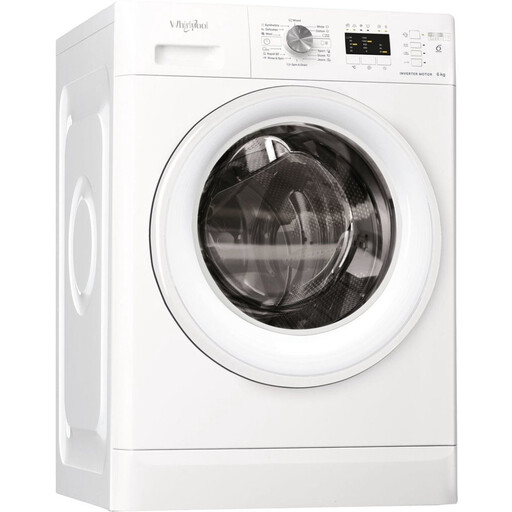
A front-loader to compare if there’s enough room for both the machine and its door.
The product title lists a capacity of 6 kg and a spin speed of 1200 rpm.
No. Machine-washable doesn’t mean that every cover can handle the same programme. IKEA Netherlands lists a maximum of 30 °C for one floor cushion cover and a maximum of 40 °C for another cushion cover. Follow the care label on each cover and sort your washing accordingly.
Not without checking the load limit for the programme you’ve chosen. According to the Consumentenbond, the rated capacity applies to cotton washes; for delicate or synthetic laundry, it recommends a smaller load. Check the manual for the exact model too.
Measure the space in width, height and depth, allowing for the hoses and for the door or lid to open fully. The Consumentenbond points out that washing machines can vary in depth as well as width.
The EU energy label for household washing machines uses a scale from A to G and includes details such as energy consumption per 100 cycles and water consumption per cycle. Compare models using the same label basis, and also check how long the programme suitable for your covers takes.