Who is this relevant to?

Hosts short on preparation time

You want to know whether the washcloths will be properly clean and dry before your guests arrive. That’s why the full programme time matters more than the duration of a quick wash phase alone. The Dutch Consumers’ Association points out that a combined cotton programme can take a long time.

Households with limited laundry space

You’d rather have one appliance for your everyday laundry than a washing machine and tumble dryer side by side. Measure the space available and check the connections required for your chosen model. The Dutch Consumers’ Association describes a washer-dryer as an option when there isn’t room for two separate appliances.

Families with lots of laundry

You regularly wash larger loads as well as washcloths. Check the washing and drying capacities separately, as the drying capacity may be lower. For example, LG lists the F4DR7596SYH as having a 9 kg washing capacity and a 6 kg drying capacity.

What should you look for when choosing?

Your current washing machine and air-drying

A good fit if: you’re preparing for an occasional visit and have enough time and space to air-dry the laundry.

The trade-off: you won’t need to buy a new appliance, but you’ll need to plan ahead for drying. Milieu Centraal names air-drying as the most environmentally friendly way to dry laundry.

A washer-dryer

A good fit if: one appliance suits your available space better and you regularly want to wash and dry without transferring the laundry between machines.

The trade-off: the drying capacity may be lower than the washing capacity, and a full wash-and-dry cycle can take a long time.

A separate washing machine and tumble dryer

A good fit if: you have room for two appliances and regularly do several loads of laundry.

The trade-off: you’ll need more space and have to transfer the laundry between machines. Milieu Centraal says that separate appliances use less energy together than a washer-dryer; compare the relevant energy labels.

Concern What to check before buying Who might be more concerned?
Getting washcloths clean and dry in time Check the duration of the full wash-and-dry cycle and the permitted load size. If I need the washcloths dry before guests arrive, the full cycle time matters more than a quick wash phase. An estimated 36% of consumers put time first.
One appliance for the space available Measure the space and access route; check the model’s dimensions and connection instructions. I want to fit in one appliance without making room for a separate tumble dryer. Around 29% of consumers put space first.
Drying capacity for everyday family laundry Compare the washing and drying capacities in kilograms separately, for the fabric type and programme you use. If I wash larger loads as well as washcloths, I want to know whether they can dry without removing some items midway through. An estimated 21% of consumers put load capacity first.
Energy use for repeated washing and drying Compare the figures for washing alone with those for the full wash-and-dry cycle on a like-for-like basis. If I often use the tumble-dryer function, I want to take the energy use of the full cycle into account. Around 14% of consumers put running costs first.

Common buying mistakes

  • Assuming the maximum wash load is also the maximum drying load

    A load that fits within the washing capacity may be too large to dry in the same cycle. For example, LG lists the F4DR7596SYH as having a 9 kg washing capacity and a 6 kg drying capacity.

    Plan a combined cycle around the drying capacity for the programme you’ve chosen, not just the size of the wash drum.

    A larger wash load may mean an extra drying cycle and more time.

  • Confusing a quick wash function with a short full cycle

    The wash-only time doesn’t tell you how long washing and drying together will take. What’s more, a manufacturer’s programme for a small load won’t necessarily work for every quantity of washcloths.

    Check the duration and permitted load size for the full cycle you actually want to use.

    The washcloths may not be dry in time for your guests.

  • Comparing the full cycle using only the washing label

    Energy figures for washing alone and for washing and drying relate to different ways of using the appliance. Looking only at the washing figures won’t give you the full picture for a combined cycle.

    Compare the relevant figures for both uses on the energy label and product information sheet.

    If you often use the tumble-dryer function, the energy use of the full cycle adds up each time.

Brands to consider

Bosch

Bosch offers washer-dryers with a range of washing and drying capacities.

  • Bosch lists a Wash & Dry 60' programme for small loads on the WNA13400EU.
  • The programme name doesn’t guarantee that every load of washcloths will be ready within 60 minutes; check the conditions and permitted load size.

LG

LG’s Dutch range includes washer-dryers with washing and drying capacities that vary by model.

  • LG lists the F4DR7596SYH as having a 9 kg washing capacity and a 6 kg drying capacity.
  • Check the drying capacity separately from the washing capacity when planning a full combined cycle.

Samsung

Samsung offers washer-dryers with a higher washing capacity than drying capacity, among other options.

  • One manufacturer listing for a washer-dryer gives a capacity of 11 kg for washing and 6 kg for drying.
  • When viewing a product, check that it’s a single washer-dryer; some listings are bundles containing two separate appliances.

Siemens

Siemens offers freestanding and built-in washer-dryers for different spaces.

  • Siemens lists, among other options, a freestanding model with a 10.5 kg washing capacity and a 6 kg drying capacity.
  • The two capacities differ, so check both before assuming you can run one uninterrupted wash-and-dry cycle.

Washer-dryers and small washing appliances

These product options are designed for washing and drying in one appliance, from small loads to larger household loads. Pay particular attention to the drying limit and the duration of the full programme.
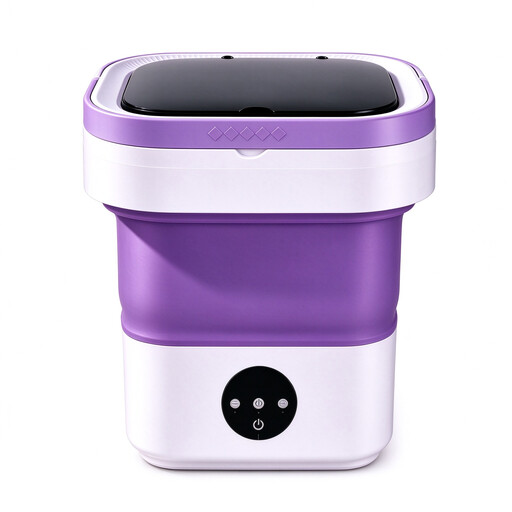
Foldable portable 3-in-1 mini washing machine, 12LZSZDXYJ

Foldable portable 3-in-1 mini washing machine, 12LZSZDXYJ

The product description mentions small loads and use at home, in a student room or while travelling.

The description warns that the air outlet gets hot. Keep it clear and away from flammable materials, and don’t leave the appliance running unattended.

Joybuy

Bosch WNA13400EU washer-dryer, 8 kg washing and 5 kg drying capacity

Bosch WNA13400EU, 8 kg washing and 5 kg drying capacity

An option if you want to wash and dry in one appliance; Bosch lists a Wash & Dry 60' programme for small loads on the WNA13400EU.

The listed capacity is 8 kg for washing and 5 kg for drying. The 60-minute programme is intended for small loads.

Joybuy

Samsung WD90DB7B85GWU3 freestanding washer-dryer, 9 kg washing and 6 kg drying capacity

Samsung WD90DB7B85GWU3, 9 kg washing and 6 kg drying capacity

A freestanding washer-dryer for anyone who wants to wash and dry in one appliance.

The product title lists a 9 kg washing capacity and a 6 kg drying capacity; for a combined cycle, use the lower drying capacity as your guide.

Joybuy

Hisense WD3S9043BW3 freestanding washer-dryer, 9 kg washing and 6 kg drying capacity

Hisense WD3S9043BW3, 9 kg washing and 6 kg drying capacity

The description mentions a 60-minute Quick Wash & Dry programme for up to 1 kg of laundry.

The listed capacity is 9 kg for washing and 6 kg for drying, so the quick combined cycle is limited to a small load.

Joybuy

TCL CP1210WA0 washer-dryer, 10 kg washing and 6 kg drying capacity

TCL CP1210WA0, 10 kg washing and 6 kg drying capacity

The product description mentions a combined 60-minute wash-and-dry cycle.

The product title lists a 10 kg washing capacity and a 6 kg drying capacity. Bear the drying capacity in mind for a combined cycle.

Joybuy

Frequently asked questions

Does a quick wash programme mean your washcloths will dry quickly too?

No. A quick wash phase doesn’t tell you how long the full wash-and-dry cycle will take. The Dutch Consumers’ Association notes that a combined cotton programme can take a long time; also check what load size a short programme is designed for.

What should you check when installing and connecting the appliance?

Check the model’s dimensions and installation instructions, the available water supply and drainage, and whether there’s a suitable earthed socket. Level the appliance according to the instructions for use.

Do washcloths always need to be washed at 60 °C?

No, there’s no universal rule that all washcloths must be washed at 60 °C. Follow the care label and take the level of soiling and any special hygiene requirements into account. For example, Milieu Centraal recommends 60 °C for dishcloths or when a baby has a gastrointestinal infection.

How do you compare the energy use of a washer-dryer?

Compare the figures for washing alone with those for the full wash-and-dry cycle on a like-for-like basis. If you regularly use the tumble-dryer function, don’t rely on the washing energy rating alone to judge energy use.

What happens if an appliance develops a fault in the Netherlands?

When used normally, a product must do what you could reasonably expect it to do. If the product is faulty, the seller is responsible for providing an appropriate remedy free of charge, as explained by ACM ConsuWijzer.
