
Careful laundry-doer
You want to wash washable, possibly absorbent underwear without automatically starting an unsuitable drying cycle. Check the care label on each item; Thinx and Modibodi’s washing instructions vary by product.


Start with the care label on your washable underwear: choose a machine-wash programme that suits it, and use the drying function only if tumble drying is permitted. A washer-dryer can be useful if you have room for just one appliance and the load fits within its drying capacity. If the underwear needs to be line-dried, compare a separate washing machine too, and allow plenty of time before your family visit. The Consumentenbond points out that a washer-dryer’s washing and drying capacities can differ.
You want to wash washable, possibly absorbent underwear without automatically starting an unsuitable drying cycle. Check the care label on each item; Thinx and Modibodi’s washing instructions vary by product.
You want to know whether your laundry will be clean and, if the care label allows, dry before you leave. Compare the programme duration and the washing and drying capacities of the exact model.
You’re looking for two functions in the space of one appliance. Weigh the space saving against the drying capacity, and check that the machine will physically fit.
Suitable for: a home with space for one appliance, when the underwear is machine washable but must not be tumble-dried.
Bear in mind: you won’t use the drying function for this underwear; check whether you can use it for other laundry.
Suitable for: a load where the care labels allow every item to be tumble-dried and the load is within the drying capacity.
Bear in mind: the full cycle can take a long time. For tested washer-dryers, the Consumentenbond reports an average of almost seven hours for the combined cotton programme; the duration may vary for a particular model or programme.
Suitable for: underwear that must not be tumble-dried, if you have enough time and space to let it dry.
Bear in mind: the underwear won’t be dry as soon as the wash programme ends; allow time for hanging it up to dry before your visit.
Suitable for: a home with space for two appliances and regular laundry that the care labels say is safe to tumble-dry.
Bear in mind: even with a separate tumble dryer, you must not dry items whose care labels prohibit machine drying.
| Point to consider | What should you check? | Who is this most relevant to? |
|---|---|---|
| Programme for your underwear | Check the care label on each item and see whether the exact model has a suitable wash programme that can be selected separately. For the period underwear mentioned, Thinx and Modibodi recommend a cold wash and line drying; always follow the care label on your own item. | I want to choose a suitable wash setting and skip the drying stage if it isn’t permitted. Around 33% of consumers give textile care the highest priority. |
| Laundry finished in time | Compare the duration of your chosen programme with the time you have before leaving, and check separately whether tumble drying is permitted. | With a visit coming up, I want to know whether the laundry can be ready in time. Around 25% of consumers prioritise having their laundry ready when they need it. |
| Space for the appliance | Measure the space where the appliance will go and the route to get it there, then compare these with the external dimensions of the exact model. | In a small home, I want to fit washing into the space for one appliance, even if some underwear needs to be line-dried. Around 25% of consumers prioritise this space-saving requirement. |
| Energy use and running costs | Compare the EU energy label figures for washing only and for the full wash-and-dry cycle, including energy and water consumption. The European Commission explains the labelling for washer-dryers. | I want to distinguish the consumption for washing only from that of a full wash-and-dry cycle. Around 17% of consumers prioritise understanding running costs. |
Drying instructions can vary from one item to another. For the period underwear mentioned, Thinx and Modibodi recommend line drying, but their advice does not automatically apply to all washable underwear.
Read the care label on each item. If necessary, choose a wash-only cycle and allow time for it to dry on the line.
If the underwear needs to be line-dried, it may not be ready to wear as soon as the wash programme ends.
A washer-dryer’s drying capacity may be lower than its washing capacity. For example, the AEG LWR7586CUB has an 8 kg washing capacity and a 5 kg drying capacity.
Check both figures for the exact model, and use the drying capacity as your guide for a combined cycle.
Some of your laundry may need to be dried separately or hung on a clothes airer.
The figures for washing only don’t tell you the same thing as those for a full wash-and-dry cycle. The Consumentenbond highlights the extra consumption involved in standard combined drying; the European Commission explains the EU labelling for washer-dryers.
Compare the energy label figures for washing and for the full cycle separately, and weigh the combined consumption against your washing and drying routine.
For the WNA13400EU, Bosch lists an 8 kg washing capacity, a 5 kg capacity for continuous washing and drying, and a sports programme for functional fabrics, among other things.
For the LWR7586CUB, AEG lists an 8 kg washing capacity and a 5 kg drying capacity, with programmes for delicates and wool/hand washing.
For the F4DR7596SYH, LG lists a 9 kg washing capacity, a 6 kg drying capacity and a delicates programme.
For the BM5DFT4841A, Beko lists an 8 kg washing capacity, a 5 kg drying capacity and a depth of 57 cm.
For the WD90DB7B85GWU3, Samsung lists a 9 kg washing capacity and a 6 kg drying capacity.
This selection includes washer-dryers and compact appliances for smaller loads. Always check that the stated washing and drying options are suitable for the garment care label.
 No image available
An option if you’re looking for a washer-dryer and the care labels say your underwear is machine washable.
The product information lists Wool and Cotton wash programmes. The stated capacity is 9 kg for washing and 5 kg for drying; the drying capacity determines the load size for a combined cycle.
Only tumble-dry your underwear if its own care label allows it.
 No image available
A washer-dryer to compare if you also want to wash and dry other laundry that the care labels say is suitable for tumble drying.
The product information lists a Baby Care wash programme, among others. The stated capacity is 9 kg for washing and 5 kg for drying; for a combined cycle, bear in mind the lower drying capacity.
Only tumble-dry your underwear if its own care label allows it.
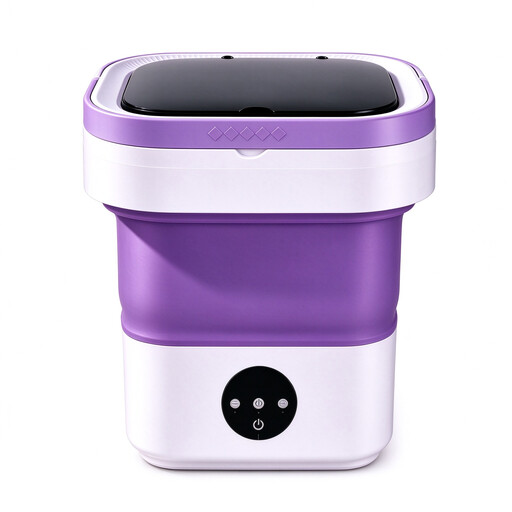 No image available
A compact option for small amounts of fabric, including underwear, according to the product description.
The product information lists a capacity of 12 L.
Do not use the appliance for clothes with flammable stains, keep the air outlet clear and do not touch the hot outlet.
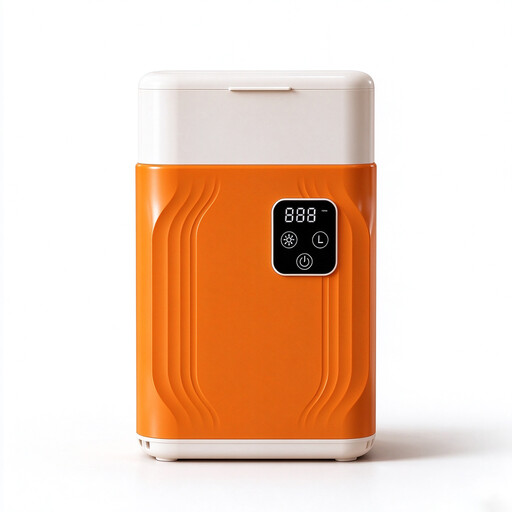 No image available
The product description says it can wash and dry small textiles, such as underwear and delicate items.
Do not use the appliance for clothes with flammable stains, keep the air outlet clear and do not touch the hot outlet.
 No image available
An option if you’re looking for one appliance with a separate wash programme and the care labels say your underwear is machine washable.
The product information lists a sports programme for microfibre, fleece and synthetic fabrics. The stated capacity is 8 kg for washing and 5 kg for drying; bear the drying capacity in mind for a combined cycle.
Only tumble-dry your underwear if its own care label allows it.
Only if the care label on that particular item allows tumble drying. For the products mentioned, Thinx and Modibodi recommend line drying; follow the instructions that came with your product.
Not necessarily: allow time for the underwear to dry completely too. For tested washer-dryers, the Consumentenbond reports an average of almost seven hours for the combined cotton programme; this isn’t a promise of how long a particular model or garment will take.
Not always, because a washer-dryer’s washing and drying capacities can differ. Compare both figures for the exact model, and make sure the load is within the drying capacity if you want to use a continuous cycle.
Compare the figures for washing only separately from those for a full wash-and-dry cycle, including energy and water consumption and programme duration. The European Commission explains the EU labelling for washer-dryers.
Measure the space where the appliance will go and the route to get it there, then compare these with the external dimensions of the exact model. Also check the connection and installation requirements in the manual.