
No room for a drying rack
You want to wash and dry cotton socks without leaving a rack in your living space. In this case, the washer-dryer’s separate drying capacity is important. Which? explains what to look out for when choosing one.


If you have room for a small drying rack and can ventilate the space, a separate washing machine is often a better fit: choose a drum capacity to suit your usual loads and compare the spin-drying results on the energy label. If there’s no room for a rack and you want to dry clothes electrically in the same appliance, consider a washer-dryer. Check the drying capacity separately from the washing capacity. Which? also highlights that combined cotton programmes take longer and that drying with typical washer-dryers uses more energy and water.
You want to wash and dry cotton socks without leaving a rack in your living space. In this case, the washer-dryer’s separate drying capacity is important. Which? explains what to look out for when choosing one.
You can hang up small loads, but want them to come out less wet after spinning. Energy Saving Trust recommends checking the drying performance on the label before looking at the spin speed. Drying clothes indoors also requires extra ventilation.
You wash socks with other items and want a drum that suits the total size of your usual load. Energy Saving Trust and Which? offer useful guidance on comparing washing capacity and, for a washer-dryer, drying capacity too.
First, choose a drying option that suits your home. Then compare capacity, spin-drying results and energy use based on how you expect to use the appliance.
| What to consider | What should you check? | Who is this important for? |
|---|---|---|
| Drying without a rack | Compare the stated washing and drying capacities separately, and check the energy use for a complete wash-and-dry cycle. | If I don’t have room for a drying rack, I want to be able to dry socks in the same appliance. Around 36% of consumers have this need in particular. |
| Less wet after spinning | Check the spin-drying results on the energy label and decide where a rack could go. Drying clothes indoors requires extra ventilation, according to Energy Saving Trust. | I can use a small rack, but want socks to be less wet after spinning. Around 29% of consumers prioritise this drying result. |
| Drum capacity to suit your needs | Estimate the size of your usual total load. For a washer-dryer, also check how much of it you can dry in one go. | For small loads, I want a drum that suits my usual washing, not just a few pairs of socks. Around 21% of consumers are mainly looking for the right capacity. |
| Energy use when drying | Compare like with like: washing with washing, and a complete wash-and-dry cycle with another complete wash-and-dry cycle. | If I need to dry clothes electrically, I want to take the energy use of the whole cycle into account. Around 14% of consumers are particularly concerned about running costs. |
With washer-dryers, the stated drying capacity may be lower than the washing capacity. So a load that fits for washing won’t necessarily fit in a continuous wash-and-dry cycle.
Compare the capacities for the exact model and consider how much washing you want to dry in one go.
An oversized load will need to be reduced before a continuous drying cycle or dried separately.
Washing-only information doesn’t show the energy use of a complete wash-and-dry cycle.
Compare product information for the same type of programme. When comparing models, also consider how often you plan to dry clothes electrically.
Electric drying uses extra energy and, with some washer-dryers, water too.
A drying rack takes up space temporarily, and drying clothes indoors requires extra ventilation, as Energy Saving Trust advises.
Before buying, decide where a small rack could go and how you’ll ventilate the space.
Bosch Netherlands lists both freestanding front-loaders and washer-dryers, so you can compare the different types of appliance within the brand.
The LG W4X1085NWB is an example of a washer-dryer for anyone looking to wash and dry clothes in one appliance.
The Beko BM5DFT4841A is a washer-dryer you can compare by capacity and spin speed.
These product choices are designed for washing and drying in one appliance. For each model, compare the stated drying capacity with the amount of washing you want to dry.
 Image unavailable
If you also want to dry clothes in the machine, check the drying capacity and programme information for this model.
The product name lists 9 kg, 1400 rpm, energy class A and an NL/FR panel.
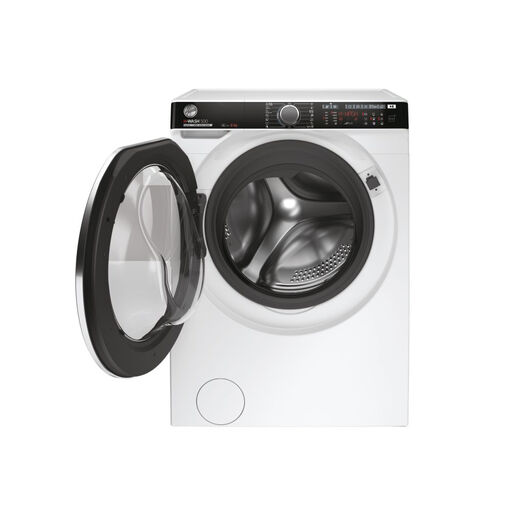 Image unavailable
This option suits anyone who wants to wash and dry clothes in one appliance. Make sure a continuous cycle is suitable for the drying capacity.
The product information lists 8 kg for washing, 5 kg for drying and 1400 RPM.
 Image unavailable
If you want to wash socks with other items and dry them in the machine, the separate drying capacity is important.
The product name lists 8 kg for washing, 6 kg for drying and 1400 rpm.
 Image unavailable
If you’re looking for one appliance to wash and dry clothes, compare the drying capacity with the size of your usual load.
The product name lists 8 kg for washing and 5 kg for drying.
 Image unavailable
This washer-dryer is worth considering if you want to wash and dry cotton in the same appliance. Also check how much installation space you’ll need.
The product information lists 8 kg for washing, 6 kg for drying and a depth of 47 cm.
Only if the load is within the stated drying capacity for the programme you’ve chosen. Check this separately from the washing capacity. For example, LG Netherlands lists 8 kg for washing and 5 kg for drying for the W4X1085NWB.
Ventilate the room where you hang the washing. Energy Saving Trust recommends extra ventilation when drying clothes indoors.
First, follow the care instructions on the socks. The European Commission describes the eco 40-60 programme as being for normally soiled cotton that can be washed at 40 °C or 60 °C according to its care instructions. Check separately whether the socks are suitable for tumble drying.
Follow the installation instructions for your chosen model and remove the transit bolts before use. Which? highlights this as an important step when installing a washer-dryer.
Yes. The Dutch government states that washing machines are among the appliances that must have an energy label. If you usually use both functions on a washer-dryer, also check the information for a complete wash-and-dry cycle.