A washer-dryer is a good fit for an upstairs flat with space for just one appliance, provided the load stays within its lower drying capacity. Measure the space, check the connections and flooring, and compare both the wash cycle and the full wash-and-dry cycle. If two appliances will fit and you often use an electric dryer, consider a separate washing machine and heat-pump dryer too: Milieu Centraal says that separate appliances use less energy together than a standard washer-dryer.
Who is this choice relevant to?
Someone with space for just one appliance
You want to be able to wash and, when needed, dry socks, but the dimensions, doorway and connections all need to fit within a single appliance space. The Consumentenbond recommends taking the flooring and connections into account when deciding where to install it.
Someone with a vibration-sensitive floor
You live upstairs and want to know before choosing whether the appliance can stand firmly and level; a motor specification alone won’t answer that. The Consumentenbond highlights the importance of a stable surface.
Someone who washes small loads of socks
You want to wash cotton socks on a suitable cycle without running an unnecessarily large cycle for just a few pairs, and you want to know how many can go straight into the dryer afterwards. The Consumentenbond and Milieu Centraal stress the importance of suitable programmes and a drum capacity that matches the load.
What should you consider when choosing?
Start with the space available and consider whether you usually just wash clothes or dry them straight away too. This will determine how much emphasis to place on drying capacity and energy use.
Washer-dryer
Choose this when: you only have room for one appliance and the load is within its drying capacity.
The trade-off: you don’t need to transfer the washing, but drying capacity may be lower than washing capacity, and a full cotton wash-and-dry cycle can take a long time.
Separate washing machine and heat-pump dryer
Choose this when: both appliances can be installed safely and you regularly use an electric dryer.
The trade-off: according to Milieu Centraal, separate appliances use less energy together than a standard washer-dryer; however, you’ll need space for two appliances and will have to transfer the washing between them.
| Consideration |
What should you check? |
Who should pay particular attention? |
| Fitting one appliance |
Measure the space and access route, and check the connections. |
If I only have space for one appliance, I want to know whether it will fit through the access route and stand securely on the floor above. Around 31% of consumers prioritise installation. |
| Vibration and noise |
Check the spin-cycle noise level and follow the instructions for a stable, level installation. |
If my floor is sensitive to vibration, I don’t want to rely on a motor specification alone; a stable, level installation matters too. Around 25% of consumers make vibration and noise their main concern. |
| Washing and drying socks |
Check the care label, the suitable cotton programme and the cycle’s drying limit. |
For a few pairs of cotton socks, I want to know which programme is suitable and how many can be dried in one go after washing. Around 25% of consumers prioritise programmes suited to their sock loads. |
| Energy use when drying |
Compare the label information for washing only and for the full wash-and-dry cycle, and consider how often you use the dryer. |
If I regularly use an electric dryer, I want to compare the energy use of the full cycle with that of washing alone. Around 19% of consumers rank drying costs above their other purchasing concerns. |
Buying pitfalls
-
Confusing washing capacity with the capacity for a combined cycle
Some models have a stated drying limit that is lower than their washing capacity. If you want to wash and dry without removing any laundry in between, use the limit for the programme you’ve chosen.
Check the maximum load for the continuous wash-and-dry cycle. If your washing load is larger, you may need to remove some items part-way through or run an extra drying cycle.
This could mean drying some of your washing separately or waiting for the next cycle.
-
Assuming a motor specification guarantees less vibration upstairs
A motor or noise specification on its own doesn’t tell you how vibration will affect your home. The Consumentenbond recommends a stable surface, and levelling the appliance is important too.
Assess the floor and installation space separately from the motor specifications, and follow the installation instructions for the exact model.
-
Comparing only the energy rating for washing
The rating for washing alone may differ from the rating for the full wash-and-dry cycle. AEG gives the LWR73864 a rating of A for washing and D for washing and drying.
Compare figures for the same type of cycle. If two appliances will fit and you often use the dryer, consider a separate washing machine and heat-pump dryer too; Milieu Centraal says that separate appliances use less energy together than a standard washer-dryer.
Brands to compare
Bosch
The WNA13401NL is worth considering if you’re looking for a washer-dryer with a maximum washing capacity of 8 kg and drying capacity of 5 kg, and want to check its stated dimensions and noise level.
- Bosch lists Auto Dry and Wash & Dry 60' for small loads.
- The stated time doesn’t automatically apply to a full cotton load; a stated noise level doesn’t guarantee that the machine won’t cause vibrations upstairs.
LG
According to LG, the GD3R509S0 has a washing capacity of 9 kg and drying capacity of 6 kg. Compare these limits with the loads you want to wash and dry.
- LG lists AI DD and a Direct Drive motor for this model.
- Claims about fabric protection and quiet operation come from the manufacturer; the clothing test described was carried out on other models.
AEG
According to AEG, the LWR73864 is a condenser washer-dryer with a washing capacity of 8 kg and a continuous wash-and-dry capacity of 5 kg. Its stated maximum external dimensions are 847 × 597 × 599 mm.
- AEG gives it a rating of A for washing alone and D for the wash-and-dry cycle, making it easier to compare the two uses separately.
- Steam and fabric-care benefits are manufacturer claims and don’t, by themselves, demonstrate a specific benefit for cotton socks in an upstairs flat.
Miele
According to Miele, the WTD160 WCS has a washing capacity of 8 kg and drying capacity of 5 kg. Also compare the controls and maintenance features that matter for your needs.
- Miele lists features including Miele@home and automatic fluff removal.
- ‘Tested for 20 years’ is a manufacturer claim, not a guarantee of the appliance’s actual lifespan in your home.
Products for washing socks and small loads
This selection includes washer-dryers for washing and drying clothes straight afterwards, as well as compact mini washing machines for small textile loads. Check the capacity, programme conditions, dimensions and installation instructions for each model.
 No image available
Haier HWD90-BP14929A-S washer-dryer, 9 kg/5 kg, 1400 rpm
Worth comparing if you want one appliance and can keep the load within the drying limit.
The product information lists a washing capacity of 9 kg, a drying capacity of 5 kg and Cotton Hygiene.
View at Joybuy
 No image available
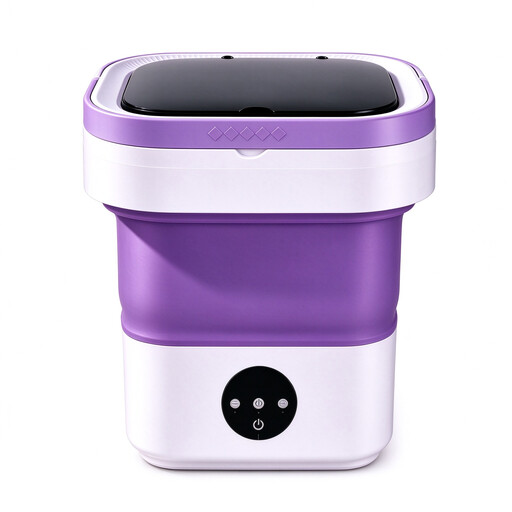
Foldable 3-in-1 mini washing machine, 12LZSZDXYJ
A compact option to consider if you want to wash and dry small textile loads.
The product description mentions socks and small textiles. Don’t cover the air outlet, and keep the appliance away from flammable materials.
View at Joybuy
 No image available
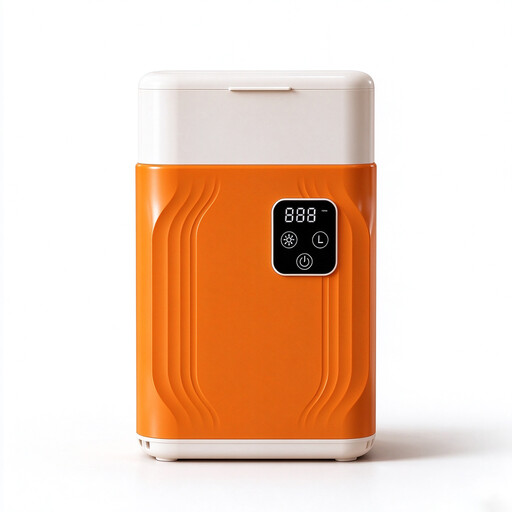
Foldable 3-in-1 mini washing machine, HB-222
A compact option to consider if you want to wash and dry small textile loads.
The product description mentions socks and small textiles. Don’t cover the air outlet, and keep the appliance away from flammable materials.
View at Joybuy
 No image available
Bosch WNA13400EU washer-dryer, 8 kg/5 kg
A model to compare if you want to combine washing and, when needed, drying straight afterwards in one appliance.
The stated capacity is 8 kg for washing and 5 kg for drying; the product description lists programmes for cotton laundry.
View at Joybuy
 No image available
Samsung WD90DB7B85GWU3 washer-dryer, 9 kg/6 kg
A model to compare if you’re looking for one appliance with separate washing and drying capacities.
The title gives capacities of 9 kg for washing and 6 kg for drying. The product description mentions automatic dosing and a programme for 5 kg of laundry in 39 minutes.
View at Joybuy
Frequently asked questions
Can I automatically dry all my cotton socks after washing?
No. First check whether the care label allows tumble drying. For a cycle without removing any laundry in between, the total load must also be within the drying capacity of the selected programme, which may be lower than the washing capacity.
What should I arrange before running the washer-dryer upstairs?
Check that the appliance can be moved safely to its installation space and will stand firmly and level there. Follow the instructions for the exact model on transit bolts, water supply, drainage and electrical connections. The Consumentenbond points out that an unstable machine can vibrate and move during the spin cycle.
Does energy rating A for washing also mean rating A for the full cycle?
No. Compare the figures for washing alone separately from those for washing and drying; AEG gives the LWR73864 ratings of A and D respectively. The EU label also provides energy-use information so you can compare models on a like-for-like basis.
Who should I contact about a fault, and is the statutory guarantee in the Netherlands exactly two years?
Report a fault to the seller; according to the Dutch government, there is no fixed statutory guarantee period in the Netherlands. You’re entitled to a product that meets what you could reasonably expect from it. A manufacturer’s guarantee or an extended warranty is separate from this.
What rules apply to a new washer-dryer sold in the Dutch market?
According to the European Commission, household washer-dryers sold on the EU market are covered by mandatory EU ecodesign and energy-labelling requirements for suppliers. Check the model information and label for the specific appliance; these rules don’t require buyers to choose a particular energy rating.


