
Commuters with limited space
You want to wash wet towels and dry them electrically when needed, but don’t have room for a washing machine and tumble dryer side by side.


A washer-dryer is a good option if you want to dry laundry electrically but don’t have room for two appliances. When choosing one, check the drying capacity, not just the washing capacity. If you have space and dry laundry often, compare a washing machine with a separate heat pump tumble dryer: Milieu Centraal recommends separate appliances because they use less energy than a washer-dryer. A quick programme is only suitable if your towel load and fabric meet the programme requirements.
You want to wash wet towels and dry them electrically when needed, but don’t have room for a washing machine and tumble dryer side by side.
After a wet trip, you want to have usable towels again quickly, so you’re looking into how long a suitable programme takes and how much laundry it can handle.
You often dry laundry electrically and want to factor in energy use when choosing between one combined appliance and two separate ones.
A good choice if: you have room for one appliance and your towels fit within the stated drying capacity.
Trade-off: drying capacity is lower than washing capacity; the Consumentenbond reports that a combined cotton wash and dry cycle takes almost seven hours on average.
A good choice if: you have room for two appliances and dry laundry electrically on a regular basis.
Trade-off: you’ll need to transfer the laundry between appliances, and you can also air-dry towels; Milieu Centraal recommends separate appliances because they use less energy than a washer-dryer.
| Concern | What should you look for? | Who does this matter to? |
|---|---|---|
| Capacity and space | Measure the space where the appliance will go and the delivery route; compare the washing and drying capacities of the exact model. | If I want to wash and dry towels without unloading the machine, both the available space and the drying limit need to work for me. Around 33% of consumers are most concerned about this. |
| Time until towels are dry | Check the programme duration, permitted load and suitable fabric types. | After a wet trip, I want to know when a small towel load will be ready to use again. Around 27% of consumers give top priority to the time required. |
| Energy and water use when drying | Compare the figures for washing only and for the complete wash-and-dry cycle on the same label basis. | If I often dry laundry electrically, I want to factor in energy and water use, and also consider whether I can air-dry towels. Around 20% of consumers are most concerned about consumption. |
| Fabric and maintenance | Check the programmes for your towels and the care instructions in the manual. | I want to be able to choose settings that suit the fabric and know what maintenance the machine needs. Around 20% of consumers say this is their main concern. |
A washer-dryer may have a lower drying capacity than washing capacity. This means a full wash load may not fit in the machine for a single drying cycle.
Compare the washing and drying capacities of the exact model with your usual towel load. Allow for extra drying cycles or taking some of the laundry out before drying.
The Consumentenbond reports that a combined cotton wash and dry cycle takes almost seven hours on average. A quick programme for a small load won’t necessarily work for a larger amount of towels.
Before relying on the stated duration, check the permitted load and fabric type for each programme. An unsuitable load could mean a longer wait.
Washing and the complete wash-and-dry cycle have separate consumption figures. The Consumentenbond also reports that standard washer-dryers use extra water during drying.
Compare the complete cycle with alternatives on the same label basis, and consider how often you dry laundry electrically.
The Dutch Serie 4 WNA13400NL is an 8 kg/5 kg model to consider if you’re looking for a washer-dryer.
The LWR9506BN4 is a heat pump washer-dryer to compare if you often use the complete cycle.
The WD80TA049BE/EN is an 8 kg/5 kg model to compare with other washer-dryers.
This selection includes washer-dryers and a separate washing machine and heat pump tumble dryer; consider the space available and drying capacity for each option.
 Image unavailable
A washer-dryer for anyone who wants to wash and dry laundry in one appliance.
Washing: 9 kg; drying: 5 kg. 1400 rpm. Listed energy classes: A-20% / D.
 Image unavailable
A combined appliance for anyone who wants to wash and dry laundry in one machine.
Washing: 9 kg; drying: 5 kg. 1400 rpm. Listed energy classes: A-20% / D.
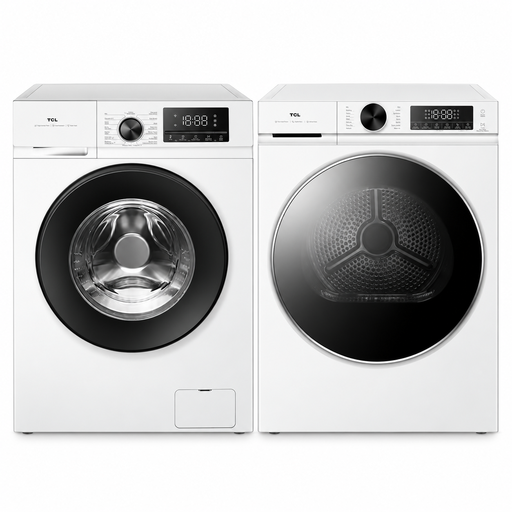 Image unavailable
A set of two appliances for anyone who wants to wash and dry separately; you’ll need room for both a washing machine and a tumble dryer.
Listed capacity: 8 kg washing and 8 kg drying. The description mentions a 15-minute programme for suitable loads, not a full-capacity load.
 Image unavailable
A washer-dryer for anyone who wants to wash and dry laundry in one appliance.
Washing: 8 kg; drying: 6 kg. 1400 rpm. The title mentions a steam function.
 Image unavailable
A combined appliance for anyone who wants to wash and dry laundry in one machine.
Washing: 8 kg; drying: 5 kg.
Not necessarily: compare the washing and drying capacities listed for the exact model. For a washer-dryer with an 8 kg washing and 5 kg drying capacity, the specifications show that you can dry less laundry at a time than you can wash.
Not without checking the programme requirements. Bosch lists Wash & Dry 60' for small loads on the WNA13400NL; check the manual for the permitted load and suitable fabric types.
Measure both the space where the appliance will go and the delivery route, and follow the manual for your chosen model for installation and maintenance. For poor drying results, AEG recommends checking the prescribed cleaning or rinsing steps, among other things.
According to the Rijksoverheid, you’re entitled to a product that works properly, and the seller must provide a solution if there’s a fault. There’s no fixed statutory warranty period in the Netherlands; a manufacturer’s warranty or an extended warranty you’ve purchased comes on top of your statutory rights.
According to the European Commission, the label includes information such as energy use per 100 cycles, water use per cycle, cycle duration and noise. Compare the figures for washing only and for the complete wash-and-dry cycle on the same basis.