Who is this choice relevant to?

Families who want to reuse tea towels safely

You share dishcloths and tea towels when preparing food and want to have clean, dry ones ready before visitors arrive. The Netherlands Nutrition Centre advises washing used cloths at 60 °C and allowing wet cloths to dry thoroughly. A steam claim is no substitute for following this advice.

Households with limited laundry space

You want to dry clothes in a machine regularly, but don’t have room for two separate appliances. For a continuous wash-and-dry cycle, the load must fit within the drying capacity.

Hosts with little time to prepare

You want to know whether a load will be ready before your visitors arrive. Check the conditions for a short programme and, for larger loads, how long the full cycle takes.

What should you look for when choosing?

Existing washing machine and clothes airer

A good fit if: you can already wash your clothes and have enough time and space for the towels to dry before you use them.

The trade-off: you’ll need to hang the towels up yourself and allow time for them to dry.

Washer-dryer

A good fit if: space is limited and, after this visit too, you want to wash and dry your clothes electrically in one go on a regular basis.

The trade-off: the maximum load for a continuous cycle may be smaller than the washing capacity. Check both figures for the exact model.

Separate washing machine and tumble dryer

A good fit if: you have room for two appliances and regularly wash several loads.

The trade-off: you’ll need space for both appliances and have to move the laundry from the washing machine to the tumble dryer.

What to consider What should you check? Who is this most relevant to?
Washing and drying used cloths Check that the wash programme allows a temperature of 60 °C and is suitable for the care label; then allow enough time for the cloths to dry thoroughly. If I use shared cloths when preparing food, I want to be able to follow the washing advice and put them away dry. Around 36% of consumers say hygienic reuse is their main concern.
Space and capacity Measure the space available and compare the washing and drying capacities in kilograms for the exact model. If I want to dry clothes electrically on a regular basis but only have room for one appliance, I look at the load that can go through the full cycle without interruption. Around 29% of consumers give limited installation space top priority.
Having laundry ready on time For a short programme, check the permitted load and conditions; also look at how long the full wash-and-dry cycle takes. If visitors are coming, I want to know whether the amount I plan to wash will be ready in time, not just how long a small-load programme takes. Around 21% of consumers prioritise having their laundry ready on time.
Consumption when drying regularly Compare the figures for washing only separately from those for washing and drying, using the same basis. If I often dry clothes electrically, I want to include both cycles when considering how I use the appliance. Around 14% of consumers are mainly concerned with ongoing energy and water consumption.

Common buying mistakes

  • Confusing washing capacity with the capacity for a full cycle

    The maximum amount a washer-dryer can wash may be more than it can dry without you having to remove some of the laundry in between.

    Plan a continuous cycle around the permitted drying weight for the exact model, not its highest capacity figure.

    A smaller drying load may mean splitting your laundry across extra cycles and allowing more time to prepare.

  • Assuming a short programme is the same as the recommended wash

    A short programme name or stated duration doesn’t automatically confirm that the cycle is suitable for used tea towels, the temperature you need or the actual load.

    Check the temperature, permitted load and care labels in the manual before planning around the time it says the programme takes.

  • Looking only at the washing figures on the energy label

    Figures for washing alone don’t automatically show how much energy and water a full wash-and-dry cycle uses.

    Compare the figures for washing and for washing and drying separately. When considering your own usage, factor in your tariffs and the number of cycles you expect to run.

Brands to consider

Bosch

The Bosch WNA13400NL is worth considering if you want to compare a limited continuous-cycle load with a short programme for small loads.

  • Bosch states that this model can wash up to 8 kg and wash and dry up to 5 kg.
  • The Wash & Dry 60' setting for small loads doesn’t confirm that used tea towels will be washed at 60 °C in line with the advice.

LG

The LG F4DR3096N3W is worth comparing if you’re looking for a larger washing and drying load in one appliance.

  • LG states that this model has a 9 kg washing capacity and a 6 kg drying capacity.
  • LG’s claims about AI DD and steam don’t prove that a programme for used tea towels meets the washing advice.

AEG

The AEG LWF62842 from the 6000 OneGo range is worth considering if you want to compare washing capacity, drying capacity and a stated full-cycle duration.

  • For this condenser model, AEG states an 8 kg washing capacity, a 4 kg drying capacity and a nominal full wash-and-dry cycle of 5:40.
  • This cycle duration is a stated product specification, not a measured time for a small load of tea towels.

Siemens

The Siemens WN54G206NL is worth considering if you need a larger washing load.

  • Siemens states that this model has a 10,5 kg washing capacity and a 6 kg drying capacity.
  • The maximum washing capacity isn’t the same as the amount that can be handled in one continuous wash-and-dry cycle.

Washer-dryers on Joybuy

These washer-dryers are for anyone who wants to combine washing and electric drying in one appliance. Compare the stated drying load with the washing load, and check the programme requirements for the exact model when washing tea towels.

Bosch WNA13400EU washer-dryer, white

Bosch WNA13400EU, 8 kg/5 kg

A washer-dryer for anyone who wants to wash and dry clothes electrically in one appliance; keep continuous-cycle loads within the drying capacity.

Up to 8 kg for washing and 5 kg for washing and drying.

Joybuy

Samsung WD90DB7B85GWU3 washer-dryer

Samsung WD90DB7B85GWU3, 9 kg/6 kg

An option to compare if you’re looking for one appliance for washing and electric drying; match the continuous-cycle load to the drying weight.

The product details state a 9 kg washing capacity and a 6 kg drying capacity.

Joybuy

TCL CP1210WA0 washer-dryer, 10 kg/6 kg

TCL CP1210WA0, 10 kg/6 kg

A washer-dryer to consider if you want to weigh up the washing and drying capacity of one appliance; the drying load determines how much fits into one continuous cycle.

The product details state a 10 kg washing capacity and a 6 kg capacity for washing and drying.

Joybuy

Comfee CFP03ED100W-HR washer-dryer, 10 kg/7 kg

Comfee CFP03ED100W-HR, 10 kg/7 kg

An option for anyone who wants to combine washing and drying in one appliance; bear in mind that the maximum load for a continuous cycle is lower.

The product details state a 10 kg washing capacity and a 7 kg capacity for washing and drying.

Joybuy
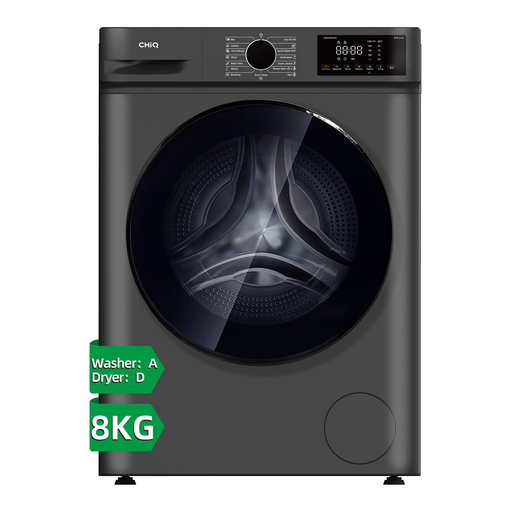
CHiQ JW85882HG washer-dryer, 8 kg/5 kg

CHiQ JW85882HG, 8 kg/5 kg

A washer-dryer to compare if you’re looking for one appliance for washing and drying; check the programme requirements for the wash you need.

The product details state an 8 kg washing capacity and a 5 kg capacity for washing and drying.

Joybuy

Frequently asked questions

Do you need a steam programme for used tea towels?

No. Don’t treat a steam claim as a substitute for washing advice. The Netherlands Nutrition Centre advises washing used dishcloths and tea towels at 60 °C and allowing wet cloths to dry thoroughly. Check the care label too.

Does eco 40-60 mean your towels are washed at 60 °C?

Not necessarily. The European Commission describes eco 40-60 as a programme for normally soiled cotton labelled as washable at 40 °C or 60 °C. Don’t assume the actual temperature or suitability for your towels based on the programme name alone; check the manual for the exact model.

What should you check before installation and during maintenance?

Consult the installation manual for your model and check the space available, water supply, drainage and positioning. Follow your model’s instructions when cleaning the drum and drain pump filter too.

Which running costs can you compare?

Compare the label figures for washing only separately from those for washing and drying. To work out your own costs, you’ll also need your tariffs and the number of cycles you expect to run.

Are washer-dryers in the Netherlands covered by just a two-year statutory warranty?

No. According to the Netherlands Government, there is no fixed statutory warranty period in the Netherlands. You’re entitled to a product that meets what you can reasonably expect. If there’s a problem, contact the retailer. Any manufacturer’s warranty is in addition to this.
