
Housemates who need clean tea towels
The Netherlands Nutrition Centre advises washing used tea towels at 60 °C. Check that the exact model has a suitable programme with this adjustable temperature, and that the care labels allow it.


Before choosing a washer-dryer for used tea towels, check that the manual for the exact model confirms a suitable wash programme with a separately adjustable temperature of 60 °C, and that the care labels allow this temperature. Then compare the drying capacity and the duration of the full cycle: a washer-dryer saves space, but may keep a shared machine occupied for a long time. If you have room, air-drying or separate appliances are also worth considering. Check the manual for the specific wash function on every model.
The Netherlands Nutrition Centre advises washing used tea towels at 60 °C. Check that the exact model has a suitable programme with this adjustable temperature, and that the care labels allow it.
If several housemates use the same machine, the duration of a full wash-and-dry cycle and the separate wash and drying capacities are important for planning.
A washer-dryer may be a good alternative if there’s little room for a second appliance or a clothes airer. Weigh up the convenience of machine drying against drying time and energy use.
Choose this option: if you want to wash and tumble-dry your laundry but don’t have room for two appliances.
The trade-off: the same drum is occupied throughout the combined cycle, so housemates may have to wait longer for their turn.
Choose this option: if you have space to air-dry the tea towels after a suitable wash.
The trade-off: you’ll need drying space and have to hang the washing out once the programme has finished.
Choose this option: if you have room for two appliances and want housemates to be able to wash a load while another is drying.
The trade-off: you’ll need space for both appliances. Milieu Centraal says separate appliances use less energy together than a washer-dryer.
The Netherlands Nutrition Centre advises washing used tea towels at 60 °C. Check both the care label and the manual for the exact model: a short programme or its name alone doesn’t confirm that the wash runs at 60 °C.
| What to consider | What to look for | Who it matters to |
|---|---|---|
| Suitable wash programme | Check the adjustable temperature in the manual and the care instructions on the tea towels. | If I want to wash used tea towels, I want to know whether the model has a suitable programme; around 33% of consumers prioritise this wash function. |
| Machine availability | Check how long the full wash-and-dry cycle takes and whether you can run a wash-only programme. | When housemates share a machine, I want to know how long it will be occupied; around 27% of consumers prioritise freeing up the machine quickly. |
| Drying without extra space | Compare wash and drying capacities separately, and measure the space available for the appliance. | If there’s little room for an airer or a second appliance, being able to dry in the same machine matters; around 20% of consumers prioritise saving space. |
| Energy and water use when drying | Compare the label figures for washing only and for the full wash-and-dry cycle, including water consumption. | If I regularly tumble-dry, I want to know the consumption figures for the whole cycle; around 20% of consumers prioritise running costs. |
On the Bosch Wash & Dry 60' programme, 60' refers to the programme duration, not a confirmed wash at 60 °C. The name ‘eco 40-60’ does not, on its own, confirm a wash at that temperature either.
Before buying, check the manual for the exact model and compare its adjustable temperature with the care label on your tea towels.
For the models in this comparison, the stated wash and drying capacities differ. As a result, a load that can be washed in full may not fit in the dryer all at once.
Plan a combined load around the lower drying capacity and check whether you’ll need to remove some of the washing from the drum after the wash.
An oversized load may mean drying the washing in batches or handling it more than once.
The EU energy label distinguishes between washing and the full wash-and-dry cycle. So the figures for washing alone don’t show how much energy and water you’ll use when you tumble-dry as well.
Compare the figures for both cycles on the EU label, and consider air-drying or using a separate tumble dryer.
The WNA13400NL is worth comparing if you want to look at wash and drying capacity alongside the space required for the appliance.
The BM5DFT4841A is a freestanding washer-dryer worth comparing for its capacity, depth and spin noise level.
The LWR9506BN4 is a heat pump washer-dryer worth comparing if you plan to tumble-dry regularly.
The W4X1085NWB is an 8/5 kg washer-dryer worth comparing if app control is also important to you.
This selection includes both separate washing machine and tumble dryer sets and washer-dryers. Before buying, check the manual for each exact model to confirm that it has a suitable wash programme, with a separately adjustable temperature of 60°C, for the tea towels you want to wash.
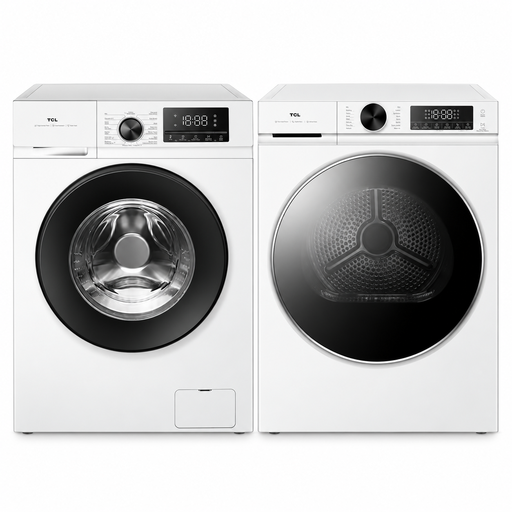 Image unavailable
A two-appliance set may suit a shared home where housemates want to wash a load while another is drying. You’ll need space for both appliances.
The product name lists an 8 kg wash capacity, an 8 kg drying capacity and a heat pump tumble dryer.
 Image unavailable
An all-in-one washer-dryer may suit you if you want to wash and dry in one machine, but it uses the same drum for both functions.
The product name lists a 10 kg wash capacity, a 6 kg drying capacity and a 60-minute wash-and-dry programme. This programme duration doesn’t confirm a wash at 60 °C.
 Image unavailable
An all-in-one washer-dryer may suit you if you don’t have room for a separate tumble dryer; the drum stays occupied throughout a combined cycle.
The product name lists a 10 kg wash capacity and a 7 kg drying capacity.
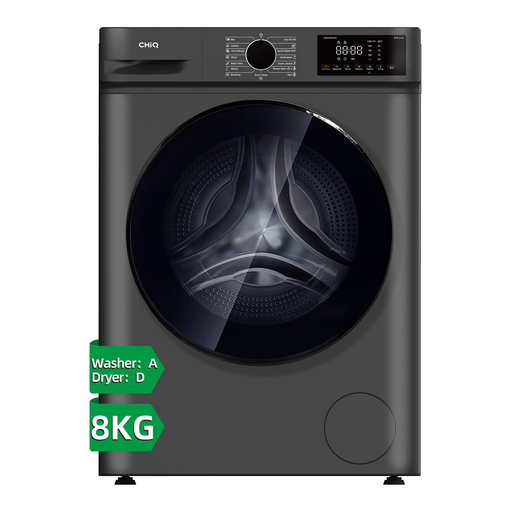 Image unavailable
An all-in-one washer-dryer may suit you if you want to wash and dry in one machine. Bear in mind that housemates won’t be able to use the same drum for a new wash during a combined cycle.
The product name lists a capacity of 8 kg. Check the product information for the separate wash and drying capacities.
 Image unavailable
This washer-dryer may suit you if you want both functions in one appliance, but the full cycle may keep the shared drum occupied for quite some time.
The product information lists an 8 kg wash capacity, a 5 kg drying capacity and a full-cycle duration of 450 minutes. Check the manual for the separately adjustable wash temperature.
No. On the Bosch model mentioned, 60' refers to a programme duration of 60 minutes, not a confirmed wash temperature of 60 °C. Check the manual to see whether the exact model has a suitable programme with an adjustable temperature of 60 °C.
Check the external dimensions and connections, and follow the manual for your chosen model. Consumentenbond recommends placing the machine on a flat, sturdy surface, removing the transit bolts, connecting the water supply and drain, levelling the machine and using an earthed socket.
The Netherlands Nutrition Centre advises using clean tea towels, washing used ones at 60 °C and hanging wet towels up to dry. Follow the manual for machine maintenance and the detergent dosing advice.
According to ACM ConsuWijzer, you have a legal guarantee in addition to any manufacturer’s or seller’s guarantee. If a product breaks sooner than you could reasonably expect under normal use, the seller is responsible for providing an appropriate solution. There isn’t one fixed legal warranty period for every washer-dryer.
When you buy a new, similar appliance, the Dutch government’s old-for-new scheme applies to household appliances, including online purchases. Agree with the seller how your old appliance will be collected when the new one is delivered.