
Households that put clean kitchen towels first
Want to wash used tea towels appropriately and then dry them, without choosing a programme based on speed alone.


A washer-dryer could be right for you if you want one appliance and the amount of tea towels you want to dry straight away is within its drying capacity. The Consumers' Association recommends considering drying capacity separately from washing capacity. For used kitchen towels, the Nutrition Centre recommends washing at 60 °C, so check that the programme and overall cycle are suitable for the towels and fit your schedule. If you have enough time, air-drying is another option; Milieu Centraal describes it as the most environmentally friendly drying method.
Want to wash used tea towels appropriately and then dry them, without choosing a programme based on speed alone.
Want to wash and dry a small load before the working week without transferring it between appliances. The permitted drying load and total programme time are important here.
May not have room for two separate appliances, but still want to be able to dry laundry electrically.
A good fit if: you have limited space and want to wash and dry the towels without transferring them between appliances.
Trade-off: drying capacity may be lower than washing capacity. Check how long the full cycle takes, too.
A good fit if: you have enough time for drying and a suitable place to hang the towels.
Trade-off: you have to hang the towels up yourself, and it’s harder to be sure they’ll be dry before a tight deadline. Milieu Centraal describes air-drying as the most environmentally friendly drying method.
A good fit if: you have room for two appliances and often want to dry more than will fit in a single continuous cycle.
Trade-off: you’ll need space for both appliances and have to transfer the laundry between them.
The Nutrition Centre recommends washing used kitchen towels at 60 °C; check the care label on the towel, too. The European Commission says the energy label includes information such as energy consumption per 100 cycles, water consumption per cycle and programme duration. Where possible, compare the same operating mode.
| What to consider | What to look for | Who is this important for? |
|---|---|---|
| Suitable wash treatment | A 60 °C programme if the care label allows it; check the total programme duration, too. | I want to wash used tea towels according to their care labels, even when a quicker programme is tempting. Around 36% of consumers put suitable washing first for these towels. |
| Dry in time | Drying capacity in kg and the duration of the full wash-and-dry cycle. | If I need the towels dry before the working week, I want to know whether the whole load can be done without interruption. Around 29% of consumers prioritise getting a dry load without transferring it between appliances. |
| Space and connections | The appliance’s dimensions and the space available; check the installation requirements for the model. | If space is limited, I want to dry laundry electrically without having to find room for two appliances. Around 21% of consumers prioritise having just one appliance. |
| Running costs | Compare energy consumption per 100 cycles and water consumption per cycle for the same operating mode. | If I use the machine regularly, I want to compare its energy and water consumption with my washing and drying habits. Around 14% of consumers give running costs top priority. |
The stated drying capacity may be lower than the washing capacity. If a load can be washed but not dried completely, you’ll need to take an extra step.
Compare the amount you want to dry straight away with the drying capacity of the exact model.
Some of the load may need to be dried separately or put through an extra drying cycle.
A short programme doesn’t prove that the temperature and wash treatment are suitable for used tea towels.
Check the care label, the selected wash programme and the total time needed for washing and drying separately.
The Consumers' Association lists long programmes and extra water consumption as drawbacks of washer-dryers; consumption also depends on the cycle you use.
Compare energy and water figures for the same operating mode, and consider how often you want to dry laundry electrically.
Regular electric drying can use extra electricity and possibly extra water. Your usage habits and the model you choose will make a difference.
The Bosch product page for the Serie 4 WNA13400NL lists a washing capacity of 8 kg and a maximum capacity of 5 kg for washing and drying.
LG lists a washing capacity of 9 kg and a drying capacity of 6 kg for the F4DR3096N3W.
Samsung lists a washing capacity of 9 kg, a drying capacity of 6 kg and dimensions of 600 × 850 × 600 mm for the WD90DG5B15BHEN.
AEG lists a maximum washing capacity of 9 kg and a capacity of 6 kg for non-stop washing and drying for the 7000-series LWR7796UD6.
Siemens lists a washing capacity of 10.5 kg and a drying capacity of 6 kg for the iQ700 WN54C2A0NL.
This selection includes everything from washer-dryers to compact appliances for small textile loads. For each model, check that its capacity and intended use are suitable for the number of tea towels you have and their care labels.
 No image available
The stated drying capacity determines how much laundry can be dried in one continuous cycle.
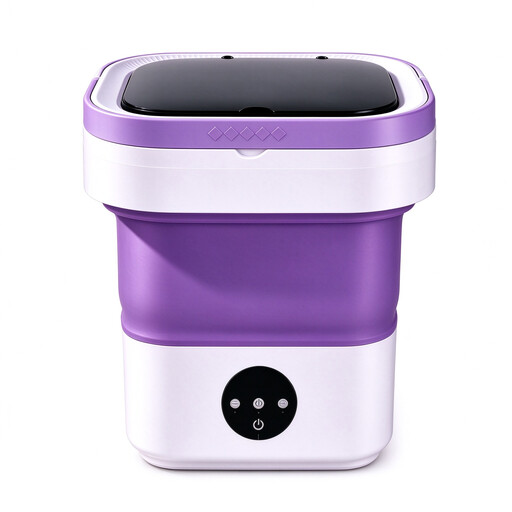 No image available
The product title describes a portable appliance for small textile loads. Before use, check that its dimensions and the care labels on your tea towels are suitable.
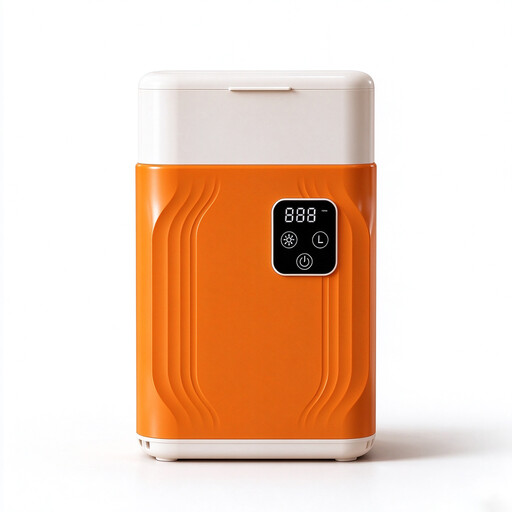 No image available
The product title describes this portable appliance as suitable for small textile loads. Check that its size and the care labels on your tea towels are right for the intended use.
 No image available
The drying capacity limits the amount of laundry you can wash and dry without interruption.
 No image available
The drying capacity is lower than the washing capacity. Bear this limit in mind if you want to dry the load without transferring it between appliances.
The Nutrition Centre recommends washing used kitchen towels at 60 °C and hanging wet towels up to dry. Check the care label on the specific towel, too; this recommendation does not set a legally required temperature.
Only if the load is within the drying capacity of the model you choose. The Consumers' Association recommends considering drying capacity separately. For a continuous cycle, that capacity is the limit, even if the washing capacity is higher.
The European Commission lists information including energy consumption per 100 cycles, water consumption per cycle and programme duration. Compare figures for the same operating mode; actual costs depend on how you use the appliance and your tariffs.
Measure the available space and the route to it, and check the installation requirements in the manual for your chosen model. Bosch recommends placing a washing machine on a stable surface and near the water supply and drainage.
According to the Dutch Government, the seller must provide a product that works properly and put right any problem with a faulty product; they can’t simply refer you to the manufacturer. This is separate from any manufacturer’s warranty or additional cover.