What should you look out for?
Washer-dryer
A good fit if: you have room for one appliance and want to tumble-dry your laundry regularly.
The trade-off: drying capacity is lower than washing capacity. Compare the full cycle and keep the load within the drying limit.
Washing machine and line drying
A good fit if: you can hang your laundry in a suitable place and don’t need to tumble-dry it.
The trade-off: you’ll need to hang the laundry yourself and have enough space for it to dry.
Washing machine and separate heat pump tumble dryer
A good fit if: you have enough room and suitable connections, and your housemates often tumble-dry larger loads.
The trade-off: you need space for two appliances. Milieu Centraal recommends this option because it uses less energy than a washer-dryer.
First, measure the space and check the connections. Then compare capacity, programme duration and consumption figures against the laundry routine your housemates actually follow.
| What to consider |
What to look for |
Who it matters more to |
| Space and connections |
Measure the space and access route; check the water supply, drain, socket and installation instructions for the exact model. |
If I need to install an appliance in a shared house, I want to know in advance that it will fit and can be connected safely. Around 31% of consumers prioritise space and connections. |
| Washing and drying |
Check the wash programmes and temperature options; follow the care label and make sure the flannels are suitable for tumble-drying. |
If you want to treat your flannels according to their care labels and how dirty they are, the available programmes are the main thing to consider. Around 25% of consumers make laundry care their top priority. |
| Availability |
Compare the full cycle duration for your preferred load and check the corresponding drying capacity. |
If housemates take turns using the machine, I want to know how long a combined cycle takes. Around 25% of consumers make machine availability their top priority. |
| Consumption |
Compare energy use per 100 cycles and water use per cycle for the same type of wash or wash-and-dry cycle. |
If you tumble-dry regularly, you’ll want to compare the consumption for your complete laundry routine. Around 19% of consumers make running costs their top priority. |
Products for washing and drying
Below are some Joybuy product options for small loads, line drying, and washing and drying in one appliance. For each model, check that the capacity and way it works suit your shared laundry routine.
 No image available
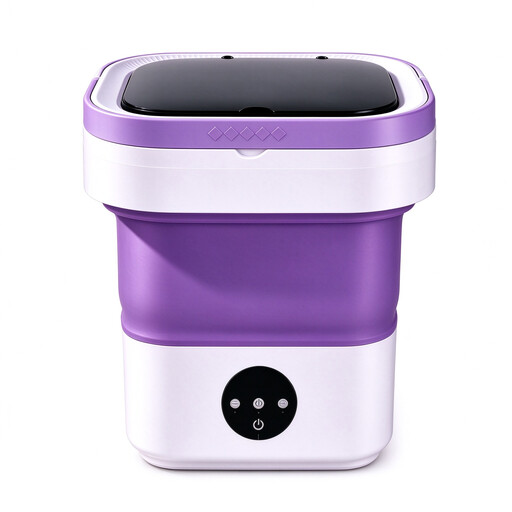
Foldable mini washing machine, 3-in-1, 12 l
An option to consider for small loads if you’re looking for a compact, foldable model.
The product name specifies a 12 l capacity and a 3-in-1 design. Check which washing and drying functions suit the way you plan to use it.
View at Joybuy
 No image available
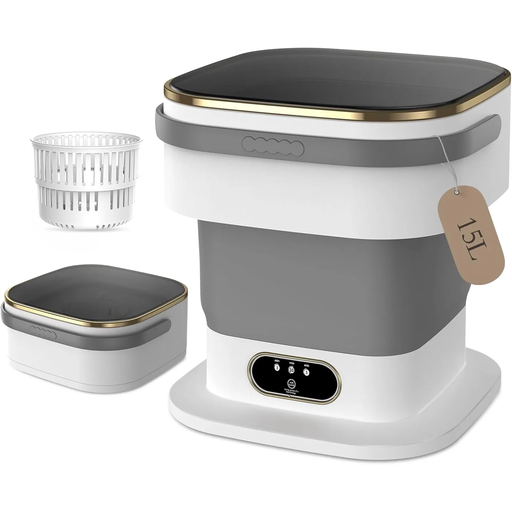
Foldable mini washing machine with spin basket, 15 litres
This portable washing machine could suit small loads if you have somewhere to hang the laundry after spinning.
The product name specifies a 15-litre capacity and a spin basket. The basket isn’t a drying function, so you’ll need a separate way to dry your laundry.
View at Joybuy
 No image available
Candy BWR 495BL8-S
A freestanding washer-dryer to consider if you want to wash and regularly tumble-dry your laundry using one appliance.
The product name specifies a 9 kg washing capacity, a 5 kg drying capacity and 1400 RPM. For consecutive washing and drying, the load is limited by the drying capacity.
View at Joybuy
 No image available
Bosch WNA13400EU
This washer-dryer could suit you if you want to wash and dry your laundry in the same appliance.
The product name specifies an 8 kg washing capacity and a 5 kg drying capacity. The drying capacity sets the limit for a combined load.
View at Joybuy
 No image available
Hisense WD3S9043BW3
A freestanding washer-dryer to compare if you want to tumble-dry your laundry regularly without installing a second appliance.
The product name specifies a 9 kg washing capacity, a 6 kg drying capacity and 1400 RPM. A stated 60-minute programme is for a maximum of 1 kg, not larger loads.
View at Joybuy
Frequently asked questions
Do flannels always need to be washed at 60 °C?
No, not as standard. Milieu Centraal says that 30 °C is usually enough for normally soiled laundry. Follow the care label and consider any special hygiene requirements separately.
Can I dry a full drum straight after washing, without unloading it?
Only if the load is also within the drying capacity of the programme you’ve selected. For example, the Beko BM5DFT4841A has an 8 kg washing capacity and a 5 kg drying capacity. If the load is larger, you’ll need to remove some laundry before drying.
What should I check before installing an appliance in a student house?
Measure the space and access route, and check the water, drain and electrical connections in the manual for the exact model. Brandweer Nederland recommends plugging high-powered appliances directly into a socket rather than using a cable reel or extension lead. If you’re renting, also check that the appliance can be installed there and that you’re allowed to do so.
How do I compare electricity and water use?
Compare like with like: wash-only figures with wash-only figures, or a full wash-and-dry cycle with another full wash-and-dry cycle. The EU label includes energy use per 100 cycles and water use per cycle, among other details. Your own consumption will also depend on how often you tumble-dry.
How long can a full wash-and-dry cycle take?
It varies by model, programme and load. The Consumers’ Association gives an average of almost 7 hours for a combined cotton wash; AEG lists 8 hours and 50 minutes at rated capacity for the LWR9506BN4. These figures use different criteria and aren’t a direct model comparison.


