What should you look for when buying?
First, compare the drying capacity with the loads you usually wash. Then check the care labels on the clothes you want to wash and dry.
Washer-dryer
A good fit if: you only have room for one appliance and your tumble-dryer-safe laundry fits within its drying capacity.
The trade-off: you don’t have to transfer the washing part-way through, but the shared machine remains occupied for the full cycle. Check the wash and drying capacities and programme duration, as Consumentenbond also recommends.
Separate washing machine and tumble dryer
A good fit if: you have room for two appliances and housemates often want to wash and dry clothes.
The trade-off: two appliances take up more space. Milieu Centraal says an energy-efficient standalone heat-pump tumble dryer may use less energy than a standard washer-dryer if you dry clothes frequently.
Washing machine with air-drying
A good fit if: you rarely need to tumble dry clothes, or the care label says an item must not go in the tumble dryer.
The trade-off: drying clothes indoors takes up space and needs good ventilation. Milieu Centraal recommends ventilating to prevent damp problems.
| What to consider |
What to look for |
Who should pay extra attention? |
| Drying capacity and waiting time |
Compare the wash and drying capacities and the duration of the full cycle. |
If we need the shared machine again soon after a cotton wash, the key question is how much laundry it can dry in one go; around 29% of consumers prioritise drying capacity and waiting time for shared use. |
| Caring for different layers |
Read each garment’s care label and use only an approved washing and drying method. |
If you wash cotton clothes alongside different types of rainwear, you’ll want to avoid treating every fabric in the same way; around 23% of consumers prioritise looking after these different layers of clothing. |
| Energy and water use |
Compare the label figures for the full wash-and-dry cycle with those for washing alone. |
If we share the bills, we’ll want to know what repeated washing and drying means for our costs; around 18% of consumers prioritise ongoing running costs. |
| Space and connections |
Measure the space and access route for the exact model, and check the connection instructions. |
If the available laundry space determines what we can buy, I’ll want to make sure the appliance will fit and can be connected; around 18% of consumers prioritise available space and positioning. |
| Noise and controls |
Compare the noise figures and check whether the different programmes are easy to use. |
If several housemates use the machine, clear programmes and suitable times for using it matter; around 12% of consumers prioritise quiet, straightforward shared use. |
Washer-dryers at Joybuy
These washer-dryers at Joybuy are for anyone who wants to wash and dry clothes in one appliance. Compare the drying capacity with the loads you usually wash, and check the permitted care method for each item.
 No image available
Midea MF205D80WB/W-NL, 8 kg wash and 6 kg drying capacity
The drying capacity is lower than the wash capacity, so keep combined loads within the stated drying limit.
The product name lists 1400 rpm, Wi-Fi and a steam function.
View at Joybuy
 No image available
Samsung WD90DB7B85GWU3, 9 kg wash and 6 kg drying capacity
Keep combined loads within the drying capacity; the stated wash capacity is higher than the drying capacity.
The product name lists AI Control and Ecobubble.
View at Joybuy
 No image available
Hisense WD5I8043BWF, 8 kg wash and 6 kg drying capacity
Keep combined loads within the drying capacity, which is lower than the stated wash capacity.
The product name lists an inverter motor.
View at Joybuy
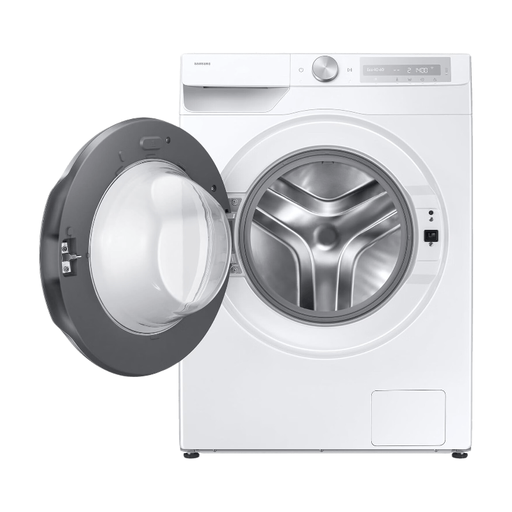 No image available
Samsung WD90HG6U94BEU3, 9 kg wash and 6 kg drying capacity
Keep combined loads within the drying capacity; the stated wash capacity is higher than the drying capacity.
The product name lists 25 programmes, automatic dosing and Wi-Fi.
View at Joybuy
 No image available
TCL CP1210WA0, 10 kg wash and 6 kg drying capacity
The stated drying capacity is lower than the wash capacity; compare it with the amount of laundry you want to dry in one go.
The product name lists a Smart DD motor and a steam wash function.
View at Joybuy
Frequently asked questions
Can a cotton raincoat go in an automatic wash-and-dry cycle?
Don’t assume so just because it’s made of cotton. Follow the coat’s care label: Patagonia warns that waxed cotton must not go in a washing machine or tumble dryer, while technical waterproof jackets may have their own care instructions.
How do you compare the running costs of washing with those of washing and drying?
On the same washer-dryer label, compare the figures for washing alone with those for the full wash-and-dry cycle. To work out the cost in pounds, you’ll also need the number of cycles and your own energy and water tariffs.
What should you check before connecting it in a student house?
Measure the space and check the instructions for the water supply, drainage, levelling and an earthed socket. These are installation checks included in consumer advice from Consumentenbond.
Which energy label applies to a new washer-dryer?
According to the European Commission, the EU energy label scale for household washer-dryers has run from A to G since 1 March 2021. The label includes information such as energy use per 100 cycles and water use per cycle.
How can you keep the shared machine easy for housemates to use?
Agree who will empty the machine when it finishes, and follow the care instructions for your chosen model. Consumentenbond recommends, among other things, levelling the machine and connecting it to an earthed socket.


