What should you look for when buying?
Washer-dryer
A good fit if: there’s room for one appliance and your housemates genuinely need to tumble-dry laundry.
The trade-off: a combined cycle can keep a shared machine occupied for a long time, and the drying capacity is lower than the washing capacity. Consumentenbond reports that a standard washer-dryer uses around 2.5 times as much energy per drying cycle as a new, efficient heat-pump dryer; this comparison relates to drying cycles.
Washing machine with air-drying
A good fit if: the sportswear you mainly wash according to its care label can’t be tumble-dried and you have a suitable place to hang it up.
The trade-off: air-drying avoids electric drying, but requires space and time.
Separate washing machine and heat-pump dryer
A good fit if: there’s room for two appliances and your housemates often have laundry that can be tumble-dried.
The trade-off: this set-up requires more space, but the appliances can wash and dry separately.
First, decide which items you actually want to dry and whether one appliance will work with your laundry schedule. Then compare the space available, the drying capacity and the figures for a complete wash-and-dry cycle.
| What to consider |
What should you check? |
Who should pay particular attention? |
| Looking after sportswear |
Check the programmes and options for synthetic or delicate fabrics, as well as the drying label on each item. A sports programme doesn’t automatically mean tumble-drying is allowed. |
If I wash synthetic or printed sportswear, I want to follow the care instructions and avoid unsuitable drying. Around 33% of consumers in this buying context prioritise sportswear care. |
| Availability for housemates |
Compare the drying capacity with the washing capacity, the length of the combined cycle and the options for washing or drying only. |
If several housemates use the same machine, I want to know whether a continuous cycle fits into our laundry schedule. Around 27% of consumers prioritise access to the shared machine. |
| Positioning and connections |
Measure the space and delivery route, and check the connections and installation instructions. Consumentenbond recommends a flat, sturdy surface and an earthed socket. |
If there’s only room for one appliance, I want to know in advance whether the model and its connections will fit the space available. Around 20% of consumers prioritise limited installation space. |
| Use of the dryer |
Compare the EU label information for washing only with that for a complete wash-and-dry cycle, and consider how often you’ll actually want to tumble-dry. |
If I use the dryer regularly, I want to factor in the energy and water use of the full cycle when making my choice. Around 20% of consumers prioritise the running costs of drying. |
Washer-dryers at Joybuy
This selection features washer-dryers for anyone who wants to use one appliance for washing and drying. Compare the separate drying capacity with the load you want to process in one continuous cycle.
 Image unavailable
Haier HWD90-BP14929A-S washer-dryer
This washer-dryer may suit you if you’re looking for one appliance and a drying capacity of 5 kg works with your laundry schedule.
Washing capacity: 9 kg; drying capacity: 5 kg.
Spin speed: 1400 rpm. The product name also mentions a steam function.
View at Joybuy
 Image unavailable
Samsung WD90DB7B85GWU3 washer-dryer
This washer-dryer may suit you if you want to share one appliance and a drying capacity of 6 kg works for the planned load.
Washing capacity: 9 kg; drying capacity: 6 kg.
The product name mentions AI Control and Ecobubble.
View at Joybuy
 Image unavailable
Hisense WD3S9043BW3 washer-dryer
This washer-dryer may suit you if you want to compare a programme for synthetic fabrics and its drying capacity works for your load.
Washing capacity: 9 kg; drying capacity: 6 kg. Spin speed: 1400 RPM.
The product description mentions a wash-and-dry programme for up to 1 kg in 60 minutes.
View at Joybuy
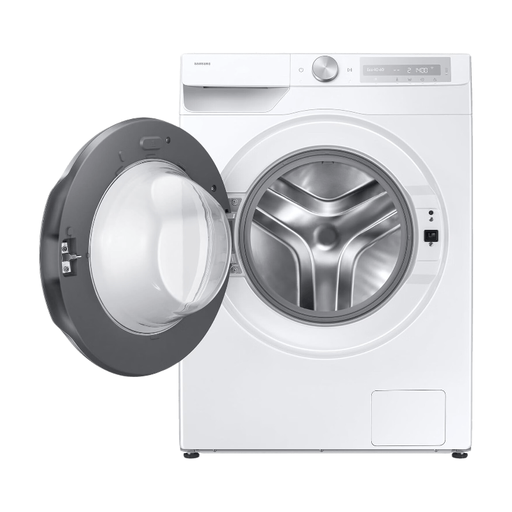 Image unavailable
Samsung WD90HG6U94BEU3 washer-dryer
This washer-dryer may suit you if you’re looking for one appliance and a drying capacity of 6 kg is enough for the planned load.
Washing capacity: 9 kg; drying capacity: 6 kg.
The product name mentions 25 programmes, automatic dosing and Wi-Fi.
View at Joybuy
 Image unavailable
TCL CP1210WA0 washer-dryer
This washer-dryer may suit you if you need the stated washing capacity and a drying capacity of 6 kg works with your schedule.
Washing capacity: 10 kg; drying capacity: 6 kg.
The product name mentions a 60-minute wash-and-dry programme, a 15-minute quick wash and a child lock.
View at Joybuy
Frequently asked questions
Can all machine-washable sportswear go straight into a wash-and-dry programme?
No. Being machine-washable doesn’t mean an item can be tumble-dried. For the sports tops discussed, Nike recommends checking the care label and generally avoiding the tumble dryer.
How can you stop sportswear from smelling musty before you can wash it?
Air out sweaty clothes rather than leaving them damp in a sports bag. Nike recommends washing similar fabrics together and separating synthetic sportswear from items such as cotton towels.
What should you check before installing a machine in a shared home?
Check the space, connections and instructions for your chosen model. Consumentenbond recommends, among other things, a flat, sturdy surface and an earthed socket; also check the specified water inlet and drain requirements.
What additional costs and warranty rights should you check?
Before buying, ask for clear details of any additional costs, such as delivery and installation. According to the Dutch Government, there’s no fixed statutory warranty period in the Netherlands; if a product is faulty, the seller must provide a solution, with the circumstances of the case taken into account.
Does a new washer-dryer in the Netherlands need an EU energy label?
Household washer-dryers placed on the market under the applicable EU rules are subject to energy labelling and ecodesign requirements. The European Commission lists information such as energy and water use and cycle data; compare the details for the specific model rather than relying only on a standalone energy-class claim.


