
Hiker with a small laundry area
You have muddy socks to wash and want to know whether one appliance will fit and dry them effectively too.


A washer-dryer is an option if you want to dry clothes electrically but don’t have room for two appliances in your small laundry area. Check the available space, connections and lower drying capacity before you buy. Muddy socks still need pre-treatment: remove loose mud and check the stain after washing before tumble drying, as Persil advises. For wool socks, always follow the care label. If you can usually hang them up to dry, you’ll avoid tumble drying and the associated energy use — a trade-off also highlighted by Milieu Centraal.
You have muddy socks to wash and want to know whether one appliance will fit and dry them effectively too.
You want to wash and dry your socks according to their care label; that matters more than the convenience of an automatic wash-and-dry programme.
You’re weighing up ongoing energy and water use against saving space and being able to hang your socks up to dry.
Choose this option: if one appliance will fit and you want to tumble dry regularly.
Bear in mind: the drying load may be smaller than the washing load. Milieu Centraal points out that a washer-dryer may use more energy than washing and drying in separate appliances.
Choose this option: if you have the space and time to hang your socks up after washing.
Bear in mind: you’ll need to hang the washing up yourself and have somewhere for it to dry.
Choose this option: if two appliances will fit safely and you often tumble dry larger loads.
Bear in mind: this set-up takes up space and you’ll need to transfer the washing between appliances; compare specific models and how often you’ll use them.
| What to consider | What to look for | Who is this important for? |
|---|---|---|
| Removing mud | Let the mud dry, gently brush off loose dirt and follow the sock care label when treating the stain. Check the stain after washing before tumble drying. | When I wash muddy socks, I want to know the stain has gone before drying them; around 29% of consumers put mud treatment first. |
| Fitting into your laundry area | Measure the height, width and depth, and allow for the door, hoses and positioning. Check the water supply, drainage, earthed socket and that the floor is level and sturdy. | If my laundry area is cramped, I want to know in advance whether the appliance will fit with its connections and the space it needs; around 29% of consumers prioritise fitting the appliance. |
| Fabric care and drying load | Read the sock care label and compare washing and drying capacities separately. A wool programme doesn’t automatically mean that every wool sock can go in the tumble dryer. | When I wash wool or delicate hiking socks, I want to care for the fibres and fit according to the care label; around 24% of consumers put fabric care first. |
| Energy use when drying | Compare the washing figures with those for washing and drying on the EU energy label. Also factor in how often you use it, water consumption and programme duration. | If I often tumble dry, I want to weigh up the full cycle’s energy use against hanging clothes up to dry; around 18% of consumers prioritise ongoing drying costs. |
The capacity for washing alone may be higher than for washing and drying. Bosch lists a maximum of 8 kg for washing and 5 kg for washing and drying for the WNA13400NL.
Compare both capacities in kilograms and use the drying capacity as your guide if you want to wash and dry a load in one go.
A programme doesn’t replace pre-treating mud or determine whether every sock can go in the tumble dryer.
Let loose mud dry, follow the fabric care label and check the stain after washing before tumble drying.
The energy use of a washing programme doesn’t tell you how much the full wash-and-dry cycle uses. The EU energy label provides figures for relevant cycles, including energy per 100 cycles, water consumption and programme duration.
Compare figures for the same cycles and think about how often you actually tumble dry.
Depth, connections and a level, sturdy surface also matter when positioning the appliance.
Measure the available space and check the installation requirements before ordering; Consumentenbond recommends a stable, sturdy surface.
According to Bosch, the WNA13400NL combines an 8 kg washing capacity with a maximum 5 kg capacity for washing and drying.
According to AEG, the LWR9506BN4 has a heat pump, a wool/hand-wash programme and an outdoor programme.
LG lists a wash-and-dry capacity of 8/5 kg for the W4X1085NWB.
According to Siemens, the WN34A100NL has a wash-and-dry capacity of 8/5 kg.
Samsung lists the WD80TA049BE/EN as a washer-dryer with an 8/5 kg capacity and stated dimensions of 600 × 850 × 600 mm (w × h × d).
Joybuy picks for a small laundry area, from a compact washing machine with a spin function to washer-dryers.
 No image available
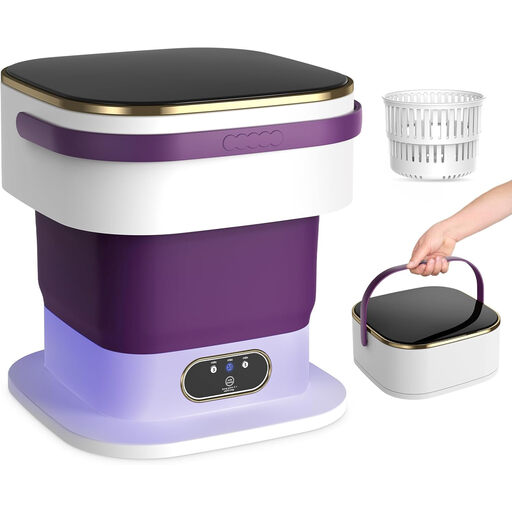
Suitable for small loads if you have space to hang your socks up to dry after spinning.
Foldable and portable, designed for small loads and equipped with a spin function. Spinning isn’t the same as tumble drying.
 No image available
A combination appliance for anyone who wants a single machine and a wool programme for suitable fabrics.
8 kg washing capacity and 6 kg drying capacity; 1400 rpm, wifi and a steam function.
 No image available
A washer-dryer for anyone who wants one appliance and a sports programme for suitable synthetic fabrics and microfibre.
The stated drying capacity is lower than the washing capacity. The appliance dimensions given are approximately 84,8 × 59,8 × 59 cm.
 No image available
A washer-dryer for anyone looking for one appliance and wanting to compare a wool programme for suitable socks.
8 kg washing capacity and 6 kg drying capacity. The stated depth is 47 cm; the drying load is smaller than the washing load.
 No image available
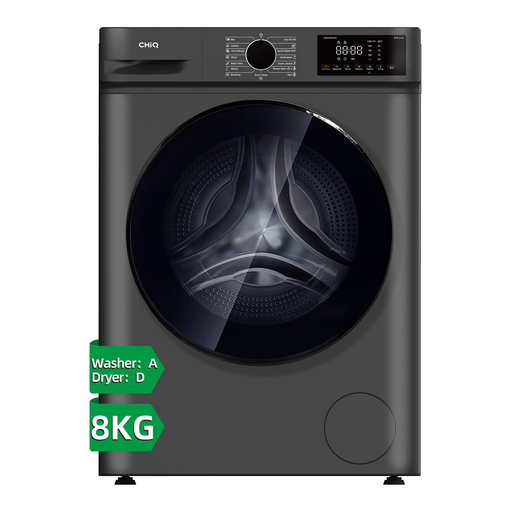
A washer-dryer for anyone who needs to consider the available depth in a small laundry area.
The stated washing capacity is 8 kg and the drying capacity is 5 kg. The stated dimensions are 600 × 520 × 847 mm; it also has a steam function.
Treat any visible mud first and check the socks after washing before tumble drying. Persil advises letting mud dry, gently brushing off loose dirt and treating the stain in a way that’s suitable for the fabric.
It depends on the care label for the specific socks. Smartwool recommends a gentle wash programme for certain merino products and says that some products should be hand-washed or air-dried. A wool programme doesn’t automatically mean they can be tumble dried.
Check the appliance dimensions and available space, that the floor is level and sturdy, the water supply and drainage, and that there’s an earthed socket. Consumentenbond also advises removing the transit bolts before use and levelling the appliance.
Compare the corresponding washing and wash-and-dry figures on the EU energy label, including energy per 100 cycles, water consumption and programme duration. Then factor in how many cycles you run and your energy and water rates; figures for washing alone don’t show the energy use of a complete wash-and-dry cycle.
Yes. ACM ConsuWijzer explains that your statutory guarantee applies in addition to any manufacturer’s warranty and doesn’t have a fixed term of exactly two years. What you could reasonably expect from the product is taken into account, and the retailer is your point of contact.