
If you often wash small loads of underwear
You regularly wash a small amount of cotton underwear and want a programme to suit. The Dutch Consumers’ Association highlights different wash programmes as useful points of comparison.


A washer-dryer is most suitable if you regularly want to tumble-dry clothes but don’t have room for two appliances. Compare the drying capacity, cotton programmes and length of a combined cycle. If you can usually air-dry small loads, a washing machine alone may be more practical: combine laundry where the care labels allow, and compare a standalone washing machine too. A short programme isn’t automatically suitable for every load size or level of soiling.
You regularly wash a small amount of cotton underwear and want a programme to suit. The Dutch Consumers’ Association highlights different wash programmes as useful points of comparison.
You want to be able to tumble-dry your underwear too, but don’t have space for a separate washing machine and tumble dryer. The Dutch Consumers’ Association cites limited space as one reason to consider a washer-dryer.
You compare the energy use of frequent washes and want to decide for each load whether tumble-drying is necessary. Milieu Centraal points out that a separate washing machine and tumble dryer use less energy together than a washer-dryer.
A good fit if: you only have room for one appliance and the care label says the laundry can be tumble-dried.
Bear in mind: the 8/5 kg models reviewed have a lower drying capacity than washing capacity.
A good fit if: you can usually hang up small loads to dry but want the flexibility of a single appliance.
Bear in mind: if you rarely use the drying function, focus mainly on the washing performance.
A good fit if: you usually air-dry your laundry or have room for a separate tumble dryer.
Bear in mind: two appliances need more space; according to Milieu Centraal, a separate washing machine and tumble dryer use less energy together than a washer-dryer.
| What to consider | What should you look for? | Who is this important for? |
|---|---|---|
| Small loads | Check the manual for the permitted load and conditions for short programmes; compare them with a standard cotton programme. | If I often wash just a little underwear, I want a programme that suits that amount. Around 28% of consumers in this comparison prioritise small loads. |
| Suitable cleaning | Follow the care label and check which cotton and, if available, hygiene programmes the model offers. | I want to match the programme to how soiled my cotton underwear is and to its care label. Around 22% of consumers prioritise suitable cleaning. |
| Drying without a second appliance | Compare washing and drying capacities and check that your usual load is within the limit for a combined cycle. | If I don’t have room for a second appliance, being able to tumble-dry in one machine matters to me. Drying in a single space is the main priority for around 22% of consumers. |
| Energy use | Compare figures for the same function on the EU energy label, such as energy use per 100 cycles and water use per cycle. | I want to know how the energy use of frequent washes compares with how often I use the drying function. Around 17% of consumers prioritise running costs. |
| Installation and aftercare | Measure the available space, including room for connections, and follow the model’s installation and maintenance instructions. | Before I choose, I want to know whether the appliance will fit and how to connect and maintain it correctly. Installation and aftercare are the main priority for around 11% of consumers. |
For the 8/5 kg models reviewed, 8 kg is the maximum washing capacity and 5 kg is the maximum drying capacity. So a full wash load may not be able to go straight through a wash-and-dry cycle without reducing the load.
Compare your usual load with the drying limit, and check whether the fabric can be tumble-dried.
The Dutch Consumers’ Association describes Eco 40-60 as a programme for normally soiled cotton that the care label says can be washed at 40 or 60 °C. The programme name doesn’t mean the machine actually reaches 60 °C.
Follow the care label and check which standard cotton or hygiene programme is suitable if your laundry needs different treatment.
The extra drying function is most useful if you tumble-dry regularly or don’t have room for a separate tumble dryer. Milieu Centraal says that a separate washing machine and tumble dryer use less energy together than a washer-dryer.
First work out how often you really tumble-dry, then compare a washer-dryer with a standalone washing machine.
The WNA13400EU is worth considering if you’re looking for one machine with a short programme for small loads.
The W4X1085NWB is an 8/5 kg model with additional fabric-care and steam functions to compare.
The BM5DFT4841A is an 8/5 kg model to compare if capacity and fit are important to you.
The LWR7586CUB is worth considering if you want to compare standard cotton washing, a Hygiene programme and Quick 20 Wash&Dry 60.
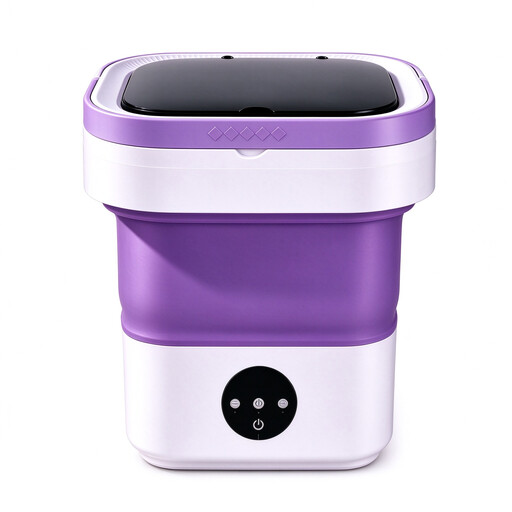
The options below range from a portable mini washing machine to freestanding washer-dryers. Compare the stated capacities and programmes with the amount of cotton underwear you usually wash.
 No image available
The product information describes this as a portable option for small loads and underwear; check that the design suits the way you wash and dry your clothes.
The product title states a capacity of 12 L. Don’t cover the air outlet while drying, as it gets hot. Don’t leave the appliance unattended while it’s running, and keep it away from flammable materials.
 No image available
This washer-dryer is worth comparing if you’re considering a cotton programme and a short combined cycle; check the conditions for small loads.
The product name lists an 8 kg washing capacity, a 6 kg drying capacity, 1.400 rpm, wifi, a steam function and Health Guard. The stated drying capacity is lower than the washing capacity.
 No image available
This model is worth considering if you sometimes want to wash and dry small loads straight away: Bosch Netherlands lists Wash & Dry 60' for small loads. Check the programme conditions for your laundry.
The stated capacity is 8 kg for washing and 5 kg for drying, so a full wash load won’t automatically fit within the drying limit.
 No image available
This washer-dryer is worth considering if you want to compare a short wash-and-dry cycle for a small load; the product information lists Quick Wash & Dry for up to 1 kg in 60 minutes.
The product name lists a 9 kg washing capacity, a 6 kg drying capacity and 1.400 rpm. According to the product information, the short cycle is limited to a maximum of 1 kg.
 No image available
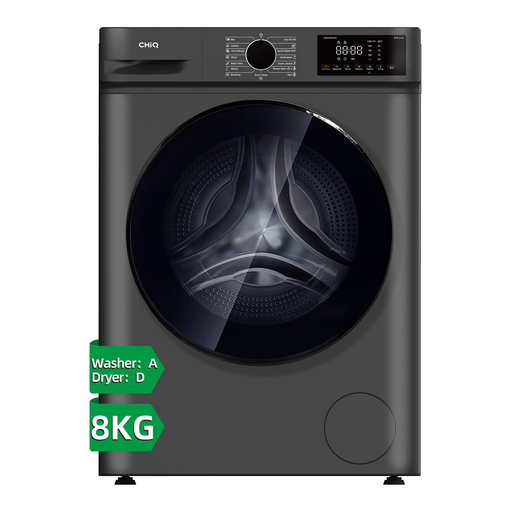
This model is worth including in your comparison if you’re looking for a cotton programme and a separate drying function; check the programme instructions for small loads.
The product name lists an 8 kg washing capacity, a 5 kg drying capacity, 1.400 RPM, a steam function and energy classes A/D. The stated drying capacity is lower than the washing capacity.
Only if the care label allows washing at 40 or 60 °C and the underwear is normally soiled. The programme name doesn’t guarantee a wash temperature of 60 °C; the Dutch Consumers’ Association advises checking a suitable cotton, hygiene or allergy programme if your laundry needs a different wash.
No. The 8/5 kg models discussed here have a drying capacity of 5 kg. Keep a combined load within the stated drying limit and check whether the fabric can be tumble-dried.
Follow the manual for the specific model. The Dutch Consumers’ Association recommends, among other things, a stable, level surface, removing the transit bolts, connecting the water supply and drain correctly, levelling the appliance and using an earthed socket. Follow the manufacturer’s cleaning instructions.
You’re entitled to a product that’s fit for purpose, and you can contact the retailer if there’s a problem to ask for a solution. According to the Dutch government, the Netherlands has no fixed statutory two-year warranty period. A manufacturer’s warranty or an additional warranty is separate from your statutory rights.
Compare like with like: washing only with washing only, or washing and drying with washing and drying. The EU label includes information such as energy use per 100 cycles and water use per cycle.