What should you consider?
A washer-dryer saves space by doing the work of two appliances, but you’ll need to plan around drying capacity and cycle time. Milieu Centraal also highlights the energy used when you tumble-dry; the Dutch Consumers’ Association discusses capacity and how clothes are treated, too.
Washer-dryer
A good fit if: you only have space for one appliance and want to wash and dry school uniforms without transferring them between machines.
Trade-off: bear in mind that the drying load may be smaller and combined programmes can take a long time, as the Dutch Consumers’ Association notes.
Separate washing machine and heat-pump tumble dryer
A good fit if: you have room for two appliances and regularly need to get through several loads in a row.
Trade-off: you’ll need space and have to transfer the washing between machines; Milieu Centraal recommends this option because of its energy use.
Washing machine with an airer
A good fit if: you can put an airer up now and then and the care label allows the garment to be hung up to dry.
Trade-off: drying clothes indoors takes up space temporarily and requires extra ventilation, according to Milieu Centraal.
| What to consider |
What should you check? |
Who should consider this? |
| School uniforms dry in time |
Check the permitted load and programme duration for washing and drying. A short wash programme doesn’t tell you how long the full cycle will take. |
If the uniforms are needed the next morning, I want to know when to start the cycle. Around 36% of consumers put getting clothes dry in time at the top of their list. |
| Size of each drying load |
Compare the washing and drying capacities of the same model, and adjust the load to what you actually want to dry. |
If I have several loads waiting, I don’t want to assume that everything I wash can be dried straight away, too. Around 29% of consumers prioritise handling several loads in a row. |
| Energy use when drying regularly |
Compare the figures for washing alone with those for the full wash-and-dry cycle separately; remember to factor in water use, too. |
If I tumble-dry often, I want to be able to assess the energy use of the full cycle. Around 21% of consumers put ongoing energy use first. |
| Taking care of clothes |
Check the care label and the programmes available for the fabric; don’t assume the result will be completely crease-free. |
If I want school uniforms to stay looking smart for longer, I want to choose a programme that suits the fabric and care label. Around 14% of consumers make keeping clothes in good condition their main consideration. |
Washer-dryers at Joybuy
This selection includes washer-dryers for households looking to combine washing and tumble-drying in one appliance.
 No image available
Haier HWD90-BP14929A-S, 9 kg washing and 5 kg drying capacity
A combined appliance for anyone who wants to use one machine and can adjust the drying load to its lower drying capacity.
Washing capacity: 9 kg; drying capacity: 5 kg; spin speed: 1400 rpm.
For a combined load, stick to the 5 kg drying limit.
View at Joybuy
 No image available
Samsung WD18DB8995BZ/T2, 18 kg washing and 11 kg drying capacity
This combined appliance could be a good option if you want to handle larger loads, provided your available space can accommodate its stated dimensions.
Washing capacity: 18 kg; drying capacity: 11 kg; stated dimensions: 686 × 1110 × 875 mm.
The stated cycle time of 98 minutes applies to a small mixed load, not a full drum in general.
View at Joybuy
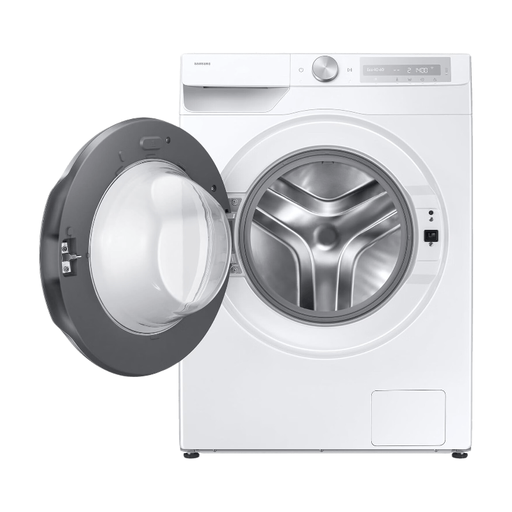 No image available
Samsung WD90HG6U94BEU3, 9 kg washing and 6 kg drying capacity
An option for anyone who wants one appliance and can plan the size of a combined school-uniform load in advance.
Washing capacity: 9 kg; drying capacity: 6 kg. The product description lists automatic dosing and steam.
The 6 kg drying capacity determines how much washing you can dry afterwards.
View at Joybuy
 No image available
TCL CP1210WA0, 10 kg washing and 6 kg drying capacity
This combined appliance takes care of both washing and drying; compare its capacity with the loads you actually want to tumble-dry.
Washing capacity: 10 kg; drying capacity: 6 kg.
The described 60-minute Wash & Dry cycle is for one shirt or blouse, not the stated duration for a full load.
View at Joybuy
Frequently asked questions
Can I dry a full washing load automatically?
Only if the load is within the drying capacity of the model and the programme you choose. The Samsung, LG and Bosch models reviewed list a washing capacity of 9 kg and a drying capacity of 6 kg, so check both figures before relying on one continuous cycle.
How can I check whether a washer-dryer will fit in my home?
Measure the space where you plan to install it and the route to that space, then compare those measurements with the dimensions of the exact model. Before installation, consult the model-specific manual for connection details; Bosch provides manuals based on the model number.
What should I look out for when comparing energy use and warranties?
If you tumble-dry often, compare the figures for the complete wash-and-dry cycle, not just those for washing. According to the Dutch government, there is no fixed statutory warranty period in the Netherlands. If a product is faulty, your rights depend in part on what you could reasonably expect from it and whether it has been used normally.
Can I have my old machine taken away when I buy online?
When you buy a new, similar appliance, the Dutch take-back scheme also applies to private consumers buying online. According to the Dutch government, the seller must take back the old appliance free of charge. If it can’t be collected at the time of delivery, you can arrange a later collection or send it back free of charge.
Which energy label should I compare?
Compare the figures for the wash cycle separately from those for the complete wash-and-dry cycle. The EU energy label for household washer-dryers distinguishes between the two; the figure for washing alone doesn’t tell you how much energy is used for drying.


