Who is this relevant for?

Family with a full school laundry load

You collect a lot of clothes over the school week and want to know how much of a wash load can go straight into the dryer. Washing and drying capacities often differ, so Consumentenbond recommends comparing both.

Family with limited drying space

You want to dry clothes electrically but have little room for a drying rack or two appliances. The space saved needs to be weighed against drying time and energy use.

Family whose clothes are needed again quickly

You want to be able to use short programmes for small, suitable loads, without assuming that a quick programme can handle a full school laundry load.

What should you look for when choosing?

Washer-dryer

A good fit if: you have room for one appliance and want to wash and dry a suitable load of school clothes without removing items.

Bear in mind: the drying capacity may be lower than the washing capacity, and the combined cycle takes time.

Separate washing machine and tumble dryer

A good fit if: you regularly handle several loads and have room for two appliances, so you can wash and dry at the same time.

Bear in mind: you need more space and have to transfer the washing. Kenniscentrum Duurzaam Leven compares the energy use of washer-dryers with separate washing and drying.

Washing machine with line-drying

A good fit if: you have enough time and a suitable, well-ventilated place to dry clothes, and the care labels allow line-drying.

Bear in mind: you avoid machine-drying, but need to plan for the space and drying time.

What to consider What to look for when buying Who should pay particular attention?
Drying load Compare the maximum washing weight, drying weight and permitted load for your chosen programme with your usual school laundry load. I want to dry a normal load after the school week without taking some items out of the drum; around 29% of consumers say getting the right drying capacity is their main concern when buying.
Cycle time Compare the full cycle time for a suitable load. Check which load size and fabrics a short programme is designed for. If clothes are needed again quickly, I want to know how long a suitable load actually takes; around 24% of consumers focus mainly on cycle time.
Installation space Measure the space and the route to it; allow for the appliance depth, an open door and the required connections. I want to dry clothes electrically in a space where two appliances would be difficult to fit; around 18% of consumers focus mainly on the space required.
Energy and water use Compare the same type of cycle on the EU energy label and consider how often you use the drying function. If I machine-dry regularly, I want to take energy and water use into account; around 17% of consumers say running costs are their main concern when buying.
Fabric care Check the care symbols and see whether the model has suitable separate washing and drying programmes. When washing different fabrics, I don’t want to machine-dry anything the care label says is unsuitable; around 12% of consumers focus mainly on fabric care.

Common mistakes

  • Looking only at the washing capacity

    A washer-dryer may be able to wash more than it can dry in the same cycle. You may need to remove some of the washing or dry it later.

    Compare your usual load with both the washing and drying capacities, as well as the limit for the programme you want to use.

    Allow for extra drying cycles or space to hang some of the washing.

  • Assuming a short programme can handle the week’s laundry

    A quick programme may be intended for a small load. The programme name alone doesn’t mean a full school laundry load will be ready in a short time.

    Check both the duration and the permitted load for the programme you’ll use for the clothes you want to wash and dry.

    A short cycle may mean handling the rest of the washing later or in several loads.

  • Comparing only the washing energy rating

    The figure for washing alone doesn’t show the energy use of a full wash-and-dry cycle.

    For different models, compare the same type of cycle on the EU energy label and consider how often you use the drying function.

    If you machine-dry regularly, the energy use of the drying part of the cycle matters too.

  • Assuming the manufacturer’s warranty covers all your legal protections

    ACM ConsuWijzer distinguishes between a warranty offered by the manufacturer and your legal rights against the retailer.

    Keep your proof of purchase and product information. If a product develops a fault despite normal use, contact the retailer.

Brands to consider

Bosch

According to Bosch Nederland, the Bosch WNA13400NL combines an 8 kg washing capacity with a maximum capacity of 5 kg for washing and drying.

  • Bosch lists Auto Dry and a Wash & Dry 60′ programme for small loads.
  • For a combined cycle, the 5 kg drying limit still applies; this figure doesn’t prove better drying performance than other brands.

LG

According to LG Nederland, the LG GD3R509S0 has a 9 kg washing capacity and a 6 kg drying capacity.

  • LG lists AI DD and Steam for this model.
  • The stated protection and hygiene benefits are manufacturer claims, not the result of an independent comparison. The drying capacity is lower than the washing capacity.

AEG

According to AEG Nederland, the AEG LWR739X64 is a 7000 ProSteam condenser washer-dryer with a 9 kg washing capacity and a 5 kg drying capacity.

  • AEG lists steam functions and separate energy ratings for washing and the full cycle.
  • The stated effects of Steam Refresh are manufacturer claims. A 9 kg washing capacity doesn’t mean this model can dry 9 kg without interruption.

Samsung

According to Samsung Nederland, the Samsung WD90HG6U94BEU3 has a 9 kg washing capacity and a 6 kg drying capacity.

  • For this AI Wash 6000-series model, Samsung lists automatic adjustments to the washing process.
  • According to Samsung, its energy-saving and cleaning claims are based on its own test conditions and aren’t a general promise for every school laundry load.

Beko

According to Beko Nederland, the Beko BM5DFT4841A has an 8 kg washing capacity, a 5 kg drying capacity and a maximum spin speed of 1400 tpm.

  • The stated capacities give you specific figures to compare with your usual load.
  • These figures don’t provide an independent comparison of drying results, cycle times or running costs against the other models listed.

Washer-dryers at Joybuy

These washer-dryers are for anyone who wants to combine washing and electric drying in one appliance. For each model, compare the drying capacity and any limits on short programmes with your usual school laundry load.

Midea MF205D80WB/W-NL washer-dryer

Midea MF205D80WB/W-NL 8/6 kg

A possible fit if you’re looking for one appliance with an 8 kg washing capacity and a 6 kg drying capacity; the drying limit determines the size of a combined load.

The product name lists 1400 tpm, Wi-Fi and a steam function.

View at Joybuy

Hisense WD3S9043BW3 washer-dryer, 9 kg washing and 6 kg drying capacity

Hisense WD3S9043BW3 9/6 kg

The 6 kg drying capacity is worth considering if you want to dry a larger load in one appliance than models with a lower drying limit can handle.

The product name lists 9 kg for washing, 6 kg for drying and 1400 tpm. According to the product description, Quick Wash & Dry takes 60 minutes and is limited to 1 kg.

View at Joybuy

Samsung WD18DB8995BZ/T2 washer-dryer, 18 kg washing and 11 kg drying capacity

Samsung WD18DB8995BZ/T2 18/11 kg

The stated capacity of 18 kg for washing and 11 kg for drying may suit you if you want to handle a larger load in one appliance; the drying capacity limits the size of a combined load.

The product description lists heat pump drying and a 98-minute Super Speed wash-and-dry programme for a small load.

View at Joybuy
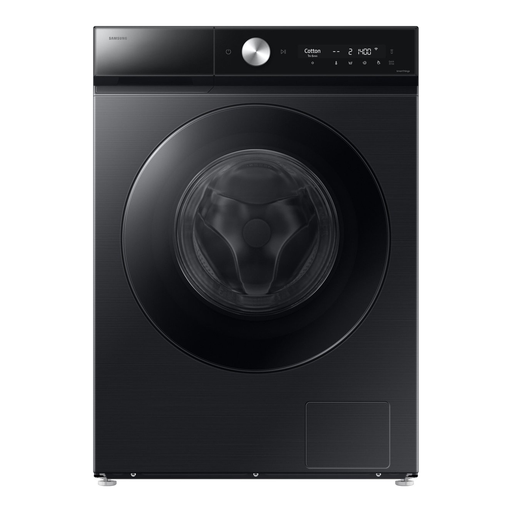
Samsung WD11DB8B85GB washer-dryer, 11 kg washing and 6 kg drying capacity

Samsung WD11DB8B85GB 11/6 kg

A possible fit if you’re looking for a generous washing capacity, but the 6 kg drying capacity determines how much can stay in for one combined load.

The product description lists a full wash-and-dry cycle of 452 minutes. Bear this in mind if clothes are needed again quickly.

View at Joybuy

Comfee CFP03ED100W-HR washer-dryer, 10 kg washing and 7 kg drying capacity

Comfee CFP03ED100W-HR 10/7 kg

The combination of a 10 kg washing capacity and a 7 kg drying capacity may suit a larger drying load; check that your usual load is within the drying limit.

The product description lists a wool programme and a 15-minute wash programme for lightly soiled clothes; the short programme time isn’t a claim about a full wash-and-dry cycle.

View at Joybuy

Frequently asked questions

Can you dry a full load without having to intervene?

Only if the load is within both the drying capacity and the limit for the programme you’ve chosen. For example, Bosch Nederland lists the WNA13400NL as having an 8 kg capacity for washing alone and a maximum of 5 kg for washing and drying.

Does all damp school clothing need to go in the tumble dryer after washing?

No. Follow the care label: according to GINETEX, a crossed-out tumble-dryer symbol means the item must not be tumble-dried. Line-drying is an alternative if you have a suitable place to do so.

Is a short programme suitable for the whole school laundry load?

Not necessarily; check the load size and fabrics the programme is designed for. For example, Bosch Nederland describes the WNA13400NL’s Wash & Dry 60′ programme as being for small loads.

Which energy label applies to a washer-dryer?

The European Commission states that household washing machines and washer-dryers have used an A–G scale since 1 March 2021. For these appliances, compare the same type of cycle: for example, washing alone with washing alone, or a full wash-and-dry cycle with the same cycle.

What should you check before installing the appliance?

Measure the space and room for connections, and check the manual for the model you’ve chosen. Consumentenbond recommends a flat, stable surface, removing the transit bolts, correctly connecting the water supply and drain, and using an earthed socket.
