
Family with a washable picnic blanket
You want to wash the blanket after use and first check which washing and drying methods the fabric can withstand.


Start with the care label: choose a wash programme that’s suitable for the blanket, and only use the drying function if the blanket is suitable for tumble drying. A washer-dryer is worth considering if you’re short on space and its washing and drying capacities suit your load. If you can hang the blanket up to dry, washing it on its own may be the more practical option.
You want to wash the blanket after use and first check which washing and drying methods the fabric can withstand.
You want to wash and, if the care label allows, dry your laundry in one appliance. The smaller drying capacity may be a deciding factor.
You want to wash the blanket with other laundry without overfilling the drum or ending up with an unexpectedly long drying cycle.
The Consumers' Association points out that a washer-dryer’s drying capacity may be lower than its washing capacity. So check both the blanket’s care label and the specifications for the complete wash-and-dry cycle.
| What to consider | What to look for | Who is this important for? |
|---|---|---|
| Care label | Check the washing and drying symbols separately, along with the permitted temperature and suitable programme. | If I want to avoid treating a blanket in a way that isn’t suitable for the fabric. Around 33% of consumers prioritise keeping their blanket in good condition. |
| Load capacity | Compare the washing and drying capacities of the exact model, and take account of the blanket’s weight and the space it takes up. | If I want to wash the blanket with my weekly laundry without exceeding the drying limit. Around 27% of consumers prioritise having enough capacity. |
| Space and convenience | Measure the space available and check the appliance’s dimensions and programme duration for the load you want to wash and dry. | If I have limited space and would rather not transfer laundry between appliances. Around 20% of consumers prefer one appliance and fewer steps. |
| Energy use when drying | Compare the information for washing with that for the complete wash-and-dry cycle; also consider whether line drying is an option for you. | If I plan to dry laundry regularly and want to factor in the energy use. Around 20% of consumers prioritise running costs. |
A washable blanket isn’t automatically suitable for machine drying too. The washing and drying symbols give different instructions, so follow the care advice for the blanket.
Check both symbols before choosing a wash-and-dry programme. If tumble drying isn’t allowed, hang the blanket up to dry in line with the care advice.
Using an unsuitable drying cycle could damage the blanket.
The washing capacity may be higher than the drying capacity. This means a full wash load may be too large to dry in one go afterwards.
Compare both capacities for the exact model and keep a non-stop load within the permitted drying capacity.
You may need to split the washed load or run an extra drying cycle.
Information for washing alone isn’t the same as information for a complete wash-and-dry cycle. Milieu Centraal recommends line drying your laundry where possible.
Compare the stated energy use for the cycle you expect to use. Consider line drying if the care label and your circumstances allow it.
If you tumble dry regularly, remember to factor in the energy use of those drying cycles separately.
The WNG254A7NL is a comparison model for anyone looking to wash a larger load and then dry a smaller one.
The LWR76144 is a comparison model if a larger separate drying capacity is important to you.
The GD3R509S0 is a 9/6 kg model to compare with washer-dryers that have a higher stated washing capacity.
The WD90DG5B15BHEN from the 5000 Series is a 9/6 kg model with app-related energy features.
This selection includes washer-dryers and a set with a separate washing machine and heat pump tumble dryer. The right option for you will depend, among other things, on the blanket’s care label, the space available and the capacity you need.
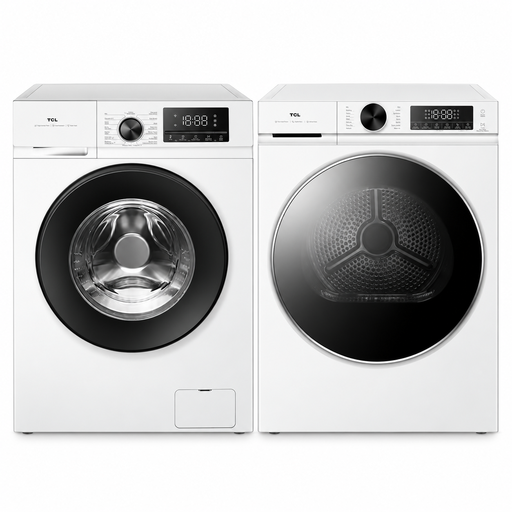 Image unavailable
A set of two appliances to compare if you have space for a separate washing machine and tumble dryer.
The product name lists 8 kg + 8 kg, 1400 tpm and a steam function.
 Image unavailable
A washer-dryer for anyone who wants to wash and, if needed, dry laundry in one appliance. Keep a full wash-and-dry load within the lower drying capacity.
The product name lists 9 kg for washing, 5 kg for drying and 1400 rpm.
 Image unavailable
A washer-dryer to compare if you want both functions in one appliance. Check that your intended drying load is within the drying capacity.
The product name lists 8 kg for washing, 6 kg for drying and 1400 rpm.
 Image unavailable
A washer-dryer to consider if you want to wash and dry in one appliance. Bear in mind the lower drying capacity when running a complete cycle.
The product name lists 8 kg for washing and 5 kg for drying. The description mentions a Wash&Dry programme and AutoDry.
 Image unavailable
A freestanding washer-dryer to compare if you want both functions in one appliance. The drying capacity limits the size of a complete wash-and-dry load.
The product name lists 9 kg for washing and 6 kg for drying.
No. Check the drying symbol separately: permission to machine wash doesn’t automatically mean the blanket can go in the tumble dryer. If the care label says not to tumble dry, choose a suitable wash programme and follow the drying instructions on the label.
Compare the washing and drying capacities of the exact model, and keep a complete wash-and-dry load within the drying capacity. The Consumers' Association points out that for a complete cycle, you shouldn’t wash more kilos than you want to dry.
Check the figures for the complete wash-and-dry cycle, not just the washing rating. For the AEG LWR76144, the manufacturer lists an A rating for washing and a D rating for washing and drying. Milieu Centraal recommends line drying your laundry whenever possible.
Check the dimensions and installation diagram for the exact model, along with the required water supply, drain and earthed socket. The Consumers' Association also recommends making sure the appliance is level. Measure the space to ensure the machine will fit where you plan to put it.
In the Netherlands, the seller must fix a fault free of charge if it occurs during normal use and the product doesn’t meet the standard you could reasonably expect. ACM ConsuWijzer lists repair, replacement or a refund as possible solutions.