
Owner of a hairy pet
You regularly wash blankets covered in loose hair and want to know how to keep the machine clean afterwards. Bosch Netherlands recommends removing as much pet hair as possible before washing.


A washer-dryer can work in a shared utility room if there’s space for one appliance, the blanket’s care label allows machine washing and tumble drying, and its permitted drying load suits your needs. If you often need to tumble-dry blankets, or the care label says not to, consider a separate drying solution or air-drying them instead. The Dutch Consumers’ Association and the Knowledge Centre for Sustainable Living point out that these options have different space and usage requirements.
You regularly wash blankets covered in loose hair and want to know how to keep the machine clean afterwards. Bosch Netherlands recommends removing as much pet hair as possible before washing.
You want to wash a blanket in as few loads as possible, and perhaps dry it too. The Dutch Consumers’ Association recommends comparing washing and drying capacities separately.
You have limited space for the appliance and need to consider vibrations, programme duration and accessible connections. The Dutch Consumers’ Association recommends a firm, level surface.
Suitable if: you have space for one appliance and the blanket is within the permitted washing and drying loads.
Bear in mind: drying capacity may be lower than washing capacity, and a combined cycle keeps the appliance occupied for longer.
Suitable if: the shared space can accommodate two appliances and you regularly use an electric tumble dryer.
Bear in mind: you’ll need space for both appliances and have to transfer the washing between them. The Knowledge Centre for Sustainable Living recommends separate appliances because of their energy consumption.
Suitable if: the blanket’s care label allows air-drying and you have a suitable place to dry it.
Bear in mind: this option needs drying space and time. Agree with others on how to use a shared drying area.
| What to consider | What to look for when buying | Who is this most relevant to? |
|---|---|---|
| Hair and maintenance | Check the model’s manual for instructions on cleaning the seal, drum and drain. Don’t assume there’s a separate lint filter. | If a blanket has lots of loose hair, I want to be able to check what needs cleaning afterwards. Around 33% of consumers cite hair and maintenance as their main concern when buying. |
| Load capacity and blanket care label | Compare washing and drying capacities separately with the blanket’s care label and your usual blanket load. Check the external dimensions too. | If I want to wash a large blanket in as few loads as possible, the permitted drying load is particularly important. For around 27% of consumers, load capacity and whether the appliance is suitable for their blanket come first. |
| Installation and planning | Measure the space, including the doorway and connections. Check the cycle duration and make sure the appliance has a stable, level surface, as specified in the installation instructions. | In a shared utility room, I want to know whether the appliance will fit and when I can use it. Around 20% of consumers put installation and scheduling in that space first. |
| Energy use and drying method | Compare the figures for washing and for the full wash-and-dry cycle on the EU energy label. Follow the blanket’s care label for the drying method. | If I often dry blankets, I want to weigh the energy use of the full cycle against the option of using a suitable drying space. For around 20% of consumers, energy use for drying is their main concern. |
The European Commission explains the EU energy label for household washing machines and washer-dryers. The Dutch Consumers’ Association and the Knowledge Centre for Sustainable Living point out that you should account for the difference between washing alone and a full wash-and-dry cycle when making comparisons.
The example models from AEG, Samsung, Miele, LG and Bosch have a lower stated drying capacity than washing capacity. This means a full wash load won’t necessarily fit into one consecutive drying cycle.
If the blanket load is too large for the drying capacity, you may need an extra drying cycle or a separate drying method.
Compare both capacities with the permitted load for your blanket before relying on a programme to handle everything in one go.
Function names and manufacturer claims don’t prove that a model removes pet hair from every pet blanket.
Remove as much loose hair as possible before washing, and follow the fabric care label and the maintenance instructions for your chosen model.
Looking at washing alone doesn’t show what the full wash-and-dry cycle involves. The Dutch Consumers’ Association explains that standard washer-dryers use more energy for drying than a new, energy-efficient heat-pump tumble dryer.
Compare the figures for the same full cycle and consider how often you actually dry the blankets. If the care label allows it, include air-drying as an alternative.
According to AEG Netherlands, the Dutch LWR7586CUB is a washer-dryer with an 8 kg washing capacity and a 5 kg drying capacity.
Samsung Service Netherlands lists the WD11DB8B85GBU3, also referred to as WD11DB8B85GB in its support information, as a QuickDrive washer-dryer with an 11 kg washing capacity and a 6 kg drying capacity.
According to Miele, the Dutch WTI370 WPM PWash has a washing capacity of 8 kg and a drying capacity of 5 kg.
According to LG, the Dutch GD3R509S0 has a washing capacity of 9 kg and a drying capacity of 6 kg.
According to Bosch, the Dutch WNG254A7NL has a washing capacity of up to 10.5 kg and a maximum of 6 kg for washing and drying, with dimensions of 848 × 598 × 590 mm.
These washer-dryers from Joybuy are for anyone who wants to wash and dry with one appliance. Compare the stated washing and drying capacities with the blanket’s care label and your usual load.
 No image available
A combination to consider if you want to wash and dry with one appliance.
Stated capacity: 8 kg for washing and 6 kg for drying. The drying load is smaller than the washing load.
 No image available
This washer-dryer is an option if you’re looking for one appliance for washing and drying.
Stated capacity: 8 kg for washing and 5 kg for drying. Bear the lower drying capacity in mind when using a combined cycle.
 No image available
An option if you want to combine washing and drying in one appliance and your load is within the model’s capacity.
Stated capacity: 9 kg for washing and 6 kg for drying. Check the drying limit even if the blanket is within the washing capacity.
 No image available
This combination could suit you if you’re looking for one freestanding appliance for washing and drying.
Stated capacity: 9 kg for washing and 6 kg for drying. The drying capacity sets the limit for a combined load.
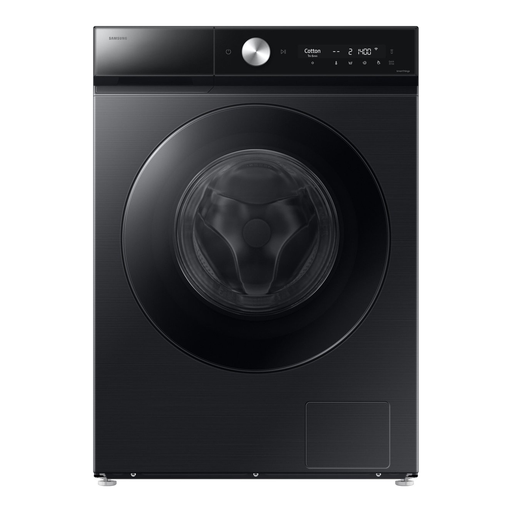 No image available
An option if you’re looking for a higher stated washing capacity and want one appliance for washing and drying.
Stated capacity: 11 kg for washing and 6 kg for drying. The drying capacity is the lower limit for a combined load.
No. ‘Washable’ doesn’t automatically mean it can be tumble-dried. Follow the care label on the specific blanket. The Knowledge Centre for Sustainable Living advises against tumble-drying fleece. Choose another drying method if the label doesn’t allow machine drying.
Remove as much loose hair as possible before washing, then check the parts listed in the model’s manual afterwards. The Dutch Consumers’ Association explains that washer-dryers can drain fluff through the water outlet. Check the instructions for your chosen model.
Measure the available space and check the connections and installation instructions for the model. The Dutch Consumers’ Association recommends a firm, level surface, removing the transit bolts and levelling the appliance. Agree usage times and cleaning arrangements with other users too.
Compare the figures for washing alone with those for the full wash-and-dry cycle on the EU energy label, and consider how often you actually tumble-dry. The European Commission explains the EU label for washing machines and washer-dryers. Your household’s usage also helps determine which cycle is relevant.
First check the washing and drying instructions on the specific blanket’s care label, then compare the permitted load with both capacities of the model. The Dutch Consumers’ Association recommends looking at washing and drying capacities separately. Washing capacity alone therefore won’t tell you how much will fit into one combined drying cycle.