
Walkers with nowhere to dry their socks
You want to wash muddy socks but have very little room for an airer. First, check whether the care label allows tumble drying; a washer-dryer also has a lower drying capacity than washing capacity.


Start by checking your socks’ care label and where you can dry them. If you have room for a small airer, a standard washing machine will do; if air-drying isn’t practical and the label allows tumble drying, a washer-dryer could save space. Its drying capacity is lower than its washing capacity, and a higher maximum spin speed doesn’t guarantee that your socks will come out of every programme drier.
You want to wash muddy socks but have very little room for an airer. First, check whether the care label allows tumble drying; a washer-dryer also has a lower drying capacity than washing capacity.
You regularly wash socks after muddy walks and want to choose a temperature and programme that suit both the dirt and the care label.
Your socks may need a gentle programme or a more cautious drying method. Follow the care label on your own socks: washing and drying instructions vary from product to product.
Start with the care label and the space available for drying. Then compare the capacity, programmes and running costs that suit the way you use the machine.
| Concern | What to look for when buying | Who is this important for? |
|---|---|---|
| Drying without a dedicated space | Check the care label, the drying capacity in kg and the dimensions, allowing for the space needed for connections. | If I don’t have room for an airer, I want to know whether my socks can be tumble-dried and how many will fit in the machine at a time. Around 36% of consumers say drying space is their main concern. |
| Washing muddy socks | Check the permitted temperature and how gentle the wash needs to be according to the care label, as well as the programmes and settings on the exact model. | People who often wash muddy socks want to choose a treatment that suits both the dirt and the socks’ care label. Around 29% of consumers prioritise this cleaning need. |
| Gentle care for socks | Check the material information and washing and drying symbols. Use a wool or delicate programme only if the care label allows it. | If I have delicate or wool socks, the permitted treatment matters more than the convenience of tumble drying. Around 21% of consumers prioritise keeping their socks in good condition. |
| Energy and water use | For the same type of cycle, compare the figures for washing and for the full wash-and-dry cycle, including kWh per 100 cycles and water per cycle. | If I tumble-dry regularly, I want to consider the consumption of the full cycle, not just washing. Around 14% of consumers prioritise energy and water use. |
A washer-dryer can wash more kilos than it can dry in one go. You’ll need to reduce a larger load for the drying cycle or dry it another way.
Check both the washing and drying capacities for the exact model, and think about how much laundry you usually want to dry straight away. The Consumentenbond points out that a washer-dryer’s washing capacity is not the same as the amount it can dry.
A larger wash load may mean an extra drying cycle or that you still need space for an airer.
The permitted drying method varies from one pair of socks to another. A drying function isn’t suitable for socks whose care label says not to tumble-dry them.
Check the labels on the socks you actually wear before using a drying programme. Darn Tough, for example, provides washing and drying advice for its own socks; that advice doesn’t automatically apply to other brands.
A wash-only cycle and a full wash-and-dry cycle are different comparisons. Some washer-dryers also use water when drying.
Compare the product information for both cycles and consider how often you’ll actually use the drying function. The European Commission says the EU product label includes figures such as energy use per 100 cycles and water use per cycle.
LG offers washer-dryers for people considering one appliance instead of a separate washing machine and tumble dryer.
The Serie 6 WGG244FMNL is a separate front-loading washing machine for people considering drying on an airer or with a separate tumble dryer.
The WT1 washer-dryers are an option to consider when comparing the features and capacities of a specific combined appliance.
These Joybuy products are washer-dryers for anyone who wants to wash and dry in one appliance. Check the separate washing and drying capacities for each model, and always follow your socks’ care labels.
 No image available
A washer-dryer for washing and drying in one appliance, provided your socks’ care label allows tumble drying.
Capacity: 9 kg washing and 5 kg drying. The description lists 16 wash programmes, including wool, and 2 drying programmes. A load over 5 kg won’t fit into one drying cycle.
 No image available
A washer-dryer for anyone who wants both functions in one appliance and whose socks can be tumble-dried according to their care label.
Capacity: 9 kg washing and 5 kg drying. The product name lists 1400 rpm; the description mentions a wool programme. Check the drying capacity if you have a larger wash load.
 No image available
This washer-dryer could suit you if you’re looking for one appliance and your socks’ care labels allow tumble drying.
Capacity: 9 kg washing and 6 kg drying. The product name lists 1400 RPM; the description mentions a wool programme. The drying capacity determines how much laundry can go in each drying cycle.
 No image available
A washer-dryer for washing and drying in one appliance, provided your socks can be tumble-dried.
Capacity: 10 kg washing and 6 kg drying. The product name lists energy ratings A/E. The drying capacity is lower than the washing capacity, so a larger load can’t be dried in one go.
 No image available
A washer-dryer for anyone who wants to wash and dry in one appliance, provided the socks’ care label allows tumble drying.
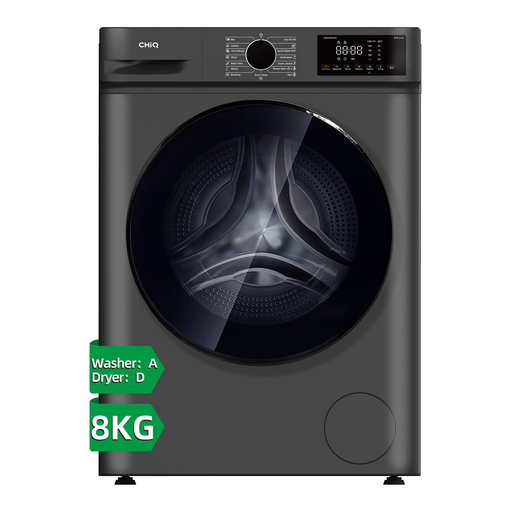
Capacity: 8 kg washing and 5 kg drying. The product name lists 1400 RPM; the description mentions 15 programmes and a depth of 520 mm. A wash load larger than the drying capacity will need a separate drying cycle.
Not without checking the socks’ care labels first. Use this programme only if the labels say the socks are suitable for the treatment it provides; otherwise, choose a programme and temperature that are permitted.
Only if the load doesn’t exceed the stated drying capacity. According to LG, the LG F4DR3096N3W has a washing capacity of 9 kg and a drying capacity of 6 kg; you’ll need to reduce a larger load or dry it separately.
Check the water supply, drainage, an earthed socket and that the appliance is level. The Consumentenbond includes these points in its washer-dryer usage tips; also follow the instructions for your chosen model.
According to the European Commission, the EU label includes figures such as energy use per 100 cycles and water use per cycle. For a washer-dryer, compare the figures for washing alone and for washing and drying separately; your actual consumption also depends on how you use it and on your tariffs.
No. According to the Dutch government, there is no fixed statutory warranty period in the Netherlands: a product should last as long as you can reasonably expect it to. If a product is faulty, contact the retailer; any manufacturer’s warranty is in addition to this.