Who is this option for?

Manager working to a short guest changeover

Needs cotton T-shirts clean and dry before the next guests arrive. The total wash-and-dry time and the drying load matter more than the length of the wash programme alone. The Consumentenbond assesses washing and drying performance separately.

Landlord with a small laundry room

May only have space for one appliance and wants to know whether its drying capacity suits a typical T-shirt load. The Consumentenbond advises matching the amount of laundry to what you want to dry.

Manager with their own T-shirt stock

Washes coloured or printed cotton shirts repeatedly and follows the washing and drying instructions for each garment. Clevercare provides care information for different types of fabric.

What should you look for?

One uninterrupted wash-and-dry cycle

A good fit when: the T-shirt load is within the drying capacity and the full cycle can finish before the next guests arrive.

Bear in mind: the full cycle can take longer than washing alone, so check the time for the load you have in mind.

Washing and drying in smaller loads

A good fit when: you want to wash more T-shirts than the machine can dry in one go and have time to split the load.

Bear in mind: an extra drying cycle or air-drying some items on a line takes more time and planning.

Separate washing machine and tumble dryer

A good fit when: you have the space and connections, and need to process several loads during a short guest changeover.

Bear in mind: two appliances need more space, and you’ll have to transfer the laundry between them.

What to consider What should you check? Who should give this more weight?
Changeover time Compare the full wash-and-dry time and the drying performance for cotton. The Consumentenbond assesses cupboard-dry cotton separately from washing alone. LG lists 7 hours and 50 minutes for the Eco 40-60 wash-and-dry cycle on the GD3V509S1; this is not necessarily the time for a cotton programme. If I need T-shirts ready before the next guests arrive, I want to know whether the full cycle will fit into the changeover window. Around 28% of consumers give priority to this timing.
Drying load Compare your usual dry load with the washing and drying capacities of the exact model. LG lists a washing capacity of 9 kg and a drying capacity of 6 kg for the F4DR3096N3W. If I want to dry all the shirts I need in one go, I focus particularly on the lower drying capacity. Around 22% of consumers prioritise this load size.
Fabric care Follow the care labels on the shirts and check that the permitted temperature and drying method are compatible with the programmes. If I wash coloured or printed shirts often, I want to be able to follow the care instructions for each garment. Around 17% of consumers prioritise fabric care.
Space for installation Measure the space and access route, and allow room for the door, hoses and connections as specified in the installation instructions. Bosch lists dimensions of 848 × 598 × 565 mm (h × w × d) for the WNA13401NL. If my laundry room only has room for one appliance, I want to know whether the washer-dryer can be positioned and connected safely there. Around 17% of consumers prioritise available space.
Energy use with frequent operation Compare the energy label figures for washing alone and for washing and drying on the same basis, and factor in how often you use the machine. Milieu Centraal points out that washer-dryers use more energy than washing and drying separately. If the machine runs often, I want to take the energy use of a full wash-and-dry cycle into account. Around 16% of consumers prioritise ongoing energy use.

Common buying mistakes

  • Assuming washing and drying capacities are the same

    A model with a 9 kg washing capacity won’t necessarily dry 9 kg in one go. Its lower drying capacity may mean you need to split the load.

    Compare your usual T-shirt load with the drying capacity and check the limit for the cotton programme you plan to use.

    An extra drying cycle can eat into the time between two guest stays.

  • Mistaking a short wash function for a short full cycle

    The washing time alone doesn’t tell you how long washing and drying together will take. The full cycle may run beyond the time available between guests.

    Check the duration of a full cycle for a suitable load, not just the time for a quick-wash programme.

  • Looking only at energy use for washing

    The energy label figures for washing alone don’t show the energy use of a full wash-and-dry cycle. This can skew your comparison if you use the machine to dry the shirts.

    Compare figures for the same type of use and consider how often you’ll run the full cycle.

  • Assuming consumer or manufacturer guarantees apply to rental use without checking

    The ACM explains statutory guarantees for sales to consumers. The buyer and the circumstances of a business purchase may be relevant.

    Before buying, explain how you intend to use the appliance for your holiday let and check the applicable purchase and guarantee terms with the seller.

Brands to compare

LG

The F4DR3096N3W available in the Netherlands is a 9/6 kg reference point if your drying load stays within 6 kg.

  • LG lists a washing capacity of 9 kg and a drying capacity of 6 kg for the F4DR3096N3W.
  • LG gives an Eco 40-60 wash-and-dry time of 7 hours and 50 minutes for the GD3V509S1. This time does not necessarily apply to other LG models or cotton programmes.

Bosch

The Serie 4 WNA13400NL is a reference point for washing 8 kg and drying 5 kg.

  • Bosch lists Auto Dry for the WNA13400NL.
  • The 5 kg drying capacity may mean that a larger wash load needs to be split across several drying cycles.

Samsung

The AI Wash 6000 Series WD90HG6U94BEU3 lists a washing capacity of 9 kg and a drying capacity of 6 kg.

  • Samsung specifies washing and drying capacities of 9/6 kg for this model.
  • A model specification or branded feature alone doesn’t show how quickly or evenly a T-shirt load will dry.

AEG

The LWR9706C8 is a heat pump washer-dryer with a stated washing capacity of 10 kg.

  • The AEG product name describes it as a 9000 AbsoluteCare heat pump washer-dryer.
  • Compare the specific cycle and energy use for your own T-shirt washing; a technology name doesn’t guarantee the same results across all models or loads.

Washer-dryers at Joybuy

These washer-dryers are for anyone who wants to wash and dry cotton T-shirts in one appliance. Compare the drying capacity and the conditions for short programmes with the load and changeover time you actually have.

Midea MF205D80WB/W-NL washer-dryer

Midea MF205D80WB/W-NL washer-dryer

A washer-dryer for anyone who wants to wash and dry shirts in one appliance; check that the drying capacity suits your usual load.

Stated capacity: 8 kg for washing and 6 kg for drying. The product name lists 1400 rpm, Wi-Fi and a steam function.

View at Joybuy

Samsung WD90DB7B85GWU3 washer-dryer

Samsung WD90DB7B85GWU3 washer-dryer

The stated drying capacity helps you work out whether a T-shirt load will fit in one go; factor in the full cycle and the time available between guests.

Stated capacity: 9 kg for washing and 6 kg for drying. The product name lists AI Control, Ecobubble and the colour white.

View at Joybuy

Samsung WD18DB8995BZ/T2 washer-dryer

Samsung WD18DB8995BZ/T2 washer-dryer

The stated capacity is well above that needed for a small T-shirt load, so also check whether the available space and the programme you choose suit your needs.

Stated capacity: 18 kg for washing and 11 kg for drying. Samsung lists a 98-minute cycle for a small mixed load; the capacity of that load is not specified.

View at Joybuy

Hisense WD3S9043BW3 washer-dryer

Hisense WD3S9043BW3 washer-dryer

A 60-minute programme may suit a small load, but it shouldn’t be taken as an indication of the capacity or duration for every T-shirt wash.

Stated capacity: 9 kg for washing and 6 kg for drying; the product name lists 1400 rpm. The Eco 40-60 wash-and-dry cycle is stated to take 7 hours and 59 minutes. The 60-minute programme is for loads of up to 1 kg.

View at Joybuy
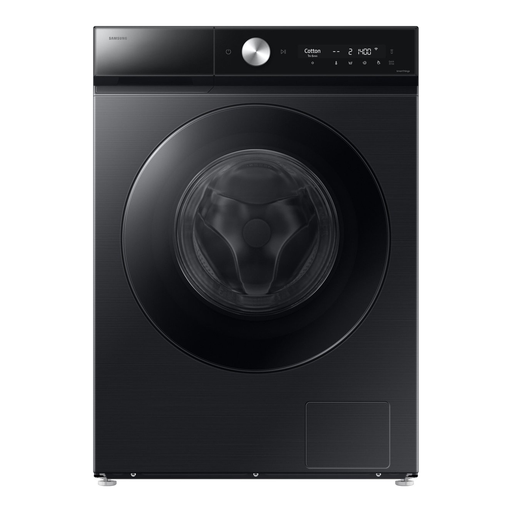
Samsung WD11DB8B85GB washer-dryer

Samsung WD11DB8B85GB washer-dryer

Check the full cycle before scheduling this model for a short guest changeover; the short programme time in the product information applies to washing only.

Stated capacity: 11 kg for washing and 6 kg for drying. The full cycle is stated to take 452 minutes; the SuperSpeed wash programme takes 39 minutes.

View at Joybuy

Frequently asked questions

Can every cotton T-shirt automatically go in the tumble dryer?

No. The fact that a shirt is made of cotton doesn’t necessarily mean it can go in the tumble dryer. Follow the care label for the specific garment; the permitted temperature and treatment can vary, for example with coloured or printed shirts.

How can you avoid needing two drying cycles for a full wash load?

Plan the load around the drying capacity, not the higher washing capacity. For example, LG lists a washing capacity of 9 kg and a drying capacity of 6 kg for the F4DR3096N3W. Also check the limit for the programme you plan to use.

What installation and maintenance points matter in a holiday let?

Follow the installation and connection instructions for the exact model, and plan maintenance and checks between stays. Brandweer Nederland advises connecting electrical appliances safely; AEG provides separate maintenance and troubleshooting instructions for washer-dryers.

Does consumer law apply to a business purchase for a rental property?

Don’t assume that it does. According to the ACM, when a product is sold to a consumer, the seller is responsible for the statutory guarantee; this rule applies to consumer sales. For a business purchase, discuss the intended use with the seller and check the applicable terms and conditions.

Is the appliance’s energy label the same as the holiday let’s energy label?

No. The energy label for household appliances is separate from a building’s energy label. The Dutch Government lists an exception to the building energy-label requirement for homes used for less than four months a year and where expected energy use is less than 25% of that for permanent use; whether this exception applies depends on the specific circumstances.
