If you can dry flannels on a small airer, a standard washing machine will do the job and you can avoid the energy used by tumble drying. If you have hardly any space to hang wet laundry, a washer-dryer could be the answer, provided your load is within its lower drying capacity. If you have room for two appliances and often tumble dry, it’s also worth comparing a separate heat-pump tumble dryer.
Which solution is right for you?
Limited space for wet laundry
You want to wash and dry flannels without keeping an airer set up all the time. With a washer-dryer, it’s important to note the difference between its washing and drying capacities. Consumentenbond points out that a washer-dryer takes up less room than a separate washing machine and tumble dryer.
Small, regular loads
You wash flannels regularly but want a drum size that also suits your household’s usual laundry. Milieu Centraal and Consumentenbond recommend choosing a capacity that matches the load you typically wash.
Frequent tumble drying and room for two appliances
You have room for a washing machine and a separate tumble dryer, and want to factor in energy use if you tumble dry regularly. Milieu Centraal says a washer-dryer uses more energy to wash and dry than separate appliances.
What should you look for when choosing?
Standard washing machine with an airer
Choose this option if: you can hang your flannels up after washing and, if needed, ventilate the room while they dry indoors.
Bear in mind: drying takes time and you’ll need some hanging space; indoor drying requires ventilation.
Washer-dryer
Choose this option if: you have little room to hang wet laundry and your usual load fits within the drying capacity.
Bear in mind: many models have a lower drying capacity than washing capacity; standard washer-dryers can use relatively high amounts of energy when drying and may have long programmes.
Washing machine with a separate heat-pump tumble dryer
Choose this option if: you have room for both appliances and want to tumble dry often.
Bear in mind: you’ll need room for two appliances. According to Milieu Centraal, separate appliances use less energy to wash and dry than a washer-dryer.
| What to consider |
What should you check? |
Who is this important for? |
| Drying without hanging space |
Check the drying capacity in kg, the wash-and-dry programme, and whether your usual load will fit. |
If I have nowhere to hang wet laundry after washing, I want to know whether the whole load can be dried in one go. Around 33% of consumers prioritise being able to dry laundry without hanging space. |
| Capacity for small loads |
Choose a drum capacity that suits your usual wash and check which fabrics can be washed together according to their care labels. |
If I regularly do small loads, I want a drum that suits the total amount of laundry in my household. Around 27% of consumers give suitable capacity for small loads top priority. |
| Energy use when tumble drying regularly |
Use the EU energy label to compare the same type of cycle, including kWh per 100 cycles and water per cycle. |
If I often tumble dry, I want to compare the stated consumption for the complete wash-and-dry cycle. Around 20% of consumers focus mainly on ongoing energy and water use. |
| Getting it in and fitting it in |
Measure the height, width and depth, access routes and door clearance; also check the connections and installation requirements for the exact model. |
If space is tight, I want to know in advance whether the appliance will actually fit and can be installed. Around 20% of consumers base their choice mainly on the space available. |
Common buying mistakes
-
Looking only at the washing capacity
With washer-dryers, the stated drying capacity may be lower than the washing capacity. This means a full wash load may not fit in the machine for one drying cycle.
Compare both capacities with the load you want to wash and dry without splitting it.
When you dry regularly, the energy and any water used add up with every cycle.
-
Choosing a large machine just for a few flannels
A larger drum won’t necessarily suit small loads. Milieu Centraal recommends choosing a drum size that suits your household.
If you like, weigh a typical full household load and check which suitable fabrics you can wash together.
-
Measuring only the outside of the appliance
The access route, connections and clearance required around the exact appliance also matter when it comes to installation.
Measure the space and access routes, then check the chosen model’s installation details before ordering.
A narrow access route or missing connection could make installation difficult.
Brands to consider
Bosch
Bosch describes washer-dryers, including the WNA13400NL, which has an 8 kg washing capacity and a 5 kg drying capacity. The model code WNA13400EU refers to a different variant.
- Bosch lists Auto Dry and a small-load programme for the WNA13400EU.
- Bosch says the WNA13400EU is no longer available from Bosch; check the exact model code and specification.
AEG
According to AEG, the AEG LWR9506BN4 is a heat-pump washer-dryer with a 10 kg washing capacity and a 6 kg drying capacity.
- AEG lists a maximum depth of 660 mm for this model.
- These are manufacturer specifications; compare energy-label and cycle figures on a like-for-like basis when assessing consumption.
LG
The LG GD3R509S0 is listed with a 9 kg washing capacity and a 6 kg drying capacity.
- Consumentenbond classifies this specific model as a condenser dryer with energy rating D for washing and drying.
- LG’s claims about AI DD and clothing protection are manufacturer claims; don’t treat them as proven results for flannels.
Beko
According to Beko, the Beko BM5DFT4841A is a freestanding washer-dryer with an 8 kg washing capacity and a 5 kg drying capacity.
- Beko lists a width of 60 cm and a depth of 57 cm.
- Remember to allow for the space needed for installation too; the appliance dimensions alone don’t determine whether it can be installed.
Samsung
Samsung features models such as the WD90DG6B85BKU3, with a 9 kg washing capacity and a 6 kg drying capacity.
- Samsung lists AI Energy Mode for compatible programmes and appliances.
- Check which programmes are compatible with the version you choose; a manufacturer’s energy-saving claim isn’t a guarantee for every cycle or load.
Washer-dryers at Joybuy
These washer-dryers are for anyone looking to combine washing and drying in one space. Compare the washing and drying capacities separately with your usual load.
 No image available
Candy BWR 495BL8-S, 9/5 kg
For anyone looking to combine washing and drying in one place.
Washing capacity: 9 kg.
Drying capacity: 5 kg; a larger wash load must be split before drying.
Spin speed: 1400 rpm.
View at Joybuy
 No image available
Midea MF205D80WB/W-NL, 8/6 kg
For anyone looking to combine washing and drying in one appliance.
Washing capacity: 8 kg.
Drying capacity: 6 kg; a larger wash load must be split before drying.
Spin speed: 1400 rpm.
View at Joybuy
 No image available
Bosch WNA13400EU, 8/5 kg
For anyone looking to combine washing and drying in one place and able to tailor the load to the drying capacity.
Washing capacity: 8 kg.
Drying capacity: 5 kg; a larger wash load must be split before drying.
The product description mentions AutoDry and a Wash&Dry programme.
View at Joybuy
 No image available
Samsung WD18DB8995BZ/T2, 18/11 kg
For anyone looking for one appliance to wash and dry larger loads, within the individual capacities.
Washing capacity: 18 kg.
Drying capacity: 11 kg; a larger wash load must be split before drying.
The product description mentions heat-pump drying.
View at Joybuy
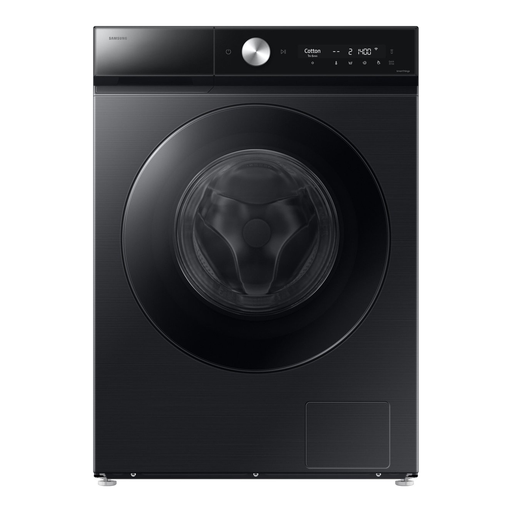 No image available
Samsung WD11DB8B85GB, 11/6 kg
For anyone looking to combine washing and drying in one appliance and happy to work with the lower drying capacity.
Washing capacity: 11 kg.
Drying capacity: 6 kg; a larger wash load must be split before drying.
The product description mentions heat-pump drying.
View at Joybuy
Frequently asked questions
Should I always wash flannels at 60 °C?
No, that isn’t a general rule. Milieu Centraal says towels usually don’t need to be washed at 60 °C to get clean, but also outlines situations where a hot wash may be a good idea. Follow the care label and take any specific hygiene needs into account; don’t choose the temperature based solely on the ‘eco 40-60’ programme name.
Can I automatically dry a full washing-machine load in the same appliance?
Only if the load is also within the drying capacity of your chosen model. For example, Bosch lists the WNA13400EU as having an 8 kg washing capacity and a 5 kg drying capacity; a larger wash load must be split before drying.
What should I consider when installing and maintaining the appliance?
Measure the appliance and access route, and follow the model’s installation instructions. Milieu Centraal also recommends running a 60 °C wash once a month to remove soap and dirt residue from the machine; this is maintenance advice, not a legal requirement.
Is an energy label compulsory, and what does a guarantee mean in the Netherlands?
Household appliances must have an energy label. According to the Dutch government, if a product is faulty, the seller must offer a solution; there is no fixed statutory guarantee period of exactly two years in the Netherlands. Any manufacturer’s guarantee or extended guarantee you purchase does not replace your statutory rights.


